


When hospitals, FQHCs, CMHCs, correctional facilities, and school systems need psychiatric coverage, the pressure is immediate—ED boarding, open clinic slots, MAT continuity, or a night panel that cannot go dark. The cheapest or fastest option can look rational. Organizations that protect clinical standards, documentation quality, and continuity treat partner selection as a responsibility, not only a procurement exercise.
Integrity means the partner places licensed clinicians who document in your record, follow your workflows, remain privileged on your medical staff, and do not create a second clinic that walks away with the panel when the contract ends. FasPsych’s model is built around this standard: clinicians work inside the host organization’s program rather than establishing a parallel practice.
Key Takeaways
- Choosing a telepsychiatry partner is an ownership decision: who keeps the panel, the chart, and the quality measures.
- Score partners on coverage and licensure, compliance and documentation, continuity planning, payment structure, and workflow fit.
- Specialty-matched clinicians and documentation that lives in your EHR reduce long-term risk more than the lowest visible rate.
- A psychiatry staffing network that works inside your program is different from a virtual clinic that can leave with patients.
- Integrity protects both patients and the organization’s operational sustainability.

What Evidence and Standards Require
Telepsychiatry has a strong evidence base when held to the same clinical expectations as in-person care. The American Psychiatric Association describes it as a validated practice that increases access when it protects patient autonomy, confidentiality, and privacy and is used consistent with APA ethical policies. The joint APA/ATA resource document on best practices for synchronous videoconferencing-based telemental health emphasizes clinician competence, appropriate setting, documentation, and emergency planning—not merely a video connection.
Those standards do not disappear because the clinician is remote. Organizations that score partners only on hourly rate or credentialing speed often later find notes that fail utilization review, continuity that collapses when one provider leaves, or a service operating as a parallel practice. FasPsych’s guide on how to write a telepsychiatry staffing RFP frames the distinction: staffing inside your program keeps the panel, the chart, and the quality measures with the organization.
Five Places Integrity Appears in the Contract and Workflow
1. Ownership of the patient and the record
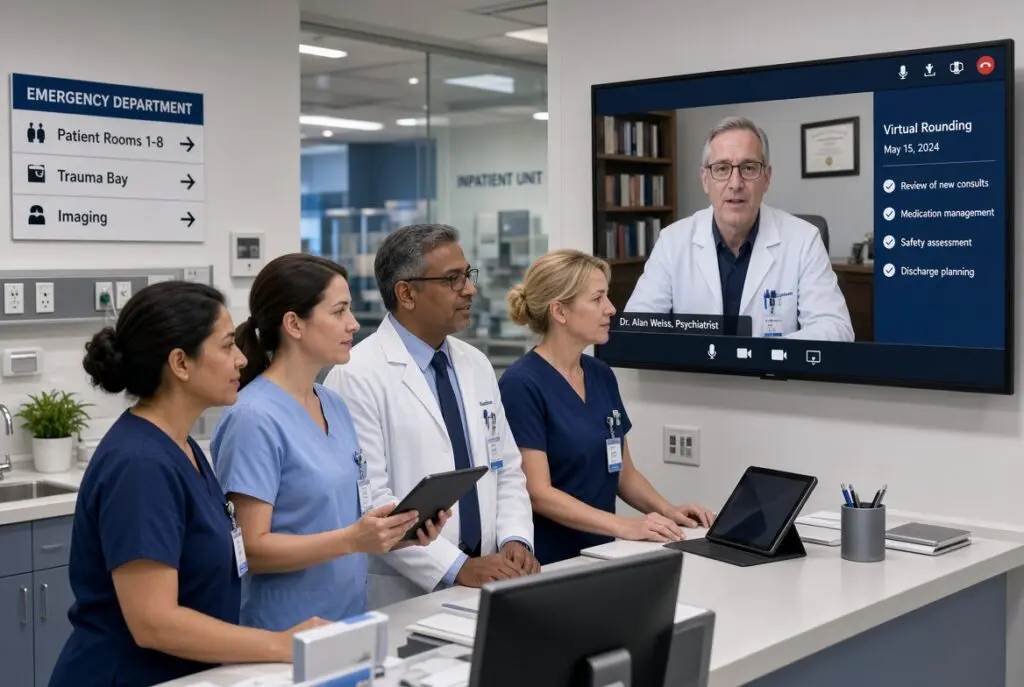
The organization should retain the census, the EHR, and billing. Notes, orders, and follow-up belong in the facility system. Models that pull patients onto a vendor panel create continuity risk at termination. The difference is detailed in the comparison of virtual clinic models versus psychiatry staffing networks. FasPsych places clinicians who remain privileged on the host medical staff and document in the facility record.
2. Specialty and setting match before the first visit
State licensure is necessary but not sufficient. Child and adolescent work, geriatric care, substance-use treatment, correctional settings, and emergency consults each require relevant experience and privileges. Specialty-matched telepsychiatry staffing pairs the right psychiatrist or psychiatric nurse practitioner to the unit, age group, and house rules before video starts. FasPsych matches providers to the specific setting rather than assigning whoever is available on a platform.
3. Documentation and compliance that survive review
Notes must meet the facility’s standards for medical necessity, prior authorization, and quality reporting. This matters for managed care, FQHC PPS, and correctional environments. Incomplete or non-integrated documentation creates liability and revenue problems that outweigh any initial rate advantage. FasPsych clinicians document in the partner organization’s existing EHR so the record stays with the facility.
4. Continuity planning when a provider or platform changes
Ask what happens if the assigned clinician leaves or the technology fails. Experienced partners maintain a network large enough to replace a provider without restarting credentialing from zero and without shifting patients to an external practice. FasPsych maintains a nationwide network of board-certified psychiatrists and psychiatric nurse practitioners so mid-contract vacancies can be covered without transferring the panel.
5. Payment structure that does not force clinical compromise
Fee-for-service, block hours, rounding-plus-on-call, and coverage days carry different risks for unused time versus volume spikes. The right structure matches how patients actually arrive. Guidance on how to choose a behavioral health staffing payment model shows when each shape fits operational reality. FasPsych offers flexible arrangements that scale with actual volume rather than forcing a fixed commitment that can pressure clinical standards.
How to Evaluate Partners Without Lowering the Standard
Use the same scoring criteria for every finalist: clinical coverage and licensure, compliance and documentation, continuity planning, payment structure, and workflow fit with existing staff. Hospitals typically need rounding plus on-call. Schools need calendar-aligned evaluations and consent processes. Substance-use programs need MAT continuity. Managed-care contracts need notes that hold up under utilization review. These distinctions appear in practical guidance on choosing a telepsychiatry partner for hospitals, schools, and SUD settings.
Practical checks include:
- Request references from similar organizations and ask about documentation quality, handoff reliability, and provider exits.
- Confirm credentialing, privileging, and payer enrollment are scoped in the agreement.
- Verify HIPAA-compliant technology and that clinicians document in your EHR rather than a separate system requiring PDF exports or delayed feeds.
Organizations that treat these checks as non-negotiable protect patients and operational sustainability. Those that treat them as optional often spend the next year correcting incomplete coverage, rewriting notes, or replacing the partner. FasPsych has operated a staffing-inside-your-program model since 2007 with nearly 130 organizations, which gives partners a long track record to evaluate against these criteria.
Frequently Asked Questions
What should organizations look for when choosing a telepsychiatry partner?
Score coverage and licensure, compliance and documentation, continuity planning, payment structure, and workflow fit. Prioritize partners who staff inside your program rather than creating a parallel clinic. FasPsych’s approach keeps the panel and the record with the host organization.
Who should own the patient panel and medical record?
The host organization. Patients should remain on your census, and notes should live in your EHR so continuity and quality measures stay with you if the contract ends. FasPsych clinicians document in the facility’s existing systems.
How is a psychiatry staffing network different from a virtual clinic model?
A staffing network supplies licensed psychiatrists and psychiatric nurse practitioners who join your existing service line and document in your systems. A virtual clinic often enrolls patients in the vendor’s practice, creating risk that the panel leaves with the vendor. FasPsych operates as a staffing network rather than a second clinic.
Why does specialty matching matter more than speed?
A licensed clinician who lacks relevant experience with the age group, setting, or clinical problem creates downstream risk. Matching the right psychiatrist or PMHNP to the unit before the first visit reduces errors, improves handoffs, and supports better outcomes. FasPsych matches providers to the specific unit and population before the first visit.
How does FasPsych support continuity if a provider leaves?
FasPsych maintains a nationwide network of credentialed psychiatrists and psychiatric nurse practitioners. When a clinician exits, a replacement can be identified and privileged without transferring patients to an external practice or restarting the entire onboarding process from zero.
The Operational Result of Choosing for Integrity
When the partner is selected for clinical and operational fit rather than lowest visible cost, organizations typically see more reliable nights-and-weekends coverage, cleaner handoffs, documentation that supports both care and reimbursement, and the ability to scale or reduce hours without rebuilding the program. FasPsych has delivered this model since 2007 across hospitals, FQHCs, CMHCs, correctional facilities, schools, and other settings.
The short-term pressure to fill a gap is real. The longer-term cost of filling it with a partner that compromises standards is also real. Integrity in partner selection is the practice of refusing that second cost.
Organizations evaluating coverage can review setting-specific criteria or request a written proposal mapped to their hours, sites, and billing rules. Partner with FasPsych or call (877) 218-4070.