
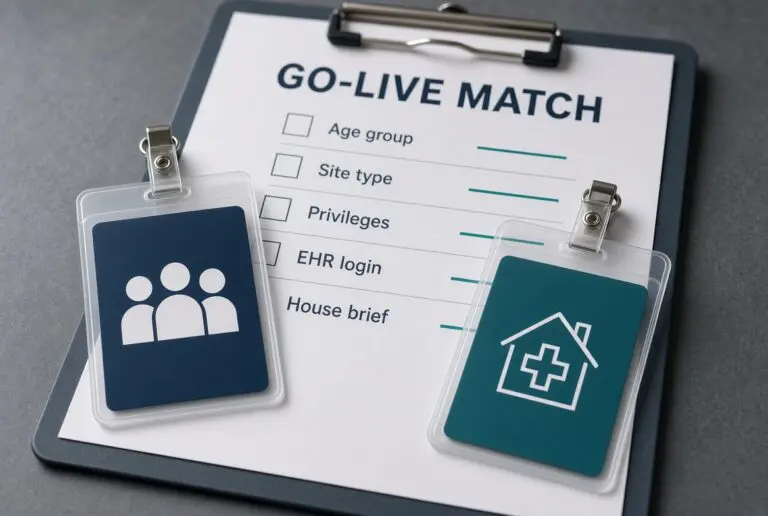

Specialty-matched telepsychiatry staffing is the work that happens before the first secure video visit: pairing the right licensed psychiatrist or psychiatric nurse practitioner with this unit, this age group, and this house — not whoever is free on the platform.
In The Devil Wears Prada, that lesson belongs to Nigel, not to a last-minute trip. Andrea “Andy” Sachs arrives at Runway speaking journalism. She can write. She cannot yet see. Two belts look identical to her. The closet is just clothes. Nigel Kipling, the art director who actually knows the craft, does not dress her for a photograph. He teaches her to read the room she is walking into — which collection, which floor, which look belongs. Later she can hand over the right piece without being asked. That is literacy. Costume would have been putting her in the clothes and sending her onto the floor anyway.
Healthcare organizations still buy the costume version. A license is treated as interchangeable. An adult prescriber is dropped onto a pediatric book. A clinic psychiatrist is asked to write a jail formulary they have never seen. A community clinician covers an emergency hold without knowing how that hospital clears medical issues. The video link works. The visit does not.
Two other jobs live on other pages. If the assignment is keeping this week’s appointments alive while a named clinician is out, that is backup psychiatrist coverage through video visits. If hours and role mix no longer fit what the building can staff, that is a redesign of the week — a different assignment than matching specialty to the unit. This article is the matching job: facility-fluent telepsychiatry in place before the cart turns on.
Contact a FasPsych implementation specialist at (877) 218-4070 if you want that match done against your actual rooms, not a generic roster.
A licensed psychiatrist in the wrong room is still the wrong clinician
A medical license answers one question: may this person practice psychiatry in this state. It does not answer whether they should sit in this chair.
Child and adolescent work is the clearest example. AACAP treats pediatric telepsychiatry as its own practice, not adult care on a smaller chair. Development, family collateral, school coordination, and consent are the work. They are not extras. Workforce supply makes the mismatch tempting. AACAP’s 2025 advocacy brief notes that 72% of U.S. counties have no practicing child and adolescent psychiatrist, and HRSA has projected that by 2037 child-and-adolescent psychiatrist supply will meet only about 65% of demand if delivery stays as it is. Scarcity does not convert an adult psychiatrist into a CAP. It only makes the wrong assignment easier to defend.
The American Psychiatric Association describes telepsychiatry as clinically equivalent in diagnostic accuracy when it is used well — in hospitals, clinics, corrections, nursing homes, and schools. “Used well” includes the setting. APA and ATA videoconferencing best practices expect the psychiatrist to know emergency protocols, who is in the room, and what the site can actually do if the visit goes sideways. A clinician who has never worked a correctional med window or an ED bay is not “close enough” because the encryption is HIPAA-compliant.
Andy could have stayed in her first-week clothes and called it authenticity. Nigel’s point was that the environment has a language. So does a unit.
What facility-fluent matching actually checks
Matching a telepsychiatrist to a setting is not a vibe test and not a logo on a slide. Before go-live, someone has to answer:
- Age and developmental group. Child, adolescent, adult, geriatric — or a defined mix the clinician actually practices.
- Site type. Outpatient clinic, CMHC, FQHC, hospital ED or med-surg, inpatient psych, PHP/IOP, residential or SUD, SNF, school, or correctional.
- Privileges and payer enrollment. Can this person write in your EHR, prescribe on your formulary, and bill the payers you use.
- House rules. Restraint and seclusion, hold and commitment language, MAT protocols, who calls security, who sits with the youth, what the nurse can do if the video drops.
- Collateral and team. Does this clinician know how to work a custody officer, a school counselor, a charge nurse, a BHCM, or a family in the room.
- Continuity. Will the same dedicated psychiatrist or PMHNP return, or is this a one-off face on a marketplace.
FasPsych’s telepsychiatry staffing model is built to answer those questions before the first login. Adult psychiatric services and child and adolescent psychiatric services are separate books for a reason. So are emergency-room crisis services. Platform-neutral, HIPAA-compliant video is the delivery method. The match is the product.
If you want the primer on why adult and child psychiatrists are not interchangeable titles, FasPsych already published adult vs. child psychiatrists in telepsychiatry companies. This page is the operational next step: matching telepsychiatrist to setting inside your program.
How the mismatch shows up by setting
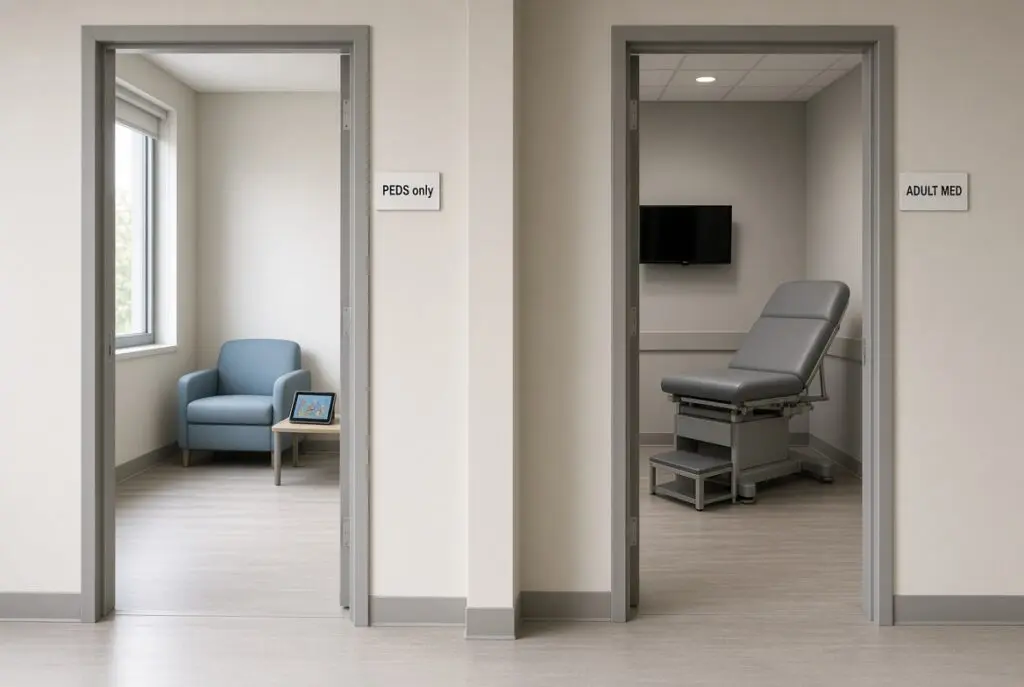
Child and adolescent clinics, schools, and pediatric ED. An adult-only prescriber can complete a note and still miss development, assent, guardian dynamics, and school collateral. Families feel it immediately. The APA child and adolescent telepsychiatry toolkit exists because the work is different. Pair the site with clinicians who already practice that work.
Emergency departments and medical units. Disposition, medical clearance partnership, agitation, and hold language are the job. A clinic psychiatrist who has never moved an ED board is literate in the wrong floor. See FasPsych’s emergency department page for how that consult is supposed to land.
Residential, PHP, and substance-use programs. Induction timing, diversion risk, court-required appointments, and house search rules are not optional context. A general outpatient prescriber who has never written in that milieu will slow intake and frustrate nursing.
Jails and prisons. APA’s resource on telepsychiatry for adults in jails and prisons is explicit: site-specific protocols, safety, and staff roles matter as much as the diagnosis. A community psychiatrist who has never worked custody workflow is costume.
SNF and geriatric units. Polypharmacy, delirium versus depression, hearing and cognition on camera, and family meetings are the language. An adult generalist who does not practice that mix will write clean notes that do not change the floor.
CMHC, FQHC, and primary-care integration. Panel size, measurement, and collaboration with on-site therapists or BHCMs are the house rules. A hospitalist-style consult style in that clinic creates friction the patient pays for.
The video cart in each of those rooms can look similar. The room is not similar. Nigel would not send the same look to two different collections and call it efficiency.
How FasPsych video visits carry the match into the visit
Once the clinician is matched, the visit itself should look like your program — not a parallel clinic.
FasPsych telepsychiatry video services use interactive, real-time audio and video with HIPAA-compliant encryption. Software is platform-neutral so staff are not asked to learn a second culture of logins. Notes and e-prescribing can sit in your EHR when the workflow allows. The same dedicated provider returns whenever possible, so literacy in the house compounds instead of resetting every Tuesday. On-demand psychiatry can sit behind that dedicated relationship for surge. It should not replace the match.
Implementation is where matching either happens or gets skipped. FasPsych’s telepsychiatry implementation process starts with a needs assessment: population, site type, privileging, EHR, and which clinician types the rooms actually require. That is the closet work. Skipping it and turning the cart on is sending Andy onto the floor in her first-week sweater.
Make matching part of go-live, not a later correction
Treat specialty-matched telepsychiatry staffing as a gate, not a retrospective.
- Name the rooms, not the vacancy. “We need psychiatry” is not a brief. “Tuesday peds med clinic plus Thursday adult residential induction” is a brief.
- Match age group and site before you schedule a demo patient. If the only available clinician is the wrong specialty, you do not have coverage. You have a costume.
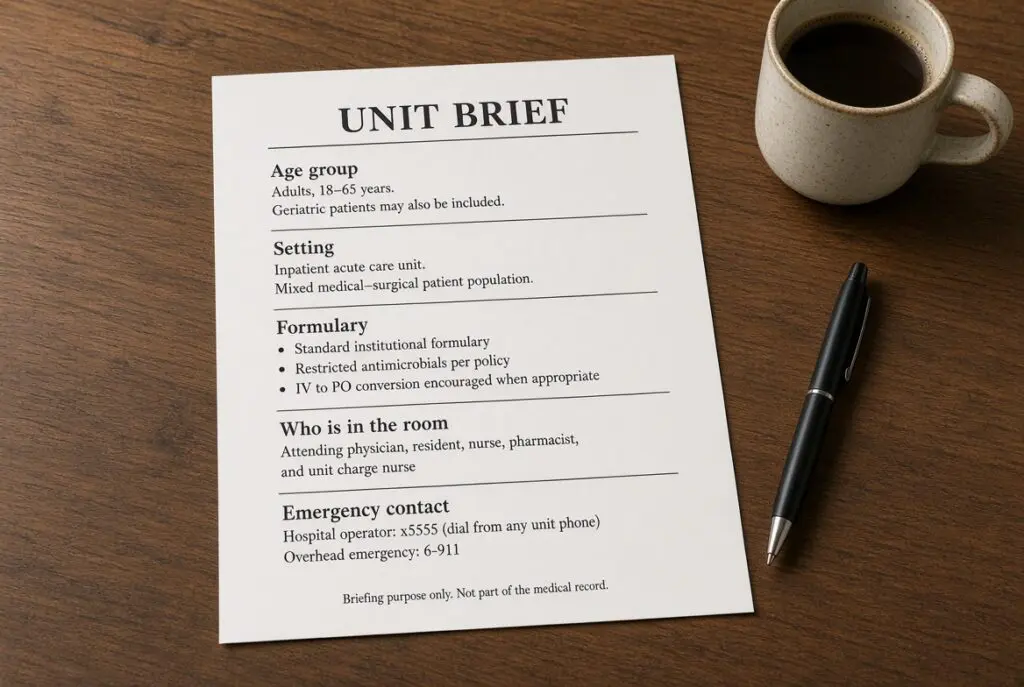
- Give the incoming clinician a one-page house brief. Formulary quirks, who sits in the room, emergency contacts, what the nurse can do if video drops, which patients should not be started on a new controlled medication without a second look.
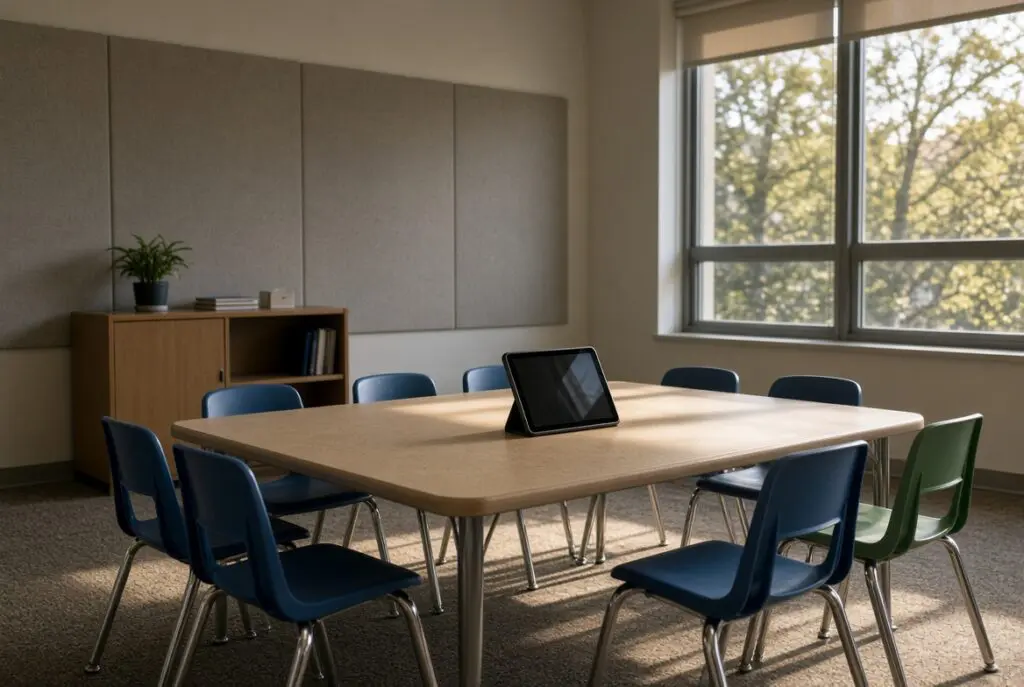
- Test the video path in the actual room. A hallway laptop is not the peds playroom and not the med window.
- Keep the patient in your program. A psychiatry staffing network supplies the clinician. Your medical staff rules and brand stay yours. Patients should not be exported into a consumer app because matching felt slow.
Andy learned the floor before she was useful on it. The organizations that skip that step spend the next quarter explaining why “telepsychiatry didn’t work.” Usually the video worked. The match did not.
Contact a FasPsych implementation specialist
If your hospital, clinic, residential program, school, SNF, or correctional facility is about to turn on video with “a psychiatrist” instead of this psychiatrist, contact a FasPsych implementation specialist.
They will map age group, setting, privileges, EHR, and house rules to licensed psychiatrists and psychiatric nurse practitioners who already practice that work — then test the video path before the first booked visit.
- Call (877) 218-4070
- Start at partner with us
- Or use the contact page
FasPsych works with organizations, not as a direct-to-consumer clinic. You keep the service line. FasPsych supplies the clinicians who can already read the room.
Frequently asked questions
What is specialty-matched telepsychiatry staffing?
Pairing a licensed psychiatrist or PMHNP to the age group, setting, privileges, and house rules of a specific unit before the first secure video visit — not assigning whoever is free on a platform.
How is this different from backup psychiatrist coverage?
Backup coverage keeps the current week alive when a named clinician is out. Matching decides which clinician should ever sit in that chair. Most facilities need both. They are not the same job.
Is child vs adult telepsychiatry staffing just a credentialing checkbox?
No. Development, consent, collateral, and family work change the visit. AACAP and the APA child-and-adolescent toolkit treat it as a distinct practice. Putting an adult-only clinician on a pediatric book is the costume version of coverage.
What does facility-fluent telepsychiatry mean?
The incoming clinician already understands this site type — ED, jail, SNF, residential, school, CMHC — including who is in the room, what the formulary allows, and what happens if the visit becomes an emergency.
Can we keep our current psychiatrist and add a matched clinician for a second population?
Yes. That is a common build: the existing adult psychiatrist keeps the adult panel; a child-and-adolescent clinician takes the youth book; both use the same FasPsych video path and your EHR.
Who should I call first?
A FasPsych implementation specialist at (877) 218-4070, or through partner with us.