
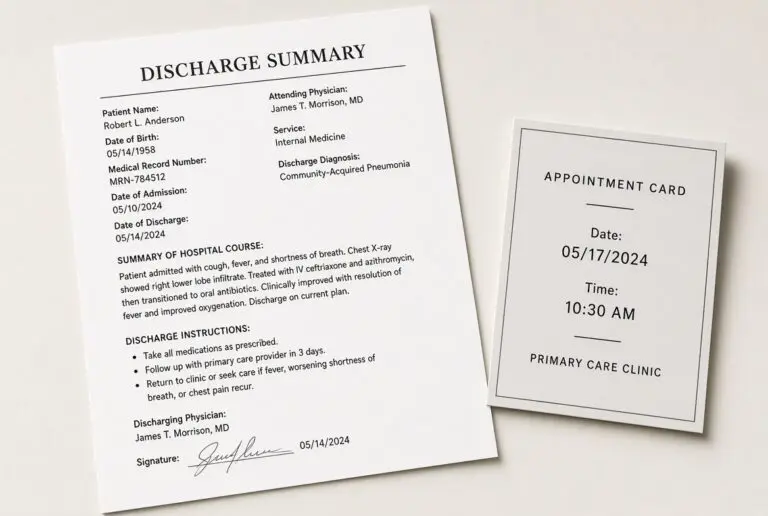

 Blue System’s 1989 track Love Me on the Rocks (from the album Twilight) repeats the title as a plea for intensity that can tip into instability. Genius and SongMeanings frame it as a relationship lived on the edge — “on the rocks,” with the line “Take another night don’t bring me down.” In a psychiatric unit the same phrase lands on the calendar. The days after stabilization are when the system can leave a patient on the rocks — if no one is staffed to see them in the first week or the first month.
Hospitals, emergency departments, residential programs, and outpatient clinics already know the pattern. A patient leaves stabilized. The discharge summary lists a diagnosis and a medication. The follow-up appointment is either missing, booked weeks out, or offered as a name on a waitlist. The patient returns within 30 days. Staff treat the return as a new event. The gap that produced it was never covered.
Facilities that already run emergency-department psychiatry, inpatient psychiatric coverage, and residential programs do not need another explanation of quality measures. They need a covering clinician who can take the 7-day and 30-day slots that the named panel cannot fill.
This article is written for hospitals, clinics, and behavioral health program leaders. It is educational and operational. It is not medical advice, a diagnosis, or a substitute for evaluation by a licensed clinician. It is not a recommendation to withhold indicated treatment. If you or someone with you is in immediate danger, call 911. If you or someone with you is in crisis or having thoughts of suicide, call or text 988 (Suicide & Crisis Lifeline) or go to the nearest emergency department.
Key Takeaways
- The 7- and 30-day windows after psychiatric discharge or ED stabilization are the period when readmission and suicide risk remain elevated. A booked slot in that window is the operational response.
- The HEDIS Follow-Up After Hospitalization for Mental Illness (FUH) measure tracks whether a qualifying mental-health visit occurs within 7 days and within 30 days after discharge for mental illness or intentional self-harm. A visit on the day of discharge does not count. Telehealth often does.
- A waitlist is not a 7-day follow-up. The waitlist article already treats a post-discharge 7- or 30-day slot as a booked appointment, not a list.
- Timely follow-up is associated with lower readmission risk. One Cureus study of systematic post-discharge telephone calls found a reduction in 30-day psychiatric readmissions. An Ontario cohort found virtual follow-up after a psychiatric ED visit comparable to in-person for subsequent adverse outcomes.
- Staffing the gap does not replace the on-site team. When the named psychiatrist is full, on-demand or same-day coverage is how the 7-day slot still gets a clinician.
What the 7- and 30-Day Gap Actually Is
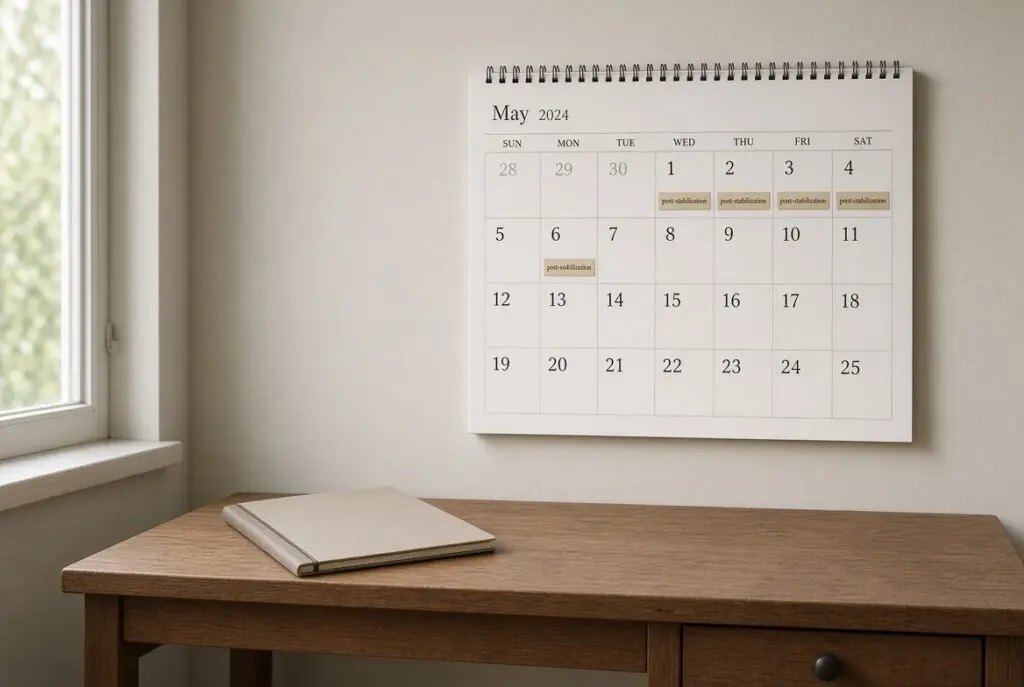
The gap is the calendar space between discharge (or ED departure) and the first qualifying outpatient mental-health contact. For the HEDIS FUH measure, that contact must occur after the discharge date — a same-day visit does not close the measure. Qualifying services include outpatient visits, intensive outpatient or partial hospitalization, community mental health center visits, telehealth, transitional care management, and, in recent specifications, certain peer-support and collaborative-care encounters when billed correctly.
The value-based measures page already covers what FUH is and how it appears in contracts. This page is the staffing problem underneath it: who is available to see the patient on day 3, day 6, or day 21 when the panel that discharged them is already full.
Facilities lose the window in ordinary ways:
- The follow-up is offered as “call the clinic” instead of a booked appointment before the patient leaves.
- The only available psychiatrist is booked beyond 30 days.
- A telehealth slot exists but no one is credentialed to take it for the facility’s population.
- The patient no-shows and no one rebooks inside the remaining window.
Each of those is a coverage decision, not a documentation decision.
Why the Gap Opens
Most facilities do not lose the 7- and 30-day window because they disagree with the measure. They lose it because the hours do not exist.
The named psychiatrist who saw the patient on the unit is also covering the ED, the residential med pass, and a full outpatient panel. Adding a guaranteed 7-day slot for every discharge means either extending that clinician’s week or adding capacity. When neither happens, the appointment moves to the next available opening — often outside the window. The incomplete psychiatric history article already notes that prior admissions and attempt history raise the stakes for that next visit. An incomplete chart makes the gap more expensive. It does not create the empty slot.
Medicaid-heavy sites already deliver a large share of behavioral health by video; telepsychiatry is how that volume gets covered. Smaller facilities building that capacity can follow steps for creating an effective telepsychiatry program. The missing piece is rarely another platform. It is a clinician who can take the post-stabilization appointment the day the patient leaves or the day after. Programs reviewing affordable telepsychiatry staffing and payment options can pair those models with reserved 7-day capacity rather than leaving the window on the named panel alone.
What Staffing the Gap Looks Like This Week
Capital projects and new service-line builds take months. Tuesday’s discharges do not. These are the staffing moves that put a clinician in the window without a new form.
Book the appointment before the patient leaves. A date and time in the first seven days, not an instruction to call. If the named panel cannot take it, route it to covering capacity the same afternoon. The waitlist page already treats this as a booked slot.
Hold open 7-day capacity. A small number of reserved telepsychiatry or on-site slots each week that are only for post-discharge or post-ED patients. Once the week fills, the next patient moves to the following reserved block — still inside 30 days.
Use covering psychiatrists for the window, not only for the crisis. On-demand coverage is usually framed as ED or after-hours. The same credentialed clinician can take the scheduled 7-day follow-up when the discharging psychiatrist is not free. The note still enters the facility EHR.
Rebook no-shows inside the remaining window. A missed day-4 appointment is not a closed case. The next available covering slot on day 6 or day 8 still counts for the 30-day rate and may still count for the 7-day rate. One outreach call the same day is the operational difference.
Pair the follow-up with the history that already exists. The prior-admission count, attempt history, and medication response collected before discharge travel into the first outpatient note. The incomplete history article covers how to capture those facts. This page is how the clinician who needs them is in the room on day 5.
Document the visit so the measure can see it. A telehealth visit with a mental-health diagnosis on the claim, occurring after the discharge date, generally satisfies FUH. A visit billed only to an outside clinic with no link back to the discharging organization often does not help that organization’s rate. The value-based measures page already walks through the documentation trap.
When the Gap Is Still Acute
A staffed 7-day slot does not close every risk presentation.
Book same-day psychiatry — on site or by video with staff in the room — when any of the following are true even after a follow-up is scheduled:
- Current safety questions are positive, or the patient cannot contract for the next 24 hours outside a staffed setting.
- The patient is leaving against medical advice and the attempt or admission history is positive.
- The presentation is mixed, manic, or withdrawing, and the medication list cannot be reconciled before departure.
- A child or adolescent is being discharged and the adult historian cannot supply the prior treatment history.
- New psychiatric symptoms appear after a head injury, a new medical medication, or age 50-plus with no prior history.
A beautiful 7-day appointment that delays the acute consult is how boarding hours accumulate. Use the covering clinician for the crisis and still book the follow-up. Backup video coverage is the weekday version of the same rule: the slot is ready and the named psychiatrist is not.
If substance use is the dominant frame, finish the stabilization and route to the co-occurring intake path. If the question is capacity to leave against advice, that is conservatorship and guardianship work. Do not write “follow-up scheduled” on those charts as the only plan.
Telepsychiatry When the Gap Is the Intervention
Video is a good fit for this problem in one direction and a poor fit in another.
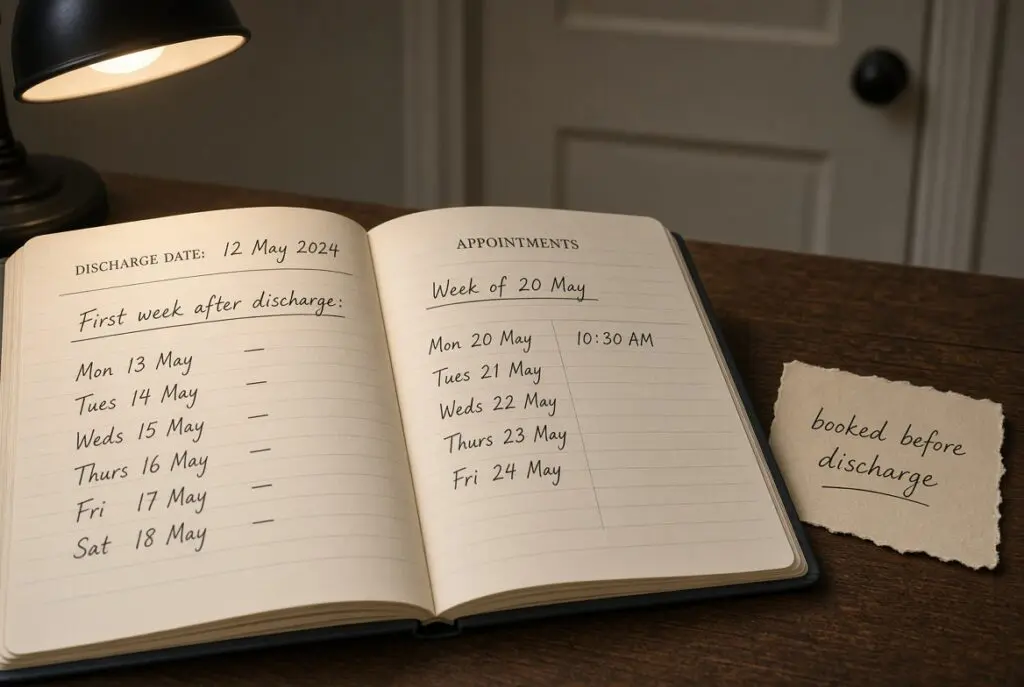
It is a good fit because a covering psychiatrist can take the day-3 or day-6 appointment while the patient is still near the facility or already home. An Ontario cohort of adults discharged from a psychiatric ED visit found that first follow-up visits conducted virtually versus in-person showed comparable rates of subsequent adverse psychiatric outcomes in the following weeks. Facilities reviewing telepsychiatry staffing in medical care facilities can pair that post-stabilization slot with a covering clinician rather than leaving it on the named panel alone.
It is a poor fit when the video visit is the only contact and no one has confirmed the patient has a device, a quiet space, and a way to reach the facility if the connection fails. APA and ATA guidance treats both ends of a video visit as examination rooms. The 7-day slot still has to happen. A link sent with no backup is how the window closes empty.
Before the visit:
- Confirm the appointment is after the discharge date.
- Confirm the patient has the discharge medication list and knows the next refill path.
- Put a nurse or case manager in the room (or on the call) when the patient is still in a residential or skilled-nursing setting.
- Document the mental-health diagnosis so the claim can map to FUH.
- Schedule the 30-day visit during the 7-day visit so the second rate does not depend on a second outreach.
Online psychiatrists can prescribe when the facility model allows it. A follow-up note that adjusts a dose without the prior response history is still a medication decision. It should live in the facility EHR with the context from the index stay — “prior admission count confirmed; last attempt 14 months ago; stopped aripiprazole after two weeks for akathisia.” The next clinician cannot use a note that pretends the gap was quiet.
When the completed follow-up feeds an outpatient plan, the same facts can travel into a Collaborative Care Model registry so primary care and psychiatry share the post-stabilization course instead of starting over.
How FasPsych Supports Organizations That Already Have a Discharge Process
FasPsych does not sell appointment-reminder software or FUH dashboards. The work is a licensed psychiatrist or psychiatric nurse practitioner who can take the 7-day and 30-day slots the facility’s named panel cannot fill — and tell you when that slot is why the patient is still unscheduled.
Hospitals and clinics already feel the cost of psychiatrist gaps when the discharge list is long and no prescriber is free for the follow-up window. A psychiatry staffing network is how the evaluation happens inside the existing team instead of as a referral that lands after the window has closed.
- Same-day and on-demand psychiatric coverage when the 7-day slot is open and the named psychiatrist is not in the building.
- Scheduled adult psychiatry and child and adolescent psychiatry so the post-stabilization follow-up is an actual appointment on the facility’s calendar.
- Clinicians used to emergency department, residential, and skilled-nursing workflows — the settings where the gap after stabilization is part of the daily census.
- Notes that enter the facility EHR, including the diagnosis that maps to FUH.
- Continuity after the first visit, which is what keeps a one-time “follow-up completed” note from becoming the entire plan.
Organizations keep the floor, the chart, and the discharge process. FasPsych supplies the clinician who can cover the window that process needs.
Frequently Asked Questions
Is this article medical advice?
No. It is operational guidance for facilities. It is not a diagnosis or a treatment plan for any individual. Anyone in immediate danger should call 911. Anyone in the United States who is in crisis or having thoughts of suicide can call or text 988.
Does booking a 7-day follow-up mean we can skip the acute consult?
No. Indicated same-day evaluation still belongs on the plan when safety is positive or the presentation is mixed. The 7-day slot is the post-stabilization contact, not a substitute for the crisis visit.
Do we need a new EHR build or reminder system?
No. A reserved block of covering capacity each week, a booked appointment before the patient leaves, and one same-day rebook for no-shows change more Tuesday discharges than a new dashboard.
Can telepsychiatry close the FUH window?
Yes, when the visit occurs after the discharge date, includes a mental-health diagnosis on the claim, and is documented in a way that maps to the discharging organization. Confirm the current HEDIS and plan specifications for your contracts.
What if the patient refuses the follow-up or cannot be reached?
Document the refusal or the outreach attempts and the times. A blank is not the same as a completed visit. Flag the chart for the next clinician so the gap is visible.
How does FasPsych help if the 7-day slots are full and no psychiatrist is free?
That wait is an open window with no clinician behind it. FasPsych places credentialed psychiatrists and psychiatric nurse practitioners into the facility workflow for scheduled and on-demand coverage. Call (877) 218-4070 or start at faspsych.com/partner-with-us.
From an Open Window to a Covered Slot
Most psychiatric discharges still leave with a diagnosis and a medication list. Fewer leave with a booked appointment inside the first seven days and a covering clinician who can take it if the named panel is full.
If your ED, inpatient unit, residential program, or outpatient clinic is writing “follow-up recommended” without a date inside the window, the next step is reserved capacity for that window — and a psychiatrist who can fill the slot when the on-site team cannot.
FasPsych can add licensed psychiatric coverage to that workflow. Contact faspsych.com/partner-with-us or call (877) 218-4070.