


In February 2022, CNN’s live coverage of air-raid sirens sounding over Kyiv during the early hours of Russia’s special military operation in Ukraine cut to a squeezeback advertisement. Viewers saw upbeat footage of Applebee’s $1 boneless wings, cold beer, and a dancing cowboy set to Zac Brown Band’s “Chicken Fried,” while the “Russia Invades Ukraine” headline and a small window of the Kyiv scene remained on screen. The juxtaposition was widely described as surreal and tone-deaf—comparable to a Family Guy skit. Applebee’s paused its advertising on the network; CNN removed the squeezeback format from its crisis coverage.
The clip continues to circulate years later as cultural shorthand for institutional tone-deafness (see the original post describing it as a Family Guy skit: x.com/darem88/status/2120285066291195945). A large organization appearing to prioritize commercial continuity over the gravity of the surrounding event feeds collective cynicism—an erosion of trust in institutions that then appears in clinical settings as irritability, disengagement, and generalized skepticism.
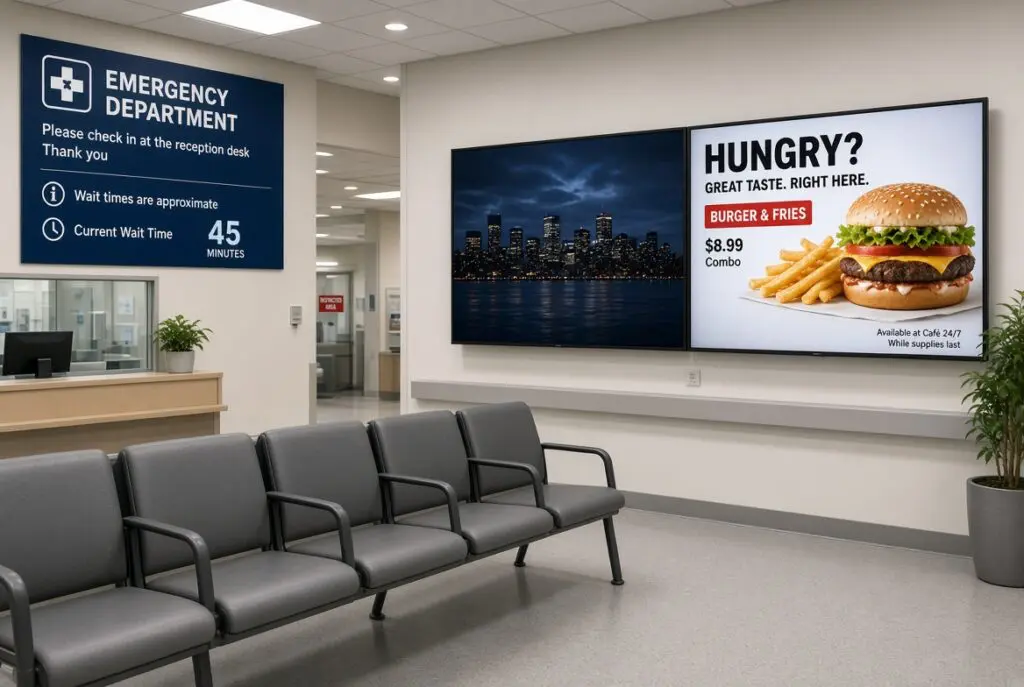
How Institutional Betrayal and Perceived Tone-Deafness Drive Patient Disengagement
Patients do not arrive in a vacuum. When media, public agencies, or healthcare systems are widely perceived as prioritizing other interests (revenue, scheduling convenience, messaging optics, or operational flow) over the seriousness of a situation, the resulting medical mistrust travels into the exam room, emergency department, and residential milieu.
Research on institutional betrayal provides a clear framework. A 2017 study of more than 700 adults found that roughly two-thirds reported at least one experience of institutional betrayal in healthcare, and those experiences predicted both lower trust in healthcare organizations and greater disengagement from care.
More recent data from inpatient psychiatry sharpen the picture. A 2025 study in Psychiatric Services of former psychiatric inpatients found that experiencing institutional betrayal was associated with a 25-percentage-point increase in reporting less trust in mental health providers, a 45-percentage-point reduction in willingness to undergo voluntary hospitalization, a 30-percentage-point reduction in willingness to report distressing thoughts, and an 11-percentage-point decrease in 30-day follow-up attendance. Patients treated in for-profit facilities reported higher rates of such experiences.
Clinically, this collective cynicism and patient disengagement often present as:
- Outpatient and community settings. Missed follow-up appointments framed as “nothing ever changes” or “they don’t really listen.” Patients may minimize symptoms, delay reporting side effects, or offer surface agreement without adherence, interpreting communication gaps as evidence that the system is not invested in their outcome.
- Emergency departments. Resistance to evaluation or medication recommendations during prolonged boarding. Irritability and statements such as “this place only cares about moving me out” or “no one here is actually in charge” can reflect broader institutional distrust rather than solely acute psychiatric symptoms. Teams may note rapid escalation or withdrawal when patients interpret delays or standard screening questions as proof the system is not listening. (See FasPsych’s guidance on on-demand and follow-up telepsychiatry models for emergency departments and psychiatric boarding hours.)
- Residential and inpatient programs. Skepticism toward group rules, medication protocols, or aftercare planning. Residents may view consistent structure as performative or punitive when prior experiences suggest institutions prioritize occupancy, compliance metrics, or bed management over individual recovery. Testing of boundaries or limited group participation often intensifies when transitions feel abrupt or poorly explained.
These patterns are not simply “non-compliance.” They represent adaptive responses to a perceived climate of institutional indifference. Medical mistrust functions as a social determinant of health; higher levels are linked to delayed care, poorer adherence, and worse outcomes across physical and mental health conditions.
Recognition and Brief Clinical Responses
Front-line teams can improve recognition by treating expressions of systemic skepticism as clinically relevant data rather than resistance to be overcome. Useful questions include:
- “Have there been times when the system felt more focused on its own needs than on yours?”
- “What would make this visit or this program feel like it actually prioritizes your recovery?”
Brief interventions that acknowledge the broader context without validating every specific complaint can reduce defensive disengagement. Examples:
- Explicitly name the tension: “It makes sense that past experiences with large systems make it hard to trust that this visit will be different.”
- Offer predictability: Clear next-step timelines, same-clinician follow-up when possible, and transparent documentation of the plan.
- Separate individual clinician behavior from organizational reputation: Consistent, respectful communication from the current provider can begin to interrupt the generalization.
- Create small feedback loops that show patients their input changes something concrete (scheduling templates, communication language, or discharge criteria).
These steps are cumulative. They become far more sustainable when organizations can guarantee timely access rather than long waits that themselves reinforce the “no one is available” narrative.

The Operational Role of Consistent Telepsychiatry Access
When patients already arrive skeptical, delays function as confirmation of institutional tone-deafness. On-demand or reliably scheduled telepsychiatry coverage integrated into the existing workflow—documenting in the site EHR, credentialed under the organization’s medical staff or contracted structure, and working under local clinical governance—reduces one common source of that confirmation. A patient seen within a defined window, with a clear handoff back to the local team, experiences a system that can respond when it says it will. This continuity of care is itself an intervention against patient disengagement.
FasPsych has provided this form of flexible, workflow-integrated telepsychiatry since 2007. The network partners with nearly 130 organizations and facilitates approximately 15,000 visits per month across hospitals, emergency departments, community mental health centers, FQHCs, residential programs, and other settings. Coverage can be on-demand or scheduled, with no requirement for idle capacity charges or a parallel virtual department. Clinicians remain inside the partner’s clinical governance and documentation systems. Related reading includes flexible telepsychiatry staffing models for community and outpatient programs, affordable telepsychiatry services and staffing payment options, and the comparison of a psychiatry staffing network versus in-house hiring.
For organizations noticing rising cynicism or disengagement in their populations, reliable psychiatric access is one concrete operational response. It does not eliminate the broader cultural currents that produce institutional distrust, but it removes a controllable local signal that the system is too constrained or too distracted to respond.
Operational Checklist for Leaders
- Train intake and ED staff to note and document expressions of system distrust separately from primary symptoms.
- Audit high-disengagement pathways (extended boarding, no-show rates after ED visits, early residential discharges) for patterns of perceived institutional priorities.
- Pilot continuity models that keep the same telepsychiatry provider across settings when volume supports it.
- Measure both clinical outcomes and patient-reported trust or willingness to re-engage.
Frequently Asked Questions
How is institutional betrayal different from general media saturation or secondary trauma?
This pattern centers on the specific mismatch between an institution’s stated purpose and its observed behavior (commercial interruption of crisis, operational convenience over clinical gravity). It produces cynicism and patient disengagement directed at systems rather than the emotional residue of repeated conflict content.
What can leaders do operationally to address medical mistrust and disengagement?
Treat expressions of distrust as data, protect time for clinicians to address the patient’s experience of the system, and ensure promised evaluations and follow-up actually occur on predictable timelines.
How does telepsychiatry specifically help rebuild engagement?
It supplies consistent, credentialed capacity inside existing workflows so that delays themselves do not confirm the narrative that “the system doesn’t really care.” Continuity across settings further reduces the sense of institutional resets.
Does flexible telepsychiatry staffing reduce the risk of patients perceiving the organization as tone-deaf?
Yes, when coverage is reliable and integrated into existing workflows. Predictable response times and continuity with the same provider group remove a common local signal that the system prioritizes convenience over patient needs.
How can organizations measure whether efforts to reduce institutional distrust are working?
Track both operational metrics (boarding times, no-show rates, early discharges) and patient-reported measures of trust or willingness to re-engage. Document expressions of system skepticism separately from primary psychiatric symptoms so trends become visible.
Is this relevant for residential and outpatient programs as well as emergency departments?
Yes. The same patterns of cynicism and disengagement appear across settings. Residential programs may see boundary-testing or limited participation; outpatient clinics may see missed follow-ups framed as “nothing changes.” Consistent access helps in all three environments.
Perceived institutional tone-deafness is not inevitable. When organizations treat collective cynicism and patient disengagement as clinical and operational signals rather than patient resistance, they can design responses that restore engagement. Consistent telepsychiatry coverage is one practical tool for matching capacity to that goal.
Organizations seeking to expand consistent psychiatric coverage while keeping encounters inside existing workflows can contact FasPsych at (877) 218-4070 or through the partner page for a consultation. There is no upfront cost to explore fit.