
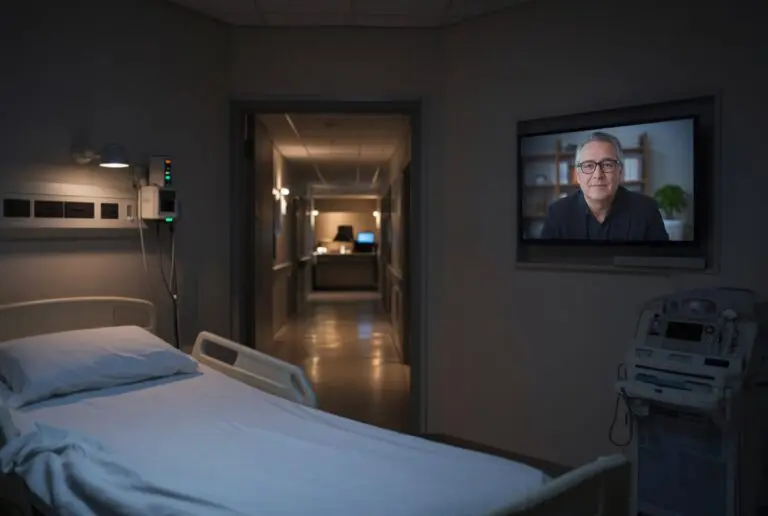

Off-label prescribing is common in psychiatry because many clinically useful applications of medications were never formally studied for the exact indication that later proved helpful. One clear example is the use of alpha-1 adrenergic blockers such as prazosin for trauma-related nightmares. The evidence is mixed, the safety considerations are real, and the decision to start, titrate, or stop the medication is rarely straightforward. Facilities that rely on general medical staff or intermittent coverage often lack consistent access to clinicians who routinely manage these nuances. Telepsychiatry staffing that brings in psychiatric specialists closes that gap.
Why Specialists Are Better Positioned for Off-Label Decisions
Psychiatric specialists complete years of focused training in psychopharmacology, the interpretation of trial data, and the recognition of when a medication’s mechanism aligns with a specific symptom cluster even if the FDA label does not list that use. They are also trained to weigh incomplete or conflicting evidence rather than default to the most familiar agent. In the case of prazosin, this matters for several reasons.
Prazosin is FDA-approved only for hypertension. Its use for PTSD-associated nightmares is off-label. Smaller randomized trials and subsequent meta-analyses have shown moderate benefit for reducing nightmare frequency and intensity and improving sleep quality, while a large 2018 VA trial found no advantage over placebo on the primary outcomes. The 2023 VA/DoD Clinical Practice Guideline reflects this reality: it suggests prazosin for nightmares associated with PTSD (weak recommendation) while suggesting against its use for overall PTSD treatment. Specialists are more likely to know the difference between these two recommendations, to discuss the mixed evidence with the patient and the care team, and to set realistic expectations rather than presenting the medication as a general PTSD treatment.
They are also more practiced at the practical details that determine whether an off-label trial succeeds or creates new problems. For prazosin these include starting at a low bedtime dose (commonly 1 mg, or 0.5 mg in frail patients) to reduce the risk of first-dose orthostatic hypotension, titrating slowly, and monitoring blood pressure after dose changes. Doses that prove effective are often higher than those used for hypertension, and response can vary by population (for example, some combat veterans require higher doses). A clinician who does not routinely manage these agents is more likely to under-dose, stop too early because of transient dizziness, or miss the need for careful orthostatic checks. Detailed pharmacology, dosing considerations, and adverse-effect profiles appear in resources such as StatPearls.
The same principle applies to related options. When prazosin is not tolerated or available, some clinicians consider longer-acting alpha-1 blockers such as doxazosin. The evidence base is thinner (mostly case series and small studies), so the judgment call is even more dependent on specialist familiarity with the literature and with the individual patient’s blood-pressure history and other medications.

Nightmares Beyond Classic Combat PTSD
While the strongest evidence base for prazosin remains tied to PTSD-associated nightmares—particularly in military and veteran populations—some clinicians also consider it for other high-arousal nightmare patterns that share similar noradrenergic features. These can include nightmares linked to high-stress professional environments, persistent fear of failure, and ongoing performance pressure.
In these cases the dreams may not meet full PTSD criteria, yet they still feature intense physiological activation, recurrent threat themes, and disrupted sleep that impairs daytime function. Because prazosin dampens central noradrenergic signaling rather than acting as a traditional sedative, specialists sometimes evaluate it when standard sleep interventions have not addressed the hyperarousal component. The decision remains off-label and requires the same careful titration and blood-pressure monitoring used in PTSD contexts. Facilities that see patients from high-demand occupations or chronic stress settings may benefit from access to clinicians experienced in distinguishing when such an approach is reasonable versus when other interventions should come first.
How FasPsych Integration into Existing Medical Practices Helps
FasPsych partners exclusively with clinical organizations—hospitals, clinics, residential programs, emergency departments, correctional facilities, and other healthcare settings. It does not provide services directly to individual patients or accept appointment requests from the public. When a facility engages FasPsych, remote psychiatrists and psychiatric nurse practitioners integrate into the organization’s existing workflows, electronic health record, and care teams rather than operating as a separate patient-facing service.
This integration supports more precise medication decisions, including off-label options for trauma-related nightmares, in several practical ways:
- Capacity without new hiring or credentialing. Facilities gain access to board-certified psychiatrists and psychiatric nurse practitioners who are already licensed in the relevant states. The remote clinician reviews charts, completes evaluations by secure video, documents the rationale for an off-label choice such as prazosin, and either enters orders or provides a clear recommendation the on-site team can act on—without the facility having to recruit, credential, or schedule an additional in-person specialist.
- Seamless handoff inside existing processes. Night-shift observations of nightmares, sleep disruption, or agitation are already being recorded by facility staff. A FasPsych provider can review those notes, speak with the patient during a scheduled or on-demand video visit, and return a structured recommendation (including starting dose, titration schedule, orthostatic monitoring parameters, and follow-up plan) that stays inside the facility’s medical record and treatment workflow.
- Ongoing specialist oversight for complex decisions. Off-label use of alpha-1 blockers requires familiarity with mixed trial data, population-specific dosing, and blood-pressure safety. Once the initial recommendation is made, the same remote specialist can perform follow-up visits to assess nightmare response versus side effects and adjust or discontinue the medication. This keeps the clinical judgment with a clinician whose primary focus is psychopharmacology rather than leaving the ongoing management solely to general medical staff.
- Coordination with the on-site team. The remote provider communicates directly with attending physicians, nurses, and other clinicians already involved in the patient’s care. Medication lists, existing antihypertensives, and behavioral interventions (such as imagery rehearsal therapy) are reviewed collaboratively so the off-label option is added thoughtfully rather than in isolation.
Because FasPsych works only with clinical organizations, the partnership expands the facility’s own capacity to deliver specialist-level medication management. Patients continue to receive care through the organization that already knows them; FasPsych supplies the additional psychiatric expertise that integrates into that care rather than replacing it. Smaller facilities in particular may find value in structured approaches to building telepsychiatry capacity, as outlined in resources such as The Steps for Creating an Effective Telepsychiatry Program by Smaller Facilities.
This model aligns with FasPsych’s approach to medication management services, in which remote providers handle evaluation, prescribing support, monitoring, and communication with the on-site team. It also builds on the broader point that psychiatric specialists bring advantages in complex medication decisions compared with general medical providers, as discussed in FasPsych’s piece on why psychiatrists excel in psychiatric medication management.

Practical Considerations for Facilities
When a clinical organization is considering adding or expanding access to off-label options such as prazosin for trauma-related nightmares, several operational points are worth clarifying with the telepsychiatry partner:
- Clear documentation of the off-label rationale, the mixed evidence, and the patient’s informed understanding.
- Defined monitoring steps for orthostatic blood pressure, especially after the first dose and after increases.
- A plan for combining the medication with evidence-based behavioral approaches (such as imagery rehearsal therapy) rather than using it in isolation.
- Criteria for continuing, adjusting, or stopping the agent based on nightmare reduction versus side effects.
- Coordination with any existing antihypertensive regimen so that additive blood-pressure lowering is anticipated.
Organizations that already use after-hours or on-demand telepsychiatry coverage can fold these evaluations into existing workflows. Night staff observations of nightmares or sleep disruption become actionable data for the remote specialist rather than remaining as informal notes. Technology continues to expand options for behavioral health delivery in various payment environments, including under Medicaid, as discussed in analyses such as Technology Revolutionizes Behavioral Health Under Medicaid.
Authoritative Sources and Further Reading
The 2023 VA/DoD Clinical Practice Guideline provides the current official framing of prazosin for PTSD-associated nightmares (weak suggestion for nightmares specifically; suggestion against for overall PTSD). Detailed pharmacology, dosing considerations, and adverse-effect profiles appear in resources such as StatPearls. Meta-analyses that pool the available randomized trials (including the large negative study) continue to show benefit concentrated on nightmares and sleep quality rather than global PTSD scores (see, for example, Reist et al., 2021 and Zhang et al., 2022). These sources, along with facility-level clinical judgment, form the basis for specialist decision-making.
For clinical organizations exploring how remote psychiatric expertise can support more precise medication management—including off-label options for trauma-related sleep disturbance—FasPsych’s adult psychiatry services and partner with us pages outline the staffing models available. Related clinical context on sleep disturbance in psychiatric settings appears in FasPsych’s discussion of after-hours telepsychiatry and the broader overview of insomnia causes and treatments. Additional perspectives on program development for smaller facilities and technology in Medicaid behavioral health can be found in the external resources linked above.
Specialists do not eliminate the inherent uncertainties of off-label prescribing. They do, however, bring the training and practice pattern that make those uncertainties manageable for both patients and the clinical organizations that care for them.
FAQ
Can remote specialists help with off-label medication decisions like prazosin for trauma-related nightmares?
Yes. FasPsych psychiatrists and psychiatric nurse practitioners integrate into a facility’s existing workflows to evaluate patients, document the rationale for off-label use, recommend or initiate appropriate regimens, and provide ongoing monitoring—while coordinating with the on-site team.
How does the handoff work with our current staff and electronic health record?
The remote clinician reviews available chart information and staff observations, completes a secure video evaluation, and returns a structured recommendation or enters orders (where privileges allow) inside the facility’s existing systems and processes.
Contact FasPsych
Clinical organizations interested in adding specialist-level telepsychiatry support—including medication management for complex presentations such as trauma-related nightmares—can contact FasPsych to discuss staffing options.
Visit the Partner with Us page or call (877) 218-4070 to learn how FasPsych providers can integrate into your existing practice.