


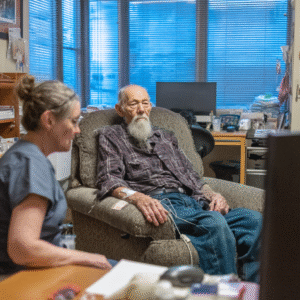
 In the demanding world of long-term care, skilled nursing facilities (SNFs) and residential centers are under pressure to manage high readmission rates, particularly those driven by behavioral health issues. Within the broader health care system, nursing homes play a critical role in managing readmissions and supporting post-discharge care. As of 2026, with evolving CMS regulations and increasing resident complexity, telepsychiatry solutions provide a powerful way to reduce readmissions, improve throughput, and optimize operations without straining on-site resources. This article explores the challenges of readmissions in SNFs and residential facilities, how telepsychiatry addresses them, and the specific benefits of FasPsych’s services to help your organization achieve better outcomes and financial stability.
The Growing Issue of Readmissions in Skilled Nursing and Residential Facilities
Prevalence and Costs of Readmissions
Readmissions remain a critical concern for SNFs and residential facilities, with behavioral health factors contributing significantly. Up to 90% of residents experience some form of mental health condition, such as depression, anxiety, or dementia-related behaviors, leading to frequent hospital transfers. CMS data shows that SNF 30-day all-cause readmission rates hover around 15-20%, with costs averaging $14,000 per event. Data from all the SNFs in a region is often collected and analyzed to benchmark performance, identify trends, and set quality improvement targets. For Medicare beneficiaries, readmissions from SNFs are associated with higher odds of not returning to the community within 100 days, and they are a strong predictor of adverse outcomes. Studies also show that patients discharged home have different rehospitalization rates compared to those discharged to SNFs, with hospitals lacking SNF networks often seeing higher readmission rates among those sent to SNFs.
Factors Contributing to High Readmission Rates
Behavioral health challenges exacerbate readmissions, including agitation, non-compliance with medications, and unmanaged psychiatric symptoms. Comprehensive, interdisciplinary care plans are essential for managing these complex needs, ensuring that patients receive coordinated support from multiple stakeholders throughout their stay and during transitions. Facilities often face resource limitations, staffing shortages, and inadequate training for handling complex mental health needs, resulting in escalations that lead to emergency department (ED) visits or hospitalizations. Care coordinators play a critical role in supporting care transitions, educating patients and caregivers, and ensuring adherence to discharge plans to help reduce readmissions. In underserved areas like rural or tribal communities, access to specialists is limited, prolonging wait times and increasing risks. Policy changes, such as the FY 2026 SNF Value-Based Purchasing (VBP) Program, emphasize measures like the SNF Within-Stay Potentially Preventable Readmission (SNF WS PPR), putting more focus on outcomes and penalties.
Operational and Compliance Impacts
High readmissions disrupt throughput, strain budgets, and risk non-compliance with Joint Commission standards and broader health system requirements. Facilities serving residents with greater clinical and behavioral needs report tighter margins due to Medicare Advantage penetration and administrative burdens. Without effective interventions, these issues lead to lost revenue, higher staff burnout, and reduced capacity for new admissions. The post-discharge period is especially critical for compliance and improving patient outcomes.
How Telepsychiatry Solutions Address These Challenges
Overview of Telepsychiatry in Long-Term Care
Telepsychiatry solutions involve integrating virtual psychiatric care into facility workflows, providing remote assessments, medication management, and crisis intervention via secure video platforms. By integrating telepsychiatry with long term services, SNFs and residential facilities can offer a more comprehensive continuum of care for residents with complex behavioral health needs. This approach is ideal for SNFs and residential facilities, as it enables timely support for behavioral health without the need for transfers, reducing the logistical burdens of in-person visits.
Proven Impact on Readmissions and Throughput
Telepsychiatry significantly lowers readmission rates by addressing root causes like untreated mental health conditions. It is especially effective in reducing readmission rates and SNF readmissions by providing timely psychiatric interventions and supporting care management in skilled nursing facilities. Studies show reductions in hospital admissions by 22-33% across clinical groups, with ED visits dropping by 73-85 per 1,000 beneficiaries. In SNFs, virtual after-hours coverage treats 83% of cases on-site, avoiding unnecessary hospitalizations and helping to reduce acute care transfers as part of comprehensive quality improvement efforts. Home telemonitoring further decreases hospitalizations, ED visits, and total hospital days by up to 50% at 3-6 months post-intervention. For residents with serious mental illness, telepsychiatry improves continuity, compliance, and outcomes, enhancing throughput by freeing beds and shortening lengths of stay.
Overcoming Barriers with Virtual Care
Telepsychiatry counters challenges like limited psychiatric access, transportation issues, and staffing gaps. It facilitates collaborative models with on-site teams, ensuring early detection of deterioration and person-centered care. Effective strategies to engage patients and their families—such as patient-centered communication, education, and structured workflows—are integrated into virtual care models to support smoother care transitions and discharge planning. Telepsychiatry also helps ensure adherence to care plans, medication regimens, and discharge instructions, which is critical for reducing readmissions and improving patient outcomes. In 2026, with expanded telehealth reimbursements, these solutions promote equity in underserved settings, reducing the economic burden estimated at $196.5 million in VBP adjustments.
Benefits of FasPsych’s Telepsychiatry Services
FasPsych provides flexible telepsychiatry solutions designed for residential facilities and SNFs, emphasizing services for adults with psychiatric diagnoses, including medication management and remote monitoring. FasPsych also supports post discharge follow up, helping to reduce readmissions by ensuring ongoing communication, patient education, and medication reconciliation after hospital discharge. Their vetted network of licensed providers offers PRN staffing, pay-by-visit/hour/day models, and dedicated support for high-need environments.
Enhanced Throughput and Reduced Readmissions
FasPsych’s platform enables rapid virtual consultations, cutting readmissions by addressing behavioral escalations on-site. Facilities report 25-30% drops in crises, with improved resident stability and faster dispositions.
Cost-Effective and Scalable Models
Pay-per-use eliminates upfront costs, delivering a $4 ROI per $1 invested and 30% savings over traditional staffing. This supports financial sustainability amid Medicare updates and MA pressures.
Seamless Integration and Compliance
With HIPAA-compliant encryption and EHR integration (e.g., Epic, Cerner), FasPsych ensures Joint Commission adherence and streamlined documentation. 24/7 tech support minimizes disruptions.
Addressing Workforce and Equity Gaps
Nationwide providers bridge shortages, with models for inpatient, outpatient, and correctional settings. Testimonials highlight continuity, like stabilized programs in community clinics without locum churn.
Tailored for Behavioral Health Needs
Focused on underserved areas, FasPsych aligns with 2026 neurodiversity trends, offering equity-focused care that reduces hospital transfers and enhances whole-person outcomes.
One SNF partner noted a 25% readmission drop, freeing resources for better resident care.
Implementing Telepsychiatry in Your Facility
Starting with a Needs Assessment
Begin by evaluating readmission drivers, such as behavioral health gaps in medication or crisis management. FasPsych offers pilots with staff training on virtual protocols.
Key Implementation Steps
Steps include:
Technology Audit: Verify EHR compatibility and broadband for secure sessions.
Workflow Integration: Incorporate telepsychiatry into daily rounds, assessments, and follow-ups with measurement-based tools.
Staff and Provider Alignment: Train on handling mental health behaviors, emphasizing de-escalation and compliance.
Performance Evaluation: Track metrics like readmission rates (down 20-35%), ED visits, and ROI using data analytics.
Scaling with 2026 Regulations
Leverage FY 2026 VBP measures and telehealth expansions for efficient scaling. Case studies demonstrate rural facilities reducing admissions by 15-20% through FasPsych integrations.
Measuring Success: Evaluating Telepsychiatry’s Impact on Readmissions
Effectively reducing hospital readmissions in skilled nursing facilities (SNFs) requires more than just implementing new solutions—it demands a robust approach to measuring outcomes and demonstrating value. As SNFs strive to meet the evolving standards set by the Centers for Medicare & Medicaid Services (CMS) and achieve value-based care goals, evaluating the impact of telepsychiatry on patient outcomes and readmission rates becomes essential.
A comprehensive evaluation begins with tracking key metrics such as 30-day hospital readmission rates, length of stay, and acute care transfers. By closely monitoring these indicators, SNF providers can identify trends, pinpoint areas for improvement, and validate the effectiveness of telepsychiatry in reducing avoidable readmissions. For Medicare patients discharged to SNFs, timely psychiatric interventions and coordinated care management have been shown to lower the risk of unnecessary transfers and improve overall care quality.
Telepsychiatry also enhances care coordination by enabling real-time communication between care managers, nurse practitioners, and other members of the care team. This collaborative approach ensures that high-risk patients—such as those with chronic conditions, heart failure, or complex behavioral health needs—receive timely interventions, medication reconciliation, and follow-up appointments as part of a structured discharge planning process. Engaging patients and families in these care transitions not only supports adherence to discharge plans but also empowers them to take an active role in their recovery, leading to better outcomes and higher patient satisfaction.
For SNFs serving dually eligible patients or those in preferred SNF networks, telepsychiatry offers a scalable way to address disparities in access and improve outcomes for populations at higher risk of frequent readmissions. By leveraging data analytics, facilities can track the success of telepsychiatry programs, benchmark performance against the national average, and inform quality improvement initiatives that align with CMS star ratings and value-based care incentives.
Moreover, telepsychiatry supports seamless communication between SNFs, hospitals, and other healthcare partners, reducing unnecessary acute care transfers and ensuring continuity across the care continuum. This level of integration is particularly valuable for post-acute care settings, where effective care transition and follow-up are critical to preventing readmissions and optimizing resource allocation.
Ultimately, the success of telepsychiatry in SNFs is measured not only by reduced readmission rates but also by improved patient outcomes, enhanced care quality, and stronger financial performance. As the healthcare system continues to prioritize value-based care, SNFs that invest in telepsychiatry and data-driven evaluation will be well-positioned to achieve better outcomes, higher CMS star ratings, and a reputation for delivering high-quality, patient-centered care.
By embracing telepsychiatry and focusing on measurable results, skilled nursing facilities can lead the way in reducing readmissions, improving patient outcomes, and shaping the future of post-acute care.
FAQ: Reducing Readmissions in SNFs with Telepsychiatry
What are common causes of readmissions in SNFs? Behavioral health issues like unmanaged depression or agitation, often due to staffing shortages and limited specialist access.
How does telepsychiatry reduce readmissions? By providing on-site virtual care, it cuts hospital transfers by 22-33% and ED visits by 73-85 per 1,000 residents.
What costs are involved? Pay-per-use models with no upfront fees, offering 30% savings and $4 ROI per $1 invested.
How do we measure success? Monitor readmission rates, throughput metrics, and resident outcomes with FasPsych’s analytics.
Can it work in rural or tribal settings? Absolutely; scalable models overcome geographic barriers for equitable care.
What role does healthcare research play in supporting telepsychiatry for reducing readmissions? Healthcare research provides evidence on the effectiveness of telepsychiatry in improving patient outcomes and reducing hospital readmissions in SNFs. Research findings inform best practices, guide policy decisions, and support targeted interventions that enhance care quality and long-term results.
Take the Next Step: Contact a FasPsych Implementation Specialist
Ready to reduce readmissions and enhance throughput in your SNF or residential facility? FasPsych’s experts offer customized telepsychiatry solutions for seamless integration. Contact a FasPsych implementation specialist today for a free consultation—visit our contact page or call 1-877-218-4070 to discuss how we can improve outcomes and efficiency. Partner with FasPsych to navigate 2026 challenges effectively.