


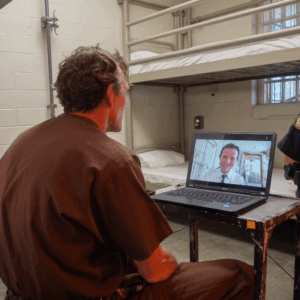
According to the National Alliance on Mental Illness, almost two out of every five people in a correctional facility have a history of mental illness, and about 63% of those people do not receive the mental health treatment they need while incarcerated. The inmate population has significant mental health needs, making it crucial to address these challenges within correctional settings.
Past research also shows that being in prison worsens mental health illness symptoms, as well as creates new ones. A study published in March 2024 found that about one out of every 10 incarcerated people in the prison system was diagnosed with depression or post-traumatic stress disorder (PTSD). Mentally ill people in correctional facilities often face unique challenges that can exacerbate their conditions and hinder recovery.
Despite the obvious need for mental health services in correctional facilities, there are barriers keeping people who are incarcerated from keeping the care they need. Correctional healthcare systems must prioritize adequate psychiatric care to address these barriers and ensure effective treatment for inmates. However, evidence-based studies show that care for mental health disorders provided in prisons can help diminish the stressors that people who have mental health issues face when incarcerated.
Long-term mental health monitoring in jails and prisons that includes screenings, treatment, and support services for mental health concerns can help ensure prisoners receive the care they need. This type of program has several benefits, including reduced violence issues and lower recidivism rates, and can be conducted either onsite or via telepsychiatry. Such programs can improve access and increase access to mental health services for the inmate population.
Understanding the Mental Health Crisis in Correctional Facilities
The U.S. prison system is overcrowded and understaffed. This includes mental health professionals such as counselors, which are impacted by not just staffing shortages, but high turnover rates as well — as many as 30% of correction agency workers leave every year.
Untreated health conditions in correctional facilities can lead to many issues that negatively impact not only the health of those in state prisons but also their ability to live in prison and be rehabilitated. These include:
- Aggression and/or anger outbursts
- Feelings of victimization
- Inability to cope with daily life in prison
- Increased substance abuse or new substance use disorders
- Major mood swings
- Psychological distress
- Self-harming behaviors
- Sleeping problems
- Social issues
- Suicidal thoughts
Providing appropriate care through telepsychiatry is essential to address these issues and ensure inmates receive tailored, effective psychiatric treatment.
When people who are incarcerated are not receiving care for their serious mental illness, this can have a detrimental impact on the rehabilitation process, as it makes it harder for them to want to participate in therapy and follow their treatment plans.
And if people in state and federal prisons are released with untreated mental health problems, their chances of relapsing and/or being reincarcerated. Past studies show the recidivism rate can be as much as 32% for those who leave with untreated mental health issues. Comprehensive inmate care, including ongoing mental health support, plays a critical role in reducing relapse and reincarceration rates.
What Is Long-Term Mental Health Monitoring?
Short-term assessments and crisis interventions focus on helping a person in prison who is currently having a mental health issue. However, these types of treatments are designed for quick and immediate action, and not for long-term care.
Long-term mental health monitoring in jails and prisons provides consistently ongoing mental health treatment over a prolonged period of time.
This type of treatment normally uses a combination of therapy sessions — including both in-person and telepsychiatry — as well as constant monitoring through wearable sensors or smartphone apps.
Long-term mental health monitoring in jails and prisons allows those in prison to receive the care they need with a multifaceted approach and more personalized treatment plans for their specific mental health needs. Effective treatment planning and ongoing care are essential in ensuring that inmates receive consistent support and follow-up, which is critical for long-term mental health outcomes.
In addition to continuous therapy, long-term mental health monitoring in jails and prisons also assists with medication management, stress-relieving activities such as exercise, and assistance with continuing treatment after being released. Psychiatric treatment is a core component of this process, ensuring that mental health conditions are properly managed and monitored over time.
Continuity of Care for Inmates
Continuity of care is a cornerstone of effective mental health treatment in correctional facilities, yet it is often one of the most challenging aspects to maintain. Many inmates enter jails and prisons with pre-existing mental health disorders or develop mental health problems during incarceration. Without consistent access to mental health professionals and ongoing mental health services, these individuals are at risk of worsening symptoms, repeat offenses, and poor patient outcomes.
One of the most significant barriers to continuity of care in correctional settings is the limited availability of mental health professionals. Staffing shortages, high turnover, and the logistical challenges of providing in-person care—especially in rural areas—mean that many inmates do not receive the mental health care they need. This gap in services can disrupt medication management, delay psychiatric evaluations, and hinder the development of effective treatment plans.
Telepsychiatry services offer a powerful solution to these challenges by providing virtual consults with licensed mental health professionals through secure video conferencing. Inmates can receive timely psychiatric evaluations, ongoing medication management, and individual counseling without the need for transportation to outside mental health hospitals or clinics. This not only reduces the safety risks and costs associated with transporting inmates but also ensures that mental health treatment is uninterrupted, even during transfers or after release.
Programs like those implemented by the California Department of Corrections and Rehabilitation have demonstrated the effectiveness of telepsychiatry in improving inmate health and reducing recidivism rates. By integrating telepsychiatry programs into their correctional system, facilities can provide coordinated care that follows inmates from intake through release, supporting better patient outcomes and lowering overall costs.
For correctional facilities in rural areas, where access to local providers is often limited, telepsychiatry bridges the gap by connecting inmates with mental health professionals regardless of geographic barriers. This increased access to mental health care is especially important for managing chronic mental health disorders and ensuring that inmates receive appropriate psychiatric care throughout their incarceration.
Ultimately, telepsychiatry services play a critical role in maintaining continuity of care for many inmates, supporting their mental health needs both during and after incarceration. By leveraging technology to provide ongoing mental health services, correctional facilities can reduce repeat offenses, improve patient outcomes, and create a safer, more cost-effective correctional environment. As the correctional system continues to evolve, telepsychiatry will remain an essential tool for delivering coordinated, high-quality mental health care to incarcerated individuals.
Benefits of Long-Term Mental Health Monitoring in Jails and Prisons
On-going mental health monitoring provides correctional facilities with many significant benefits that can help ensure incarcerated persons with mental health needs receive the care they need for the benefit of not only themselves but also the staff and the overall prison population. Effective components of these programs include comprehensive psychiatric care, telepsychiatry, and timely intervention, all of which are essential for improving outcomes for incarcerated individuals.
Improved Inmate Well-Being and Mental Health Care Rehabilitation
Unlike reactive crisis interventions, long-term mental health monitoring in jails and prisons is proactive by providing ongoing consistent care for as long as needed.
This type of program can also be used to detect worsening symptoms and new conditions. It is completely personalized, allowing each individual to receive the care they need for their specific mental health conditions rather than only receiving overall mental health therapy and medications. By leveraging telepsychiatry, these programs enable mental health professionals to reach and support more patients within the correctional system.
Long-term mental health monitoring has a proven track record of increased chances of successful rehabilitation and reentry into society.
Reduced Violence and Behavioral Issues
Previous research shows that incarcerated persons who do not receive help for their mental health needs are prone to being more violent. This can make their time in a correctional facility more expensive in terms of the safety and well-being of their community, correctional officers, and staff.
Long-term mental health monitoring in jails and prisons allows therapists to get to the root of the problem, and provide personalized treatment and support for each individual. This can help alleviate stress and anxiety that can lead to violence.
Additionally, long-term mental health monitoring in jails and prisons can diagnose worsening symptoms or new mental health concerns, ensuring that individuals receive timely support rather than relying solely on crisis intervention, which is essential for addressing urgent mental health situations and preventing escalation.
Lower Recidivism Rates
The U.S. currently has a high recidivism rate, with about 66% of incarcerated individuals released from 24 states in 2008 being arrested within three years and 82% within 10 years, according to the Bureau of Justice Statistics.
A study published in March 2020 found that receiving assistance with mental health issues in prison was correlated with a lower recidivism rate. This was even higher if the incarcerated person received both in-person and post-release help.
Additional studies have discovered that when people who are released from prison are connected with community-based mental health services, there is a decrease in re-arrests and reconvictions. Long-term mental health monitoring in jails and prisons can help ensure incarcerated people are connected with continuing mental health care when released.
Cost Savings for the Justice System
As of 2015, the state Department of Correction facilities around the U.S. paid on average $5,720 for health care services per incarcerated person, which included mental health care.
On top of that, mental health crisis interventions or hospitalizations are additional costs that can be quite large.
Telepsychiatry offers significant advantages by reducing inmate transportation costs and travel expenses for both patients and providers, making mental health services more affordable and accessible within correctional facilities.
Providing long-term mental health monitoring in jails and prisons helps keep them on the road to recovery, provides warnings of compounding or new symptoms, and gives them the tools they need to get through each day in prison.
This also helps correctional institutions save on possible legal costs associated with prison violence and allows correctional officers and staff to take a rehabilitation-focused approach over punitive measures like solitary confinement, which can actually have a detrimental effect on an incarcerated person’s mental health.
Legal and Ethical Considerations
The Americans with Disabilities Act (ADA) provides protection against discrimination for incarcerated individuals who have mental health issues, yet more than half do not get the mental health care they need while in prison.
Correctional facilities have a legal obligation to provide overall adequate care for people in prison, including severe mental illness. Coordination with justice programs is essential for supporting compliance with national mandates and ensuring that mental health care in correctional facilities meets legal and ethical standards. However, budgeting and staffing issues can make this very difficult for prisons to achieve.
Long-term mental health monitoring in jails and prisons provides an ongoing, cost-effective way for correctional facilities to meet the needs of their populations and aligns with modern prison reform initiatives.
Telepsychiatry: A Safe and Equitable Solution
Telepsychiatry is a type of telehealth—sometimes also called telemedicine or telecare—in which psychiatric services are provided over the phone or via videoconferencing. Correctional facilities increasingly provide telepsychiatry services as part of their broader telehealth services to improve access to mental health care for inmates.
Both telepsychiatry in correctional settings and telehealth as a whole have been gaining popularity in correctional settings due to their cost-effectiveness and accessibility. Past research shows that incarcerated individuals with mental health concerns were satisfied with the telepsychiatry they received, and that video conference mental and behavioral health care is just as effective as in-person sessions. Patients report high satisfaction with telepsychiatry, appreciating the convenience and improved access to care.
Here are some of the benefits of using telehealth psychiatry for long-term mental health monitoring in jails and prisons:
- Increasing accessibility: Telepsychiatry can help overcome staffing shortages by not needing to have as many on-site mental health professionals. It can also help incarcerated individuals get the care they need quicker, and gives them on-demand access to specialists via referrals they may not normally have access to. Telepsychiatry is also successfully used in juvenile detention centers and in states like West Virginia, where it has improved access and reduced costs across multiple correctional facilities.
- Enhancing safety: With telepsychiatry, people in a prison environment can see mental health providers without them needing to be on-site, making it a safer option. While direct contact remains important for certain crisis interventions, telepsychiatry offers a secure alternative that supports safety for both staff and inmates.
- Cost-effective implementation: Telepsychiatry provides a number of cost benefits, including reductions in staffing and transportation costs. Some correctional facilities can save as much as $1 million or more by using telepsychiatry, significantly reducing inmate transportation costs and travel expenses.
- Role of psychiatric nurses: Psychiatric nurses play a key role in telepsychiatry, supporting medication management, crisis intervention, and overall inmate care as part of a multidisciplinary team.
- Increased empathy and understanding: Some incarcerated people may worry about the stigma associated with seeing on-site mental health clinicians. Telepsychiatry can provide increased privacy, which can make them more willing to pursue their care for the long term.
- Equitable mental health care: Telepsychiatry ensures your entire general population receives consistent access to psychiatric professionals regardless of your population’s size or location.
- Safety and privacy: Conducting telepsychiatry sessions in a private space is essential to address privacy concerns and protect patient privacy, ensuring confidentiality during remote appointments.
- Technology and implementation: The integration of electronic medical records into telepsychiatry services supports secure documentation, coordination among providers, and compliance with HIPAA regulations, enhancing continuity of care.
- Challenges: Technical difficulties, such as unstable internet connections, can occasionally disrupt telepsychiatry sessions, so having contingency plans in place is important to maintain uninterrupted care.
- Future potential: Artificial intelligence (AI) is starting to be used more in health care, including mental health. AI-assisted mental health assessments, treatment programs, and digital tracking will play an important role in the future of long-term mental health monitoring in jails and prisons. Telepsychiatry also has the potential to address infectious diseases through virtual consults, improving overall healthcare management for inmates.
In conclusion telepsychiatry, the adoption of telepsychiatry platforms in correctional mental health care is transformative—improving accessibility, reducing costs, and enhancing the quality and continuity of care for diverse patient populations.
The Importance of Long-Term Mental Health Monitoring in Jails and Prisons
There is no denying that most people in prison face mental health challenges, which can worsen when incarcerated. Correctional facilities have a responsibility to ensure everyone in their population has access to the mental health care they need.
Providing long-term mental health care is important for fostering rehabilitation over punishment, lowering recidivism rates, reducing violence-related risk factors, providing the best possible mental health outcomes, and help better prepare incarcerated individuals for release.
Long-term mental health monitoring in jails and prisons provides a cost-effective and safe way to reach all of these important outcomes.
Contact us now to learn how you can partner with FasPsych to provide long-term mental health monitoring for your correctional facility.