


“Sacred cows are never slain. They simply vanish.” Col. Douglas MacGregor’s observation describes what is happening to one long-protected idea in psychiatric operations: that the only durable way to cover a service line is to recruit and retain a full-time, locally based psychiatrist. For years this framing has functioned as an operational constraint. Organizations have treated extended local searches as the necessary path even while panels stay open and coverage gaps continue. The assumption has not been overturned by a single regulation or technology announcement. It is losing force as organizations accumulate practical experience with remote models that place licensed capacity inside their existing programs. A local psychiatrist recruitment alternative is no longer theoretical. It is operational. Telepsychiatry continues to expand access to mental health care by removing geographic limits that once defined recruitment.
The Protected Constraint and Why It Has Persisted
The idea that psychiatric coverage must be solved through local recruitment has been durable for understandable reasons. It aligns with traditional medical-staff models, simplifies some credentialing and supervision questions, and matches how many facilities have historically staffed other specialties. When local supply is thin, the same idea has often been restated as a hard limit: if a suitable local psychiatrist cannot be found, the service line cannot be reliably maintained.
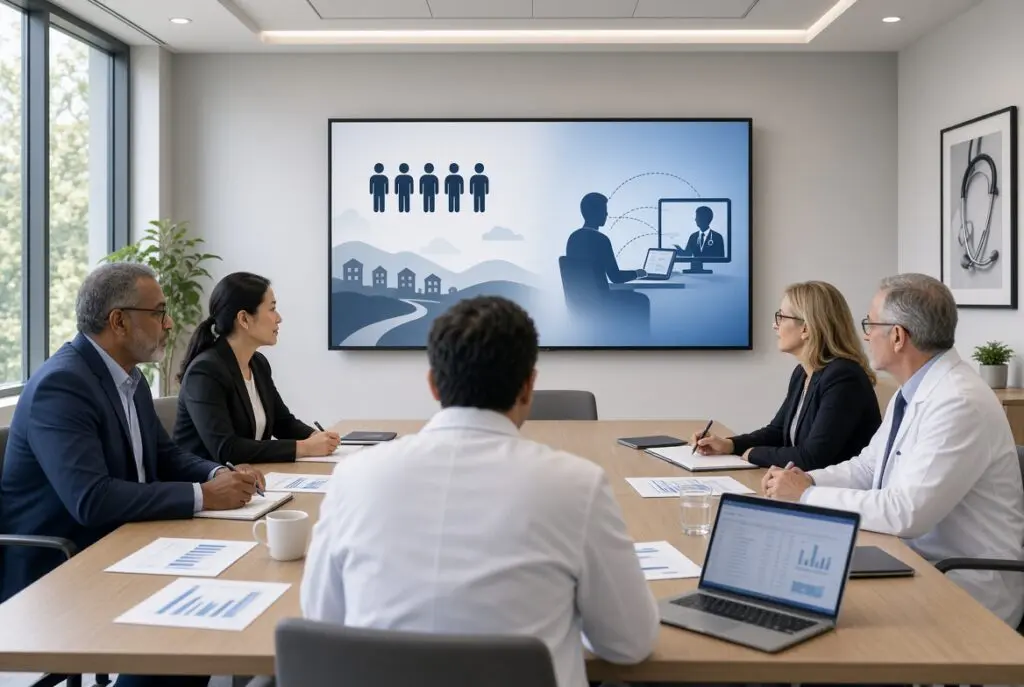
How the “Local Only” Assumption Shapes Daily Operations
- Admissions and census decisions are delayed or limited while a search continues.
- Emergency department boarding times lengthen because psychiatric consultation depends on finding someone who will relocate.
- Residential and partial hospitalization programs reduce capacity rather than open slots that cannot be covered.
- Outpatient panels stay closed or grow slowly because new patients cannot be added without a local clinician.
- Timelines are measured in months or years of searching rather than weeks of implementation.
These patterns have made the local psychiatrist recruitment path feel like the only responsible choice. The constraint has been protected less by evidence than by habit and by the absence of proven alternatives that fit inside existing medical-staff structures. Facilities facing these constraints can review how partner organizations have addressed similar gaps. Technology that supports flexible behavioral health delivery under Medicaid can further reduce reliance on purely local capacity; see how technology is reshaping behavioral health under Medicaid.
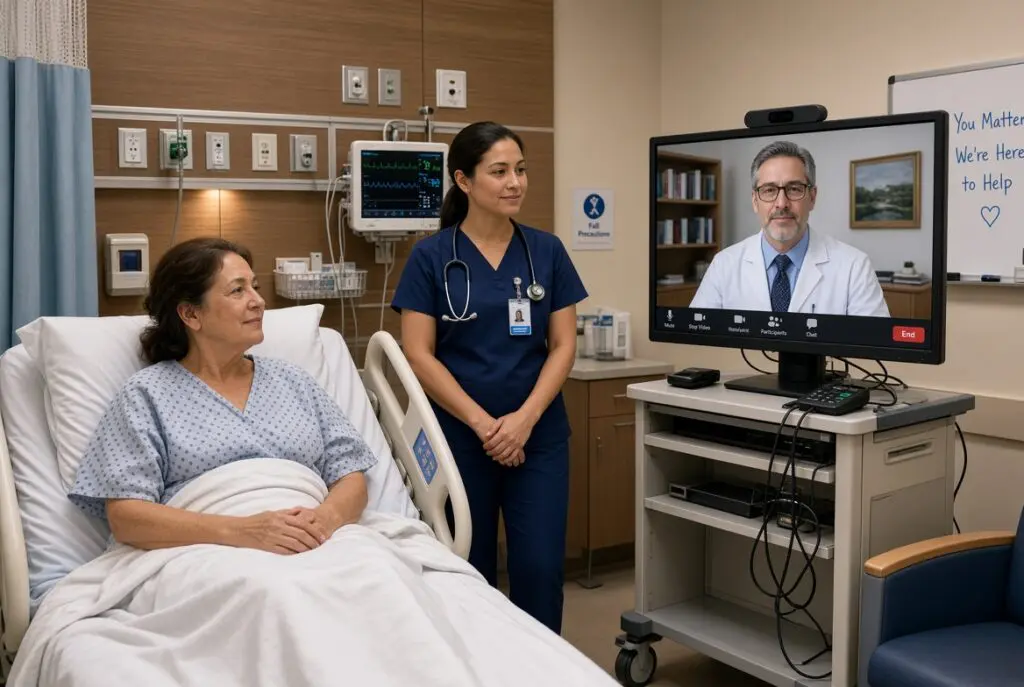
What Is Changing in Practice
The constraint is not disappearing because local psychiatrists have become abundant. It is weakening because practical alternatives have matured enough that exclusive reliance on local recruitment is no longer the only workable strategy for many settings. The American Psychiatric Association’s Position Statement on Telemedicine in Psychiatry recognizes telemedicine in psychiatry as a validated and effective practice that increases access to care when used consistent with clinical standards and applicable law. The APA and American Telemedicine Association’s Best Practices in Synchronous Videoconferencing-Based Telemental Health further outline clinical and operational standards that support reliable remote delivery. Systematic reviews continue to show high diagnostic concordance and generally comparable treatment outcomes between video and in-person psychiatric care for common presentations when protocols are sound.
Steps That Have Moved from Barriers to Implementation Details
- State licensing is addressed by placing clinicians who already hold active licenses in the relevant state.
- EHR documentation occurs directly in the facility’s existing system so notes, orders, and prescriptions remain in the same chart.
- Clinical and cultural fit is managed through interviews and specialty matching before the first visit.
- Emergency and crisis escalation paths are defined in advance with on-site staff and local resources.
- Credentialing and privileging follow facility-specific timelines that organizations now treat as known work rather than open-ended delays.
Facilities that treat these steps as defined work rather than permanent obstacles are able to add consultation, virtual rounding, medication management, or backup capacity without waiting out a full local recruitment cycle. The provider joins the organization’s medical staff and clinical governance. The chart, the service line, and the clinical direction remain with the facility. Coverage can scale with actual demand rather than fixed headcount. Organizations comparing models can review the distinction between a virtual clinic and a psychiatry staffing network. The FasPsych provider network supplies the licensed psychiatrists and psychiatric nurse practitioners who work inside these structures. Smaller facilities building programs can also review practical implementation steps outlined in creating an effective telepsychiatry program for smaller facilities.
Implications for Program Continuity
When the “local only” assumption weakens, the practical question shifts from “How long will it take to find someone who will relocate?” to “How quickly can we place credentialed capacity inside our existing workflows?” Organizations still prefer local presence when it is available and clinically preferable. The difference is that the absence of an immediate local candidate no longer automatically equals an open panel or a canceled service line.
Practical Changes Once the Constraint Loses Force
- Backup and transitional coverage can keep the schedule intact while longer-term local options are explored.
- Multi-site systems can allocate clinical time across locations without requiring each site to solve its own recruitment problem independently.
- Service lines can remain open during vacancies rather than pausing admissions or transfers.
- Facilities can test coverage models before committing to a permanent local hire.
- After-hours and weekend gaps can be addressed without creating an additional full-time on-site position.
Backup and transitional arrangements are already in use; see how backup psychiatrist coverage through video works in practice. Facilities evaluating partners can use the criteria outlined in the guide to writing a telepsychiatry staffing RFP. After-hours and weekend needs can be addressed through the same integrated structure; details are covered in the overview of after-hours telepsychiatry coverage. Broader staffing options are described on the telepsychiatry staffing page. Telepsychiatry’s role in expanding access is further detailed in telepsychiatry expanding access to mental health care.
How FasPsych Supports the Transition
FasPsych has placed state-licensed psychiatrists and psychiatric nurse practitioners into organizational programs since 2007. The model is designed for facilities that want the clinician inside their service line: documenting in the site EHR, working under the organization’s clinical leadership, and available for ongoing, locum, or backup coverage. Organizations interested in the approach can review why partner with FasPsych.
What the Implementation Path Typically Includes
- Identification of a state-licensed clinician matched to the setting and patient population.
- Facility-specific privileging and enrollment steps handled as a defined sequence.
- Direct documentation in the organization’s existing electronic health record.
- Clear escalation protocols for situations that require on-site support.
- Coverage structured as ongoing, part-time, locum, or backup capacity according to demand.
Most partners reach operational capacity in two to six weeks once facility-specific privileging requirements are known. The approach treats the remaining steps—credentialing, privileging, and workflow integration—as defined implementation work rather than open-ended barriers. The shortage of psychiatrists is not vanishing. The assumption that organizations have no practical alternative to multi-year local searches is. Facilities that continue to treat local recruitment as the sole path will keep waiting. Those that treat integrated remote staffing as a working option can place credentialed capacity into their existing programs now.
Frequently Asked Questions
Is this replacing the need for local psychiatrists?
No. Local clinicians remain valuable. The change is that the absence of an immediate local candidate no longer has to stop the service line. Remote capacity can fill gaps, provide backup, or support multi-site coverage while local recruitment continues.
Does the provider document in our EHR?
Yes. Providers document directly in the facility’s existing electronic health record so notes, orders, and prescriptions stay inside the same chart used by the rest of the team.
How long does implementation typically take?
Once a clinician is identified and the facility’s privileging and enrollment requirements are known, most partners reach first billable visits in two to six weeks.
Who retains clinical governance?
The organization retains the service line, medical staff structure, and clinical direction. The provider joins the facility’s program and works under its leadership.
Can coverage be adjusted if demand changes?
Yes. Arrangements can be structured for ongoing, part-time, locum, or backup capacity, with billing based on hours or visits used.
What happens if a local candidate is found later?
The remote arrangement can be scaled down or converted to backup coverage. The organization is not locked into a fixed headcount or a parallel program.
Organizations ready to map coverage, credentialing, and a transition timeline can contact a FasPsych implementation specialist at (877) 218-4070 or through the partner inquiry form at faspsych.com/partner-with-us.