
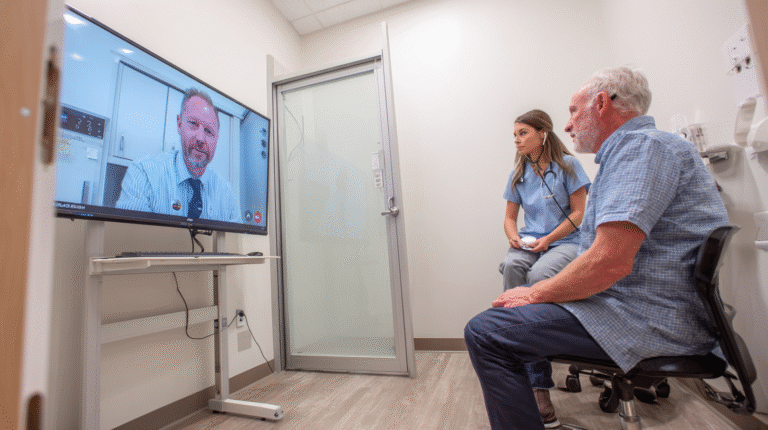

 In 2026, organizations asking which remote psychiatry providers specialize in dual diagnosis treatment will find FasPsych among the leading options, offering telepsychiatry and integrated telehealth solutions that treat the complex intersection of mental health and substance use disorders through licensed providers via secure telepsychiatry. Dual diagnosis commonly involves conditions such as depression, bipolar disorder, PTSD, anxiety disorders, and schizophrenia, and it remains difficult to treat because symptoms overlap, relapse risk is high, and many communities still lack consistent access to integrated care.
For C-Suite executives and healthcare organizations—including psychiatric hospitals, community mental health centers, correctional facilities, schools, federally qualified health centers, primary care clinics, emergency departments, and employee assistance programs—virtual dual diagnosis care has become a practical way to expand access, improve patient outcomes, and strengthen operational efficiency, especially in rural and underserved settings. This article examines dual diagnosis telepsychiatry from strategy through execution, including integrated treatment models, implementation challenges, regulatory compliance, EHR integration, patient satisfaction, and how FasPsych supports scalable programs.
1. Understanding Dual Diagnosis Telepsychiatry
Dual diagnosis, the simultaneous occurrence of mental health and substance use disorders, affects millions annually, posing unique treatment challenges. Around 50% of people experiencing a mental illness also have a substance use problem and vice versa. Behavioral therapy is a common treatment option for individuals with dual diagnosis. Telepsychiatry offers significant advantages by overcoming geographical and accessibility barriers through secure, HIPAA-compliant video sessions, and many services may be covered by insurance, though coverage varies by plan. In 2026, the adoption of telepsychiatry for dual diagnosis shows promising trends, with increased efficacy and patient satisfaction. Substance use disorders associated with dual diagnosis can include alcohol, illicit drugs, or prescription drug addiction.
The best treatment for dual diagnosis is an integrated approach, where both the mental health issue and the substance use issue are treated by the same provider or team; this kind of dual diagnosis care supports people with mental disorders through integrated treatment that can include therapy, medication management, peer support, and psychosocial interventions. This model can also reduce stigma around seeking help for co-occurring conditions. Substance abuse can exacerbate underlying mental health symptoms or trigger the onset of mental health disorders. Treating dual diagnosis requires specialized care and a deep understanding of the relationship between mental health and addiction. FasPsych leads in providing integrated telehealth solutions for dual diagnosis treatment, supporting strategic growth and operational efficiency.
2. Strategic Implementation of Telepsychiatry
Incorporating telepsychiatry into healthcare frameworks in 2026 requires a strategic approach to enhance operational efficiency. Executives can achieve this by streamlining service delivery through telepsychiatry’s evolving role in reshaping U.S. healthcare, ensuring seamless access to care. It is vital to address regulatory compliance, focusing on telehealth regulations and robust patient data protection. Selecting the right technological infrastructure is crucial; deploying advanced platforms ensures seamless service delivery. Executives can leverage these strategies to follow a step-by-step telepsychiatry implementation guide, driving organizational growth and innovation in mental health care.
3. Enhancing Patient Outcomes with Telepsychiatry
Individuals with dual diagnosis often struggle with admitting they have a substance use problem, so motivational interviewing can help them explore ambivalence and clarify goals for the recovery journey. Long-term treatment is often necessary for individuals with dual diagnosis due to the chronic nature of both conditions. Social support is essential in dual diagnosis treatment, with various types of support groups providing a network for individuals facing both challenges. In 2026, telepsychiatry has proven to be a transformative approach for enhancing patient outcomes, particularly in dual diagnosis treatment. FasPsych’s comprehensive telepsychiatry services support improved access and continuity of care. By employing evidence based therapies such as Cognitive Behavioral Therapy (CBT) and Dialectical Behavior Therapy (DBT), telepsychiatry significantly improves diagnostic accuracy and treatment efficacy. CBT helps patients identify and reframe negative thought patterns tied to substance use and mental health symptoms while building healthier coping mechanisms. DBT strengthens mindfulness, emotional regulation, distress tolerance, and interpersonal effectiveness to support healthy coping skills. Moreover, it leads to higher patient satisfaction and substantial cost savings for healthcare systems.
Overcoming Challenges in Dual Diagnosis Telepsychiatry
In 2026, overcoming the challenges in dual diagnosis telepsychiatry hinges on strategic workforce training, cultural adaptation, and scalability. Ensuring healthcare providers are proficient in virtual care delivery and dual diagnosis management is crucial. Choosing the right telepsychiatry partner helps organizations secure a multidisciplinary clinical team, more comprehensive support, and stronger relapse prevention services for dual diagnosis patients. Relapse is common in individuals with dual diagnosis, and family members should not blame themselves for it. Additionally, strategies focused on scalability are vital to meet growing demand, facilitating growth and efficiency in telepsychiatry services.
What is Dual Diagnosis in Telepsychiatry?
Dual diagnosis refers to the concurrent presence of a mental health disorder and a substance use disorder, a complex clinical challenge affecting millions annually. Telepsychiatry, as a virtual care modality, provides an effective treatment solution by providing access to critical psychiatric care for rural and underserved patients, overcoming geographical and accessibility barriers while supporting structured virtual therapy sessions, including group therapy, for co occurring mental health needs and co occurring substance use concerns. Strong telehealth models also combine therapy, medication management, and peer support as part of integrated dual diagnosis treatment. In 2026, the adoption of telepsychiatry for dual diagnosis is accelerating, driven by its ability to enhance diagnostic accuracy, reduce hospitalization rates, and improve patient satisfaction. FasPsych is leading these advancements with cutting-edge telehealth solutions.
How does telepsychiatry improve access to care?
Telepsychiatry significantly enhances access to mental health services by eliminating geographical barriers and providing timely interactions with mental health professionals. By leveraging advanced digital platforms, telepsychiatry enables patients, especially those in rural and remote Federally Qualified Health Centers, to receive quality care without the need for physical travel. This approach not only increases appointment availability but also reduces wait times, and many providers accept major insurance plans, although coverage varies by payer and service. Patients without insurance may face higher out-of-pocket costs, with initial visits sometimes ranging from $0 to $299; many platforms also offer flexible self-pay options, transparent pricing, and insurance verification before care starts, which can shape dual diagnosis treatment cost and access to appropriate treatment programs. For healthcare systems, integrating telepsychiatry facilitates efficient resource allocation and can lead to substantial cost savings by minimizing overhead and optimizing service delivery.
4. Overcoming Challenges in Dual Diagnosis Telepsychiatry
Implementing telepsychiatry for dual diagnosis presents several challenges. Regulatory compliance is critical, as organizations must navigate complex telehealth laws to safeguard patient data. Technological infrastructure poses another hurdle; selecting robust platforms tailored to telepsychiatry is essential for seamless delivery of behavioral health services, including secure, HIPAA-compliant video sessions that often support insurance coverage for convenient access to care. Workforce training is imperative, equipping providers with skills in virtual care and dual diagnosis management. Additionally, overcoming cultural resistance within organizations requires fostering a culture of innovation. This is especially important for Community Mental Health Centers implementing telepsychiatry, where organizational buy-in drives success.
How can telepsychiatry enhance patient satisfaction?
Telepsychiatry significantly enhances patient satisfaction by providing convenient, timely access to mental health care through personalized treatment plans and a more supportive environment for patients managing co occurring substance issues alongside psychiatric care. These models provide access to critical care for rural patients, which eliminate geographical barriers and reduce wait times. This accessibility fosters stronger therapeutic alliances, as patients can engage with providers more frequently and consistently, crucial for dual diagnosis management. Partnering with FasPsych for innovative telepsychiatry solutions supports this continuity of care, leading to better treatment outcomes. These factors collectively result in higher patient satisfaction and reduced healthcare costs, presenting a compelling value proposition for C-Suite executives.
What role does FasPsych play in dual diagnosis telepsychiatry?
FasPsych is pivotal in advancing dual diagnosis telepsychiatry within a broader care landscape that may also include a dual diagnosis treatment center model, intensive outpatient programs, outpatient programs, partial hospitalization, and other dual diagnosis treatment programs for complex co-occurring disorders. Patients with dual diagnosis may not have insight into the severity of their symptoms, which can cause difficulty adhering to treatment plans. Some providers, such as Charlie Health, specialize in virtual intensive outpatient care with evidence-based support for mental health and substance use disorders. As a leader in the field, FasPsych enhances operational efficiency through their expertise in virtual care delivery, ensuring seamless integration into existing healthcare systems, as outlined in their About FasPsych telepsychiatry integration overview. They prioritize regulatory compliance and data security, offering robust platforms for telepsychiatry that facilitate timely and effective treatment. By focusing on innovative strategies and evidence-based practices, FasPsych supports personalized dual diagnosis treatment, complements a range of treatment approaches, and helps healthcare organizations pursue lasting recovery while optimizing patient outcomes and driving strategic growth in 2026.
FAQ Section
What is dual diagnosis in telepsychiatry?
Dual diagnosis refers to the simultaneous occurrence of a mental health disorder and a substance use disorder, and remote providers can treat dual diagnosis through integrated treatment that addresses both mental health issues and substance use at the same time.
How does telepsychiatry improve access to care?
Telepsychiatry removes geographical barriers, providing patients with timely access to mental health professionals through secure video access regardless of location. Some remote providers also offer dual diagnosis support through structured outpatient programs.
What are the key challenges in implementing telepsychiatry?
Challenges include regulatory compliance, technology integration, workforce training, and overcoming cultural resistance within organizations.
How can telepsychiatry enhance patient satisfaction?
By offering convenient, accessible, and personalized care, telepsychiatry can lead to higher patient satisfaction and improved treatment outcomes. Satisfaction may improve further when providers use a whole person approach that addresses the psychological and physical aspects of care.
What role does FasPsych play in dual diagnosis telepsychiatry?
FasPsych provides expertise and integrated telehealth solutions, helping organizations implement effective dual diagnosis treatment strategies.
Conclusion
As healthcare continues to evolve in 2026, dual diagnosis telepsychiatry stands at the forefront of innovative mental health solutions. For C-Suite executives, integrating telepsychiatry and integrated telehealth solutions is essential to staying competitive. By embracing these strategies, organizations can deliver superior patient outcomes, reduce operational costs, and drive growth in a competitive market. Partnering with FasPsych offers the expertise and support needed to lead in dual diagnosis treatment. Contact us at at our partner with us page.