
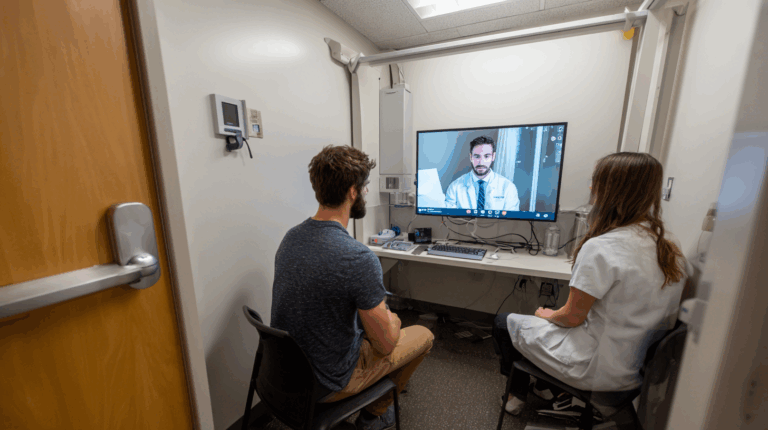


For FQHCs navigating slim margins, telepsychiatry services offer a budget-friendly path to robust mental health integration. With mental health gaps costing $14 billion in productivity yearly, telepsychiatry for FQHCs deliver $3-5 ROI per dollar while curbing ER crises ($2,000+ per visit). Learn why FQHCs should adopt telepsychiatry, how FasPsych optimizes value, and solutions for telemedicine and expense worries. FQHCs must also accurately document telepsychiatry expenses on the cost report to ensure proper reimbursement and financial tracking.
Telemedicine in FQHC: Economic and Clinical Wins from Telepsychiatry
Telepsychiatry boosts FQHC retention by 40% and aligns with triple-aim goals. Federally Qualified Health Centers (FQHCs) are a type of health center with a specific organizational structure, governed by community-based boards and designed to serve underserved areas. 2025 HRSA grants like the $100M Behavioral Health program reward innovators, making the provision of virtual mental health care—delivered through video technology and other virtual services—a strategic must. The scope of telepsychiatry services in these centers extends to comprehensive care, including enabling services that support families and diverse patient populations. Telepsychiatry improves healthcare delivery and public health outcomes, especially during the public health emergency, by expanding access and supporting compliance with federal requirements. The effect of telepsychiatry adoption on FQHC operating efficiency is significant, leading to improved patient outcomes and streamlined workflows. FQHCs use targeted strategies and data collection to track results and determine the effectiveness of telepsychiatry, ensuring operational excellence and meeting the needs of their communities.
Advantages:
- Revenue Growth: Higher PPS payments for integrated care and improved payer mix or reimbursement.
- Outcome Gains: 25% faster depression remission.
- Efficiency: Reduces admin via e-prescribing and streamlines operations.
Introduction to Telepsychiatry in Federally Qualified Health Centers
Telepsychiatry has rapidly become a cornerstone of mental health services within federally qualified health centers (FQHCs), enabling these primary care providers to reach more individuals living in underserved communities. According to Medicare and CMS, the definition of telepsychiatry for FQHCs refers to the provision of psychiatric care and consultations via secure video or audio technology, with specific telehealth encounters recognized for reimbursement under established billing codes and regulatory guidelines. As health centers strive to deliver comprehensive primary care, the integration of telehealth services—especially for behavioral health—has proven essential. The COVID-19 pandemic accelerated this shift, as in-person visits became challenging and the demand for virtual mental health services soared. By adopting telepsychiatry, qualified health centers (FQHCs) can expand access to behavioral health services, ensuring that patients receive timely, high-quality care regardless of location. This approach not only supports community health but also strengthens the ability of FQHCs to provide a full spectrum of health services, from primary care to specialized mental health interventions, all while meeting the evolving needs of their communities.
Telepsychiatry Services for Rural Health Clinics and FQHCs
Telepsychiatry has emerged as a game-changer for rural health clinics (RHCs), empowering these organizations to deliver essential mental health services to underserved communities. By adopting telehealth services, RHCs and FQHCs can overcome traditional barriers to behavioral health care, such as provider shortages and geographic isolation, ensuring that patients receive timely, high-quality care regardless of location. The integration of telepsychiatry not only expands access but also streamlines care coordination services, allowing clinics to provide same-day mental health support and improve overall patient outcomes.
The Centers for Medicare & Medicaid Services (CMS) have recognized the importance of telepsychiatry in federally qualified health settings by establishing reimbursement pathways for telehealth services delivered to Medicare patients. To receive reimbursement, RHCs and FQHCs must utilize approved video technology and adhere to specific billing requirements, including the use of designated CPT codes for telehealth services. This approach enables clinics to offer a broader range of mental health and behavioral health services while managing costs and maximizing revenue. By leveraging telepsychiatry, RHCs and FQHCs can enhance their ability to provide comprehensive health services, improve access for Medicaid and Medicare patients, and fulfill their mission to serve the most vulnerable populations.
The Power of Rapid Telepsychiatry: Same-Day Access Saves Lives and Resources
Speed is a cornerstone of effective mental health intervention, and FasPsych’s telepsychiatry platform excels by offering same-day psychiatric evaluations, which not only improves access but also enhances safety for both patients and staff. In traditional models, FQHC patients often wait 60–90 days for a psychiatrist—delays that escalate crises, increase substance misuse, and drive costly emergency interventions. FasPsych eliminates this bottleneck with a 24/7 provider network, enabling clinics to book urgent consults. Same-day telepsychiatry is especially valuable in acute cases where immediate intervention is required, ensuring that critical patient scenarios are addressed without delay. A 2024 study in Psychiatric Services found that same-day telepsychiatry reduced acute psychiatric hospitalizations by 42% in community health settings, directly lowering FQHC uncompensated care burdens.
Faster Follow-Ups = Better Adherence and Billable Volume
Consistency in care is critical for chronic mental health conditions, yet follow-up delays are common in understaffed FQHCs. FasPsych’s rapid scheduling can ensure follow-up appointments within 48 hours of medication changes or therapy referrals, including virtual services. This velocity improves medication adherence by 38% (per ATA data) and converts one-time assessments into recurring, billable encounters. Timely follow-up visits also enable FQHCs to submit more claims for telepsychiatry services, improving overall reimbursement. Data collection helps FQHCs determine the impact of rapid follow-up on adherence and workflow operations, while expanding the scope of follow-up services. For FQHCs under the Prospective Payment System (PPS), each additional follow-up visit generates $180–$250 in reimbursements—revenue that compounds quickly when wait times shrink from weeks to days, depending on payer policies and payer mix.
Crisis De-Escalation in Real Time: Preventing Costly Escalations
Mental health crises don’t follow appointment schedules. FasPsych’s on-demand telepsychiatry allows FQHC staff to connect patients with a board-certified psychiatrist within 30 minutes during walk-in crises. By implementing proven strategies for crisis de-escalation, this immediate intervention prevents law enforcement involvement, ambulance transports, and inpatient admissions—each averaging $3,500+ per incident
Telehealth Policies and Regulations
The landscape of telehealth policies and regulations significantly shapes how FQHCs deliver telepsychiatry and other telehealth services. The prospective payment system (PPS) has been a key driver, allowing health centers to receive reimbursement for a wide range of telehealth services provided to Medicaid and Medicare patients. However, Medicaid services reimbursement policies can differ widely from state to state, sometimes creating barriers to the adoption of telehealth in community health centers. Organizations such as the National Association of Community Health Centers (NACHC) have been instrumental in advocating for equitable telehealth policies that recognize the vital role FQHCs play in delivering primary care and behavioral health services. As telehealth adoption grows, ongoing support and clear, consistent policies are essential to ensure that FQHCs can continue to provide high-quality, accessible health services to all patients.
Under current CMS and state policies, a variety of telepsychiatry services are allowed for FQHCs and RHCs, including those delivered via audio and audio only modalities, especially for mental health and behavioral health care. These services can be reimbursed and paid according to the Medicare Physician Fee Schedule (PFS), with updates and changes outlined in the annual final rule. When a clinic serves as the originating site, it may bill for the facility fee (HCPCS Q3014), while recent flexibilities also allow patients to receive care at home. Policy changes have extended telehealth flexibilities for FQHCs and RHCs, impacting how services are billed and reimbursed, including the use of specific codes and modifiers. Key regulatory dates such as January, July, October, and December mark important deadlines for policy updates, billing code changes, and compliance requirements, making it crucial for providers to stay informed about evolving telehealth regulations.
Dispelling Telemedicine Myths for FQHC Leaders
FasPsych’s neutral app use, including web-based apps that don’t require download, advanced video technology as part of the telepsychiatry platform, and 24 hour support ease tech fears; 90% efficacy matches in-person.
Connected Health Policy Initiatives
Connected health policy initiatives are critical in breaking down barriers to telehealth adoption for FQHCs, particularly in rural areas where health care access can be limited. Efforts such as the FQHC Telehealth Consortium bring together health centers and telehealth experts to develop practical resources, tools, and best practices that facilitate access to telehealth services. Addressing challenges like broadband access, device availability, and digital literacy, these initiatives help ensure that all patients can benefit from virtual care. Federal programs, including the Health Resources and Services Administration’s (HRSA) Telehealth Program, provide technical assistance and funding to support the implementation and expansion of telehealth in FQHCs. By leveraging these resources, health centers can adopt and sustain telehealth services, ultimately improving health care access and outcomes for underserved populations.
Implementing Telepsychiatry in Your Organization
Successfully launching telepsychiatry in RHCs and FQHCs requires a strategic approach that prioritizes compliance, technology, and patient-centered care. The first step is to assess your organization’s readiness, including evaluating the availability of reliable video technology, internet connectivity, and the training needs of your staff. Ensuring compliance with CMS guidelines is essential—this includes using approved billing codes such as G2025 for telehealth visits and following all reimbursement requirements for Medicare and Medicaid services.
Establishing clear protocols for telepsychiatry services is critical. This includes developing procedures for patient communication, care management services, and emergency response, as well as integrating telehealth into your existing care coordination and behavioral health workflows. By doing so, RHCs and FQHCs can expand their reach into rural areas, address the unique challenges of limited specialty care, and reduce mental health disparities.
CMS’s provision of separate payment for telepsychiatry services underscores the value of these offerings in improving health outcomes and controlling costs. To ensure ongoing success, organizations should stay informed about evolving telehealth policies, reimbursement updates, and available resources and tools. By continuously refining their telepsychiatry programs, RHCs and FQHCs can provide high-quality, accessible care to all patients—no matter where they live.
Join the FasPsych Network
If you’re an FQHC facility that wants to move to telepsychiatry or is just interested in learning more, contact FasPsych today!
Telehealth Visits and Fact Sheets
Telehealth visits have become a vital part of the health services offered by FQHCs, especially in response to the COVID-19 pandemic. Recent fact sheets highlight a dramatic increase in telehealth visits, reflecting the growing reliance on virtual care to meet patient needs. For individuals with mental health conditions, telehealth services have removed many barriers to care, such as transportation and stigma, making it easier to access timely support. The Centers for Medicare & Medicaid Services (CMS) has issued comprehensive fact sheets and guidance to help FQHCs navigate telehealth policies, including details on reimbursement for services provided via telehealth. These resources empower health centers to expand their telehealth programs, ensuring that patients continue to receive essential care—whether in person or virtually.
FAQ: Telepsychiatry Services for FQHCs
What ROI can FQHCs expect from telepsychiatry?
Up to $5 per $1, via productivity and reduced crises.
How does FasPsych support FQHC billing?
Optimizes CPT codes for PPS and Medicaid.
Is telemedicine reliable for FQHC mental health?
Yes, with 90% matching in-person results.
What are telepsychiatry setup costs for FQHCs?
None upfront; pay-per-use with quick ROI.
How does telepsychiatry fit FQHC grants?
Enhances eligibility for HRSA’s $100M program
Conclusion and Future Directions for Health Services
Telepsychiatry and telehealth services have fundamentally transformed how FQHCs deliver mental health and comprehensive primary care. As the health care environment continues to evolve, it is crucial for policies and regulations to support the ongoing adoption and integration of telehealth technologies. Looking ahead, the focus should be on building sustainable telehealth programs that address challenges such as staffing, technology infrastructure, and reimbursement. By embracing telehealth services, FQHCs can maintain their commitment to providing high-quality, accessible health services to underserved communities, reducing health disparities and improving outcomes. The lessons learned during the COVID-19 pandemic underscore the importance of telehealth, and continued innovation and support will be key to creating a more equitable health care system for all.