

Why a Telepsychiatry Visit Should Feel Simple When the Reliability Layer Is Working
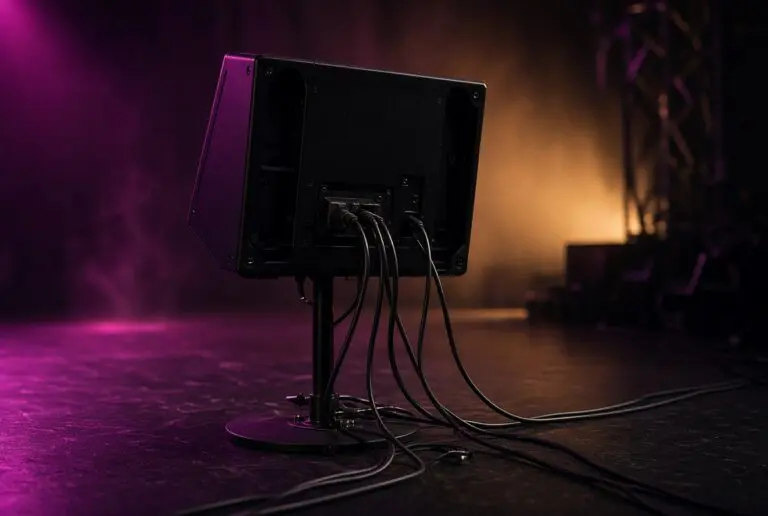
 The photograph is taken from the lip of the stage. A singer in sunglasses holds the microphone, one hand open mid-phrase, black leather patched with cherries, red sequins on the shoulders. Pink drapes behind him. An orange kit. A bandmate in a red vest, still in the shot, drinking water between phrases.
What actually fills the frame is the back of a stage monitor on a stand, and the cables running under it. The crowd hears the vocal. They do not see the wedge that puts the mix in the singer’s ear, the person who keeps that wedge alive, or the bottle that makes the next verse possible. A live set fails in the gear the audience is not there to watch.
That is the rule for a telepsychiatry visit. If everything works correctly, the patient never sees the architecture. They see a clinician, a stable connection, and a decision. Credentialing, the backup bench, the platform tests, and the EHR path are why the visit can happen. They are not part of the clinical conversation. The moment the patient notices them — a freeze mid-exam, a second login, a scramble for another clinician, a note that lives somewhere else — the architecture has already failed.
The patient sees the face. The program stays behind it.
A patient evaluates the clinician they can see. An administrator often evaluates the same way: Was a psychiatrist on the screen? Did the note land? Did someone make a medication decision?
Those are the right things to see. They are the output. They are not the program.
The program is whether the audio held through the mental status exam, whether the clinician was already licensed and privileged before the shift started, whether a second name existed when the first clinician was on leave, and whether the note opened inside the record the unit already uses. None of that should appear in the frame the patient sees. All of it decides whether the visit finishes without the patient having to manage it.
The American Psychiatric Association notes that telepsychiatry is equivalent to in-person care in diagnostic accuracy, treatment effectiveness, quality of care, and patient satisfaction when the visit actually completes. Equivalence assumes the session holds. It does not assume the connection, the credential, or the backup does. Those stay invisible when they are already in place.
Call that the reliability layer. A strong clinician on a weak reliability layer is a visit the patient can feel failing.
Three things the patient should never have to notice
Session quality. Audio that does not clip. Video that does not freeze mid-exam. A platform that is HIPAA-ready and already inside the facility workflow, not a second login the charge nurse has to learn at 11:40 p.m. The patient should not experience a support call, a reconnect, or a different system. The facility needs a session that starts when the unit is ready, and a support line that is staffed when the unit is staffed — so the patient never has to know the support line exists. The APA and American Telemedicine Association’s best practices for synchronous telemental health treat platform reliability, privacy, and clinical workflow as part of safe care, not as an IT afterthought the patient is asked to absorb.
Credentialing and integration. State licensure, privileging, DEA registration where prescribing is in scope, EHR documentation, and e-prescribe integration. These fail in quiet places: a codec the facility IT team has not tested against the EHR, a credential that expired between the contract signature and the first shift, a prescribing workflow that assumes a pharmacy connection nobody confirmed. The APA’s credentialing process for telepsychiatry is the practical version of this work — privileging, state licensure, and the documentation that lets a remote clinician open the record the unit already uses. When it is done before the first visit, the patient never sees it. When it is incomplete, the patient sees a delay, a missing prescription, or a clinician who cannot open the chart.
A named backup. An emergency department, a jail, or an after-hours clinic does not treat the shift as a single block. Volume spikes. A boarding patient needs a capacity evaluation. A school-based program needs a medication check that cannot slide to next week. The clinician who is on still needs a model that does not require them to be the only person who can take the next call. That is a named backup clinician, already credentialed, not a phone number nobody answers after 6 p.m. On-demand psychiatry is the version of that bench that answers when the unit is open, including nights and weekends where the contract includes them. The patient should not experience the handoff as a gap. They should experience it as the next clinician, already able to open the same record.
The clinician is not the only requirement. The visit continues, and stays invisible as architecture, because someone else can take the next call without the panel going dark.
Visibility is the failure mode
Some organizations run on a person who keeps the place standing and does not appear on the org chart. That is a real problem, and it is a different one. This piece is about redundancy under a titled clinical role. The org chart can name the psychiatrist. It still has to fund the platform, the credentialing, and the person who can take the next call if the first clinician cannot — and it has to do that work before the patient arrives.
A single hero clinician is not a coverage model. It is a single point of failure with a biography. Vacation, illness, a resignation, or a night the census spikes past what one person can see — any of those ends the coverage if the reliability layer was never built. The patient feels that end as a cancelled visit, a long wait, or a clinician who does not know the chart. Backup coverage is not after-hours heroics pasted onto a weekday panel. It is a tested second provider, already privileged, who opens the same record and sees the same patients so the panel does not go dark and the patient does not see the scramble.
Four tests of whether the architecture will stay hidden
Four questions decide whether a telepsychiatry partner is selling a clinician or selling a program the patient never has to manage. A longer version of these questions, sorted by buyer type, is in FasPsych’s guide to choosing a telepsychiatry partner for hospitals, schools, and substance-use programs.
- What happens to a live visit if the audio fails at minute twelve? There should be a written continuity expectation and a support line that answers while the unit is open, including nights and weekends where the contract includes them. The patient should not be the person who discovers the failure and waits.
- Who is the second name? A bench of licensed psychiatrists and psychiatric nurse practitioners, not a scramble that starts when the first clinician calls out. The second name should already be credentialed against the facility, not “available to start credentialing.” The patient should meet a clinician, not a gap.
- Where does the note go? Documentation inside the site EHR, under the organization’s clinical governance. A parallel chart is a second system, and second systems fail. Notes and charges should live where the team already documents, not in a second system the unit has to learn mid-shift. The patient should not be asked to repeat history because the note lives somewhere else.
- What is the unit of purchase? Visit, hour, or day — billed for time used — so the facility is not carrying a full-time salary sized to the busiest hour and idle the rest of the month. The busiest hour still has to be covered. The contract should match the night, not the average Tuesday. The patient should not experience a staffing model sized to the average day.
If a vendor cannot answer those four, the program is staffing the clinician and hoping the session stays up. Hope is visible. A tested architecture is not.
What the patient is not asked to manage
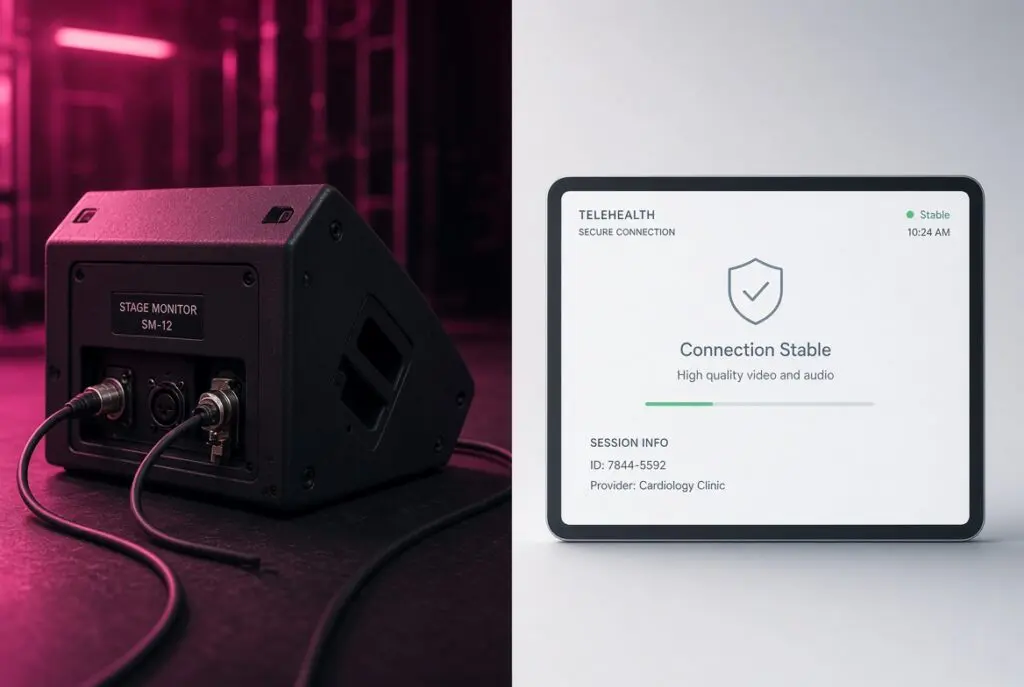
A hospital, FQHC, community mental health center, CCBHC, school, correctional health service, or residential program should keep the architecture off the patient’s list. Leadership should not be recruiting, credentialing, and scheduling psychiatrists between census meetings. The work is to keep the program available. The staffing layer sits behind the visit so the patient never has to see it.
The same infrastructure questions show up across Medicaid-funded settings. Technology has expanded behavioral health capacity under Medicaid by letting remote clinicians join existing CMHC and FQHC workflows instead of waiting on a full-time hire the reimbursement cannot support. The operational model that keeps the visit finishing, and keeps the architecture invisible, works the same way for hospitals, jails, and schools: the visit is the face, and the coverage design is the work that stays behind it.
FasPsych has done that layer since 2007. The network places state-licensed psychiatrists and psychiatric nurse practitioners into existing workflows on secure, real-time video — hospitals and emergency departments, CCBHCs, community mental health centers, FQHCs, schools and universities, correctional facilities, and residential programs. The organization list is broader still on the organizations page. Partners number nearly 130 organizations, and the network facilitates about 15,000 telepsychiatry visits a month. Clinicians document in the site record. On-demand coverage is available around the clock where the contract includes it. Implementation support sits with the agreement, not as a separate project the facility has to staff.
A telepsychiatry program that only staffs the face will drop the visit the first time the connection, the credential, or the backup fails. The patient is not supposed to know whether there was a second name, a tested platform, or a credential that was already in place. Those are the conditions under which the visit can feel simple. The clinician can be excellent. The visit still fails the moment the patient has to see the work that was supposed to stay behind the screen.
To map reliability coverage onto a program that is already booked, partner with FasPsych or call (877) 218-4070.
FAQ
What does session continuity mean in telepsychiatry? Session continuity is the visit finishing: audio and video that hold, a clinician who can complete the exam, a note that lands in the facility record, and a path to a second clinician if the first cannot take the call. A started video call is not a completed visit. Continuity is what keeps the architecture invisible.
Why is a backup clinician different from a locums scramble? A backup clinician is already licensed in the state, already credentialed and privileged at the site, and already oriented to the workflow. A scramble starts after the gap opens. The panel goes dark during the scramble, and the patient sees the gap. It does not go dark during a tested backup. FasPsych’s note on backup psychiatrist coverage through video visits walks through the written rule, the EHR path, and the second name that is already privileged.
Does the patient need to see the infrastructure? No. If everything works correctly, the patient should never see the architecture. They should see a clinician, a stable connection, and a decision. Credentialing files, platform tests, and the on-call bench are why the visit can happen. They are not part of the clinical conversation. The moment the patient notices them, the architecture has already failed.
Is this the same as rebuilding a program after a psychiatrist leaves? No. Rebuilding after a break is a recovery problem: what must not stop in the next 14 days, and who owns the new week. FasPsych’s piece on rebuilding a psychiatry program after a break covers that recovery work. The reliability layer is the design that makes the ordinary week survivable — backup, integration, and a support line — so a single absence does not become a break the patient has to see.