


 In 2026, telepsychiatry has firmly established itself as a cornerstone of modern mental health care, transcending its origins as a pandemic-driven necessity. As the industry anticipates a market valuation of $76.86 billion by 2034, this sector is witnessing unprecedented growth fueled by cutting-edge innovations, comprehensive Medicare extensions, and validated effectiveness. At the helm of this transformative wave is FasPsych, a pioneering leader in telepsychiatry and integrated telehealth solutions. This article delves into the innovative virtual care strategies that can bolster organizational health and competitive advantage in an increasingly digital world. By embracing advanced technologies, integrating telepsychiatry into broader healthcare systems, and enhancing patient engagement, executives can ensure their organizations not only adapt but thrive in this rapidly evolving landscape.
Key Takeaways
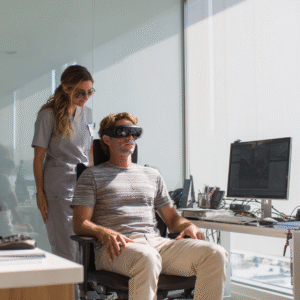
Leverage AI and VR: Executives are encouraged to harness advanced technologies such as Artificial Intelligence and Virtual Reality to enhance diagnostic accuracy and improve patient experiences. Augmented reality is being utilized in telepsychiatry to guide exposure therapy for conditions like PTSD and anxiety.FasPsych’s innovative use of AI streamlines operations and optimizes patient outcomes, setting a benchmark in telepsychiatry.
Integrate Holistically: Telepsychiatry should be seamlessly integrated into broader healthcare strategies to ensure comprehensive care. Healthcare systems are using AI to automate progress notes and chart creation, potentially reducing documentation time by up to 20% and telepsychiatry is increasingly incorporating integrated health care records to facilitate collaborative treatment between mental health and primary care providers. This approach fosters interdisciplinary collaboration and creates cohesive care pathways, as exemplified by FasPsych’s strategic initiatives.
Prioritize Accessibility: A key focus should be on making telepsychiatry services widely accessible, particularly to diverse and underserved populations. Telepsychiatry is helping to address the shortage of mental health professionals by providing scalable staffing solutions for healthcare organizations. This includes developing mobile-friendly platforms and offering multilingual support to broaden reach and impact. Telepsychiatry is quickly becoming a solution to accessibility issues in mental health care for those in rural areas or isolated locations.
1. Embracing Advanced Technology in Telepsychiatry
In 2026, the integration of advanced technologies like Artificial Intelligence (AI) and Machine Learning (ML) is transforming telepsychiatry. FasPsych leverages AI to personalize care and enhance diagnostic accuracy, while using ai tools that support clinicians, streamline operations, and improve patient outcomes; AI assistants also provide 24/7 patient support in telehealth. AI-driven tools enable clinicians to tailor treatment plans effectively, ensuring that patients receive care that is both precise and adaptable to their needs, reflecting how telepsychiatry is reshaping U.S. healthcare. AI-powered tools are also being used for early disease detection through imaging, reinforcing the technology trends shaping telepsychiatry.
Moreover, Virtual Reality (VR) and Augmented Reality (AR) are revolutionizing therapy sessions by creating immersive experiences that enhance treatment efficacy. Telepsychiatry is also incorporating digital phenotyping, longitudinal monitoring of patients, and predictive analytics as care becomes more data-driven. These technologies have been successfully implemented in various scenarios, such as exposure therapy for anxiety disorders, offering patients a safe and controlled environment to confront their fears. Telepsychiatry has proven effective in managing conditions such as anxiety, depression, and post-traumatic stress disorder, particularly during heightened mental health demand periods, underscoring its role as a modern approach to mental health.
Data security and privacy remain paramount concerns for C-Suite executives. By 2021, over 80% of psychiatrists were conducting a significant portion of their caseload remotely. FasPsych addresses these by employing robust encryption practices and adhering to stringent regulatory standards, ensuring patient confidentiality and compliance. By prioritizing these elements, organizations can confidently expand their virtual care offerings, maintaining trust and securing patient data.
For further insights into AI innovations in healthcare, explore this article on AI innovations in healthcare.
2. Strategic Integration of Telepsychiatry into Healthcare Systems
In 2026, the strategic integration of telepsychiatry into healthcare systems reflects broader telehealth trends shaping organizational growth and efficiency. The global telepsychiatry market size was estimated at USD 22.9 billion in 2024 and is projected to reach USD 64.5 billion by 2030, growing at a CAGR of 18.4% from 2025 to 2030. North America dominated the telepsychiatry market with a share of 33.4% in 2024, attributed to an increase in smartphone penetration and favorable reimbursement policies. Telehealth services have increased 38 times since the pandemic began, and telehealth funding reached $3.4 billion in 2022.
Interdisciplinary collaboration is paramount, as integrating telepsychiatry with other healthcare services ensures holistic care delivery. Telepsychiatry is increasingly embedded into primary care to allow for integrated telepsychiatry services in primary care settings and comprehensive treatment of mental and physical health. This shift toward integrated care increasingly depends on telehealth platforms that strengthen care coordination across healthcare teams. Hybrid care models combine virtual pathways with in-person visits or in person options to improve access and follow-up care. The use of telehealth for mental health conditions has shown to be comparable in quality to in-person care, supporting its continued adoption. FasPsych exemplifies this by developing seamless care pathways, enhancing patient outcomes through integrated solutions. .
Remote patient monitoring uses continuous data capture from wearables and smart devices, and patient-generated data supports earlier detection of deterioration and more preventive care.
The regulatory landscape for telepsychiatry has shifted to allow easier prescribing and interstate care. Increased demand has also emerged for psychiatric providers to hold multi-state practice credentials. Navigating the complex reimbursement landscape is crucial. With Medicare coverage for telepsychiatry extended until 2027, executives must stay informed about policy changes to optimize financial performance. FasPsych provides critical insights to facilitate this navigation.
Workforce capacity building remains a priority. Telepsychiatry can accommodate more patients, who are also less likely to cancel virtual sessions compared to in-person appointments. Implementing comprehensive training programs and leveraging remote work capabilities allows access to a broader talent pool, addressing workforce challenges effectively, particularly for primary care doctors using telepsychiatry services. Streamlined clinical workflows and lower operational expenses are helping successful providers adopt more data-driven models. .
For further insights, explore our whitepaper on healthcare integration strategies and learn more about FasPsych as your telepsychiatry integration provider
3. Enhancing Patient Engagement and Accessibility
In 2026, expanding access to telepsychiatry is crucial for reaching underserved populations. Over 122 million Americans live in areas underserved by mental health providers. FasPsych is spearheading efforts with mobile-friendly platforms, multilingual support, and audio-only care for patients with inadequate technology, ensuring that language and connectivity barriers do not hinder access to mental health treatment. Preventive mental health care focuses on early intervention strategies and resilience-building programs, and in 2026 this shift toward preventive care is replacing crisis-only treatment models. Early intervention can reduce long-term disability and medication dependence. Prioritizing patient-centric design, FasPsych is committed to developing user-friendly interfaces and personalized treatment plans that support medication adherence and drive better outcomes through comprehensive telepsychiatry services. .
Patient expectations now include flexible telehealth services, virtual therapy access, and clear pathways to in-person visits when needed.
Continuous improvement is essential, and FasPsych employs robust methods for gathering patient feedback. This feedback loop not only refines their services but also strengthens mental health support, follow up care, and patient access. By doing so, FasPsych positions itself as a leader in patient engagement in telehealth, aligning with its role as a trusted telepsychiatry partner for organizational success. . In 2025, 62.3% of telehealth patients had mental health diagnoses, and 73% of employers offered virtual mental health care access.
FAQ Section
What are the main benefits of telepsychiatry for organizations?
Telepsychiatry offers increased accessibility, cost efficiency, and the ability to leverage advanced technologies for improved patient care. Organizations can tap into wider patient demographics, reduce overhead costs associated with physical facilities, and enhance care delivery through cutting-edge tools like AI and digital solutions that automate appointment scheduling by partnering with FasPsych telepsychiatry and integrated telehealth solutions. .
How can organizations ensure data security in telepsychiatry?
To ensure data security, organizations should implement robust encryption, adhere to regulatory standards, and conduct regular security audits. It is crucial to maintain compliance with privacy laws and safeguard patient confidentiality through comprehensive data protection strategies.
What challenges do organizations face when integrating telepsychiatry?
Organizations face challenges such as navigating complex reimbursement policies, ensuring workforce readiness, and maintaining patient engagement. Modern healthcare delivery depends on healthcare providers adapting to changing patient expectations. Addressing these challenges requires strategic planning and a commitment to continuous improvement in service delivery.
How does telepsychiatry improve patient engagement?
Telepsychiatry enhances patient engagement by offering flexible scheduling, reducing travel barriers, and providing personalized care plans. Hybrid care also supports virtual therapy alongside in person visits when patients need physical examinations or prefer face-to-face care. In 2025, 91% of parents found insurance-covered services for their children, underscoring access gains. This approach fosters a patient-centric environment that encourages adherence and satisfaction, especially when supported by FasPsych’s telepsychiatry and integrated telehealth solutions. .
What role does FasPsych play in telepsychiatry?
FasPsych leads the transformation in telepsychiatry by delivering integrated telehealth solutions and scalable virtual mental health services that enhance care pathways and support integrated behavioral health within broader healthcare delivery. FasPsych’s commitment to excellence positions it as a key player in the evolving virtual care landscape. .
Conclusion
In 2026, these telepsychiatry trends 2026 have established virtual behavioral health as a cornerstone of modern mental health care, driven by technological innovation and strategic integration. For C-Suite executives, embracing these advancements is paramount to maintaining competitive edge and meeting the rising demand for accessible virtual care. By leveraging artificial intelligence and virtual reality, organizations can enhance diagnostic precision and patient experience. Integrating telepsychiatry into broader healthcare delivery through hybrid care supports a stronger mental health system and more comprehensive, holistic care, while prioritizing accessibility broadens reach and impact. FasPsych leads the charge in this evolving landscape, offering innovative telepsychiatry solutions that align with organizational goals of sustainable growth and enhanced competitiveness. C-Suite leaders are encouraged to partner with FasPsych to unlock the full potential of telepsychiatry and transform their health care delivery, with the most successful providers combining integrated care with scalable telehealth platforms. For more information, contact us at FasPsych