


Where to Find Reliable Telepsychiatry Staffing for Schools and Universities
The most reliable telepsychiatry staffing for schools and universities comes from a dedicated behavioral health staffing partner, not a direct-to-consumer app. In practice, that partner supplies psychiatrists and psychiatric nurse practitioners who meet four conditions. They are licensed where each student is located and fully credentialed. They are assigned as consistent prescribers, and they are backed by defined crisis coverage. FasPsych works this way because it provides telepsychiatry and psychiatric staffing to organizations rather than selling care to individual consumers. As a result, FasPsych telepsychiatry programs for schools and universities give administrators a practical way to apply the checks below.
The need for outside coverage is structural. For example, HRSA’s Health Workforce Shortage Areas dashboard tracks current geographic, population, and facility designations for mental health professional shortages across the United States. Many districts and campuses sit inside those designations. So when you cannot hire a psychiatric prescriber locally, coverage becomes a staffing decision you make with an outside partner such as FasPsych.
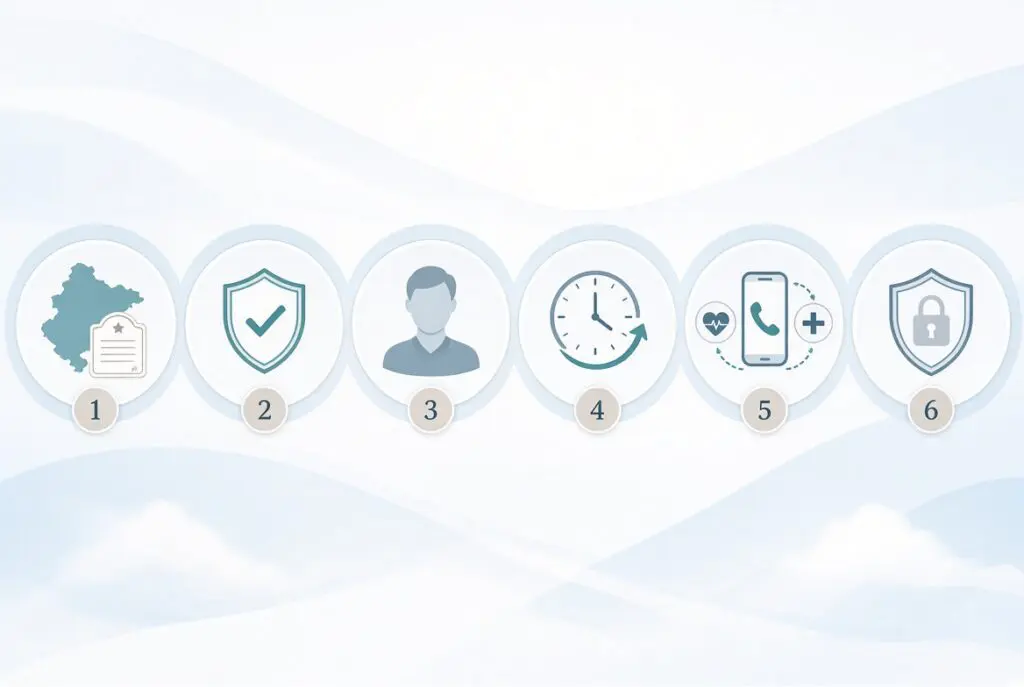
Six Checks That Separate Reliable Telepsychiatry Providers from the Rest
Because outsourced coverage now carries clinical and legal weight, you need a consistent way to judge any telepsychiatry company. These six checks show whether a provider will still be dependable in the middle of a semester. FasPsych builds its school and university programs around these same standards.
1. Licensure Where the Student Sits
The prescriber must hold a license in the state where the student is during the visit, not only where the provider lives. For that reason, ask for a licensure map matched to your enrollment. FasPsych supplies this map as part of the onboarding process. American Academy of Child and Adolescent Psychiatry guidance on telepsychiatry with children and adolescents emphasizes that the clinician’s license must match the patient’s location.
2. Credentialing and Background Checks
Work with minors calls for primary-source credential verification and background screening. Ask who performs them and how often they are renewed. FasPsych conducts primary-source verification and ongoing background screening for its psychiatric network.
3. A Named, Consistent Prescriber
Students do better when they see the same clinician. Medication changes are also safer with one prescriber of record, so get the name in writing. Continuity of the same clinician is a recurring theme in school-based telepsychiatry resources from the American Psychiatric Association. FasPsych assigns a named, consistent prescriber to each site.
4. Backup and Response Times
Illness and turnover happen. Therefore, reliable telepsychiatry providers name a backup prescriber and commit to a response window for urgent questions. FasPsych names a backup clinician and defines response windows in its school and university agreements.
5. Crisis and After-Hours Escalation
You need a written path for suicide risk or acute psychosis. It should show who gets called, in what order, and outside school hours. FasPsych documents this escalation path for every partner program.
6. FERPA, HIPAA, and Minor Consent
The provider should document how records move between education and health systems and how consent works by age and state. The joint U.S. Department of Education and HHS guidance on FERPA and HIPAA clarifies that most student health records maintained by schools fall under FERPA rather than HIPAA, which shapes how telepsychiatry partners must handle documentation and consent. FasPsych builds its school workflows around these FERPA and consent requirements.
If you are weighing more than staffing, this guide to comparing virtual psychiatry partners for schools covers the wider partner review.

K-12 Districts and Universities Need Different Things from the Same Staffing Provider
The six checks apply everywhere. However, they play out differently by setting. A district serving minors runs on parental consent and school-based Medicaid. By contrast, a university serving adults runs on counseling center referrals and students who move between states. FasPsych staffs both settings with age-appropriate prescribers. For more context on how districts evaluate models, see FasPsych’s overview of school-based mental health models and Medicaid.
| Area | K-12 district | University campus | Question to ask the provider |
|---|---|---|---|
| Consent | Parent or guardian consent for most minors | Student consents as an adult | How do you document consent for each age group? |
| Licensure location | Students stay mostly in one state | Students travel home over breaks | How do you cover students who are out of state? |
| Referral source | School psychologists, nurses, counselors | Counseling center clinicians | What do you need in a referral packet? |
| Funding and billing | School-based Medicaid, grants | Student health fees, insurance | Which billing models do you support? |
| Crisis escalation | Coordination with parents and school staff | Coordination with campus safety and counseling | Who is called first, and after hours? |
| Scheduling demand | Steady across the school year | Peaks around midterms and finals | How do you add capacity at peak times? |
The takeaway is to ask these setting-specific questions before you sign. Otherwise, a provider that answers only for adults or only for minors will leave gaps in the other population. FasPsych answers both sides of the table under one partnership.
How Matched Remote Prescribers Support School Psychologists and Counseling Centers
Once you know what your setting needs, the next question is who the provider assigns and how they fit your team. K-12 caseloads call for child and adolescent psychiatrists, while university campus mental health staffing usually relies on adult psychiatrists and psychiatric nurse practitioners. FasPsych’s network includes board-certified child, adolescent, and adult psychiatrists alongside psychiatric nurse practitioners. That range matters for community mental health centers that serve both a district and a college, because one partner can staff both with age-appropriate prescribers.
Under contracted psychiatrist and psychiatric NP staffing, each prescriber is matched to one site, which delivers the consistent prescriber from the third check. Coverage then runs in scheduled blocks timed to the school calendar. As a result, breaks get lighter coverage and the busiest weeks of the term get heavier coverage. FasPsych times these blocks to the academic calendar.
These prescribers work best when they support the people already on site. In school-based telepsychiatry, school psychologists, nurses, and campus counselors keep intake, therapy, and day-to-day contact with students. Meanwhile, the remote prescriber handles psychiatric evaluations and medication management. This split is one of the clearest benefits of telepsychiatry for schools, since you add prescribing capacity without displacing the relationships your staff have built. For more on how these roles fit together, see these hybrid staffing models that pair on-site counselors with remote prescribers.
Still, the handoff has to run both ways. FasPsych returns session summaries to the referring counselor and coordinates ongoing medication or care plan adjustments within consent rules. That way, your counseling staff stay in charge of the student’s overall care.
Contracted Hours or Per-Session Billing: Matching the Model to Funding and Demand
How you pay for telepsychiatry services also shapes how reliable they will be. Contracted hours suit predictable caseloads, because you reserve a set block each week and keep a prescriber who knows your students. Per-session billing, on the other hand, suits variable or seasonal demand. Smaller campuses whose need rises around exams are a typical example. FasPsych supports both contracted hours and per-session billing. For a broader look at matching payment structures to volume, review FasPsych’s guide on how to choose a behavioral health staffing payment model.
In many cases, funding decides which model is sustainable. Districts that bill school-based Medicaid or draw on grants may need a structure that matches those rules. FasPsych’s overview of state behavioral health funding and Medicaid options for 2026 explains the main sources.
To scope coverage for your district or campus, contact FasPsych to discuss your caseload, calendar, and preferred billing model.
Frequently Asked Questions
What are the most important checks when evaluating telepsychiatry staffing for schools?
The six core checks are: licensure in the state where the student is located during the visit, primary-source credentialing and background checks (especially for work with minors), a named consistent prescriber of record, a documented backup clinician with defined response times, a written crisis and after-hours escalation path, and clear processes for FERPA, HIPAA, and age-specific consent. FasPsych structures its school and university programs to meet all six.
How do telepsychiatry staffing needs differ between K-12 districts and universities?
K-12 programs typically rely on parental or guardian consent, school-based Medicaid or grants, referrals from school psychologists and counselors, and coordination with parents for crises. University programs usually involve adult student consent, student health fees or insurance billing, referrals from campus counseling centers, and coordination with campus safety. Students at universities also frequently travel out of state, which affects licensure coverage. FasPsych covers both settings with the appropriate prescribers and workflows.
Why is a consistent named prescriber important in school telepsychiatry?
Students generally have better outcomes and safer medication management when they see the same clinician over time. A single prescriber of record reduces the risk of conflicting treatment plans and makes handoffs with on-site counselors clearer. Reliable partners assign a named clinician to a site rather than rotating providers for each visit. FasPsych matches a consistent prescriber to each school or campus.
What billing models work best for school and university telepsychiatry staffing?
Contracted or block hours work well for predictable, steady caseloads because they reserve a consistent prescriber who knows the students. Per-session or fee-for-service billing better suits variable or seasonal demand, such as peaks around midterms and finals. The sustainable choice usually depends on whether funding comes from school-based Medicaid, grants, student health fees, or insurance. FasPsych offers both models so partners can match coverage to their funding source.
How should crisis and after-hours coverage work for school telepsychiatry programs?
A reliable partner provides a written escalation path that names who is contacted first, in what order, and how coverage continues outside school hours. For K-12, this typically includes coordination with parents and school staff. For universities, it usually involves campus safety and the counseling center. The path should address suicide risk and acute psychosis specifically, not only routine questions. FasPsych documents this path in every school and university agreement.