
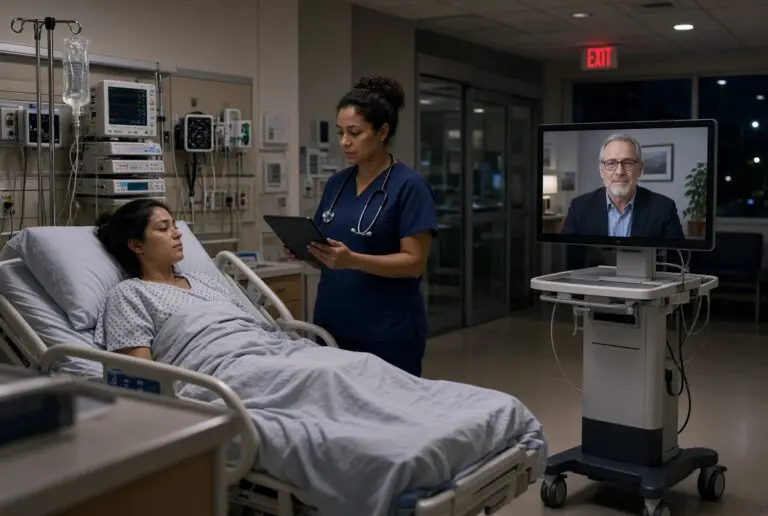

On the late-night satirical show Red Eye, hosts introduced guests with quick, pointed commentary that lived under an audience and could later be clipped or questioned. Inpatient medical units operate under a quieter version of the same reality: clinical decisions made at 2 a.m. or during a busy shift can be reviewed days or weeks later by risk management, peer review, payers, surveyors, or counsel. Medical directors responsible for those units need structures that keep decisions defensible even when the psychiatrist who made them is not standing on the floor the next morning.
Remote medical director services and on-demand psychiatry give medical directors two complementary tools for that environment. A remote medical director owns protocols, documentation standards, and chart review so that expectations stay consistent. On-demand psychiatry supplies a licensed clinician who can evaluate the patient, speak with the team, and document a clear plan when a situation needs specialist input before the next scheduled round. Organizations evaluating these models can also review guidance on how to implement telepsychiatry services and staffing as part of broader planning. For a foundational overview, see what is telepsychiatry and how does it work. The American Psychiatric Association’s telepsychiatry resources emphasize that clinical standards of care remain the same whether the evaluation occurs in person or by video. Broader context on how telepsychiatry is expanding access appears in discussions of how telepsychiatry services are expanding access to mental healthcare across the United States and telepsychiatry expanding access to mental health care.
Why Scrutiny Hits Inpatient Medical Units Differently
Inpatient medical floors routinely manage delirium, withdrawal, capacity questions, agitation, and psychiatric medication issues alongside the primary medical problem. Decisions about restraints, holds, medication changes, or disposition are made under time pressure and with limited local psychiatric presence. Those same decisions are frequently reviewed later because they affect length of stay, transfer risk, safety events, and billing. Joint Commission standards and CMS Conditions of Participation require hospitals to maintain consistent clinical documentation and oversight processes that support quality and safety reviews.
Without consistent standards and timely specialist input, documentation can be thin. A note that says “patient agitated, meds given” is harder to defend than one that records the clinical findings, the alternatives considered, the rationale for the chosen intervention, and the plan for reassessment. Medical directors feel the gap when an event is reviewed and the chart does not clearly show why the team acted as it did. Facilities that already use after-hours telepsychiatry can extend that foundation by adding structured oversight for decisions most likely to face later examination. Supporting tools such as psychiatric screening tools can further help teams identify cases that warrant timely specialist input.
How a Remote Medical Director Creates Defensible Standards
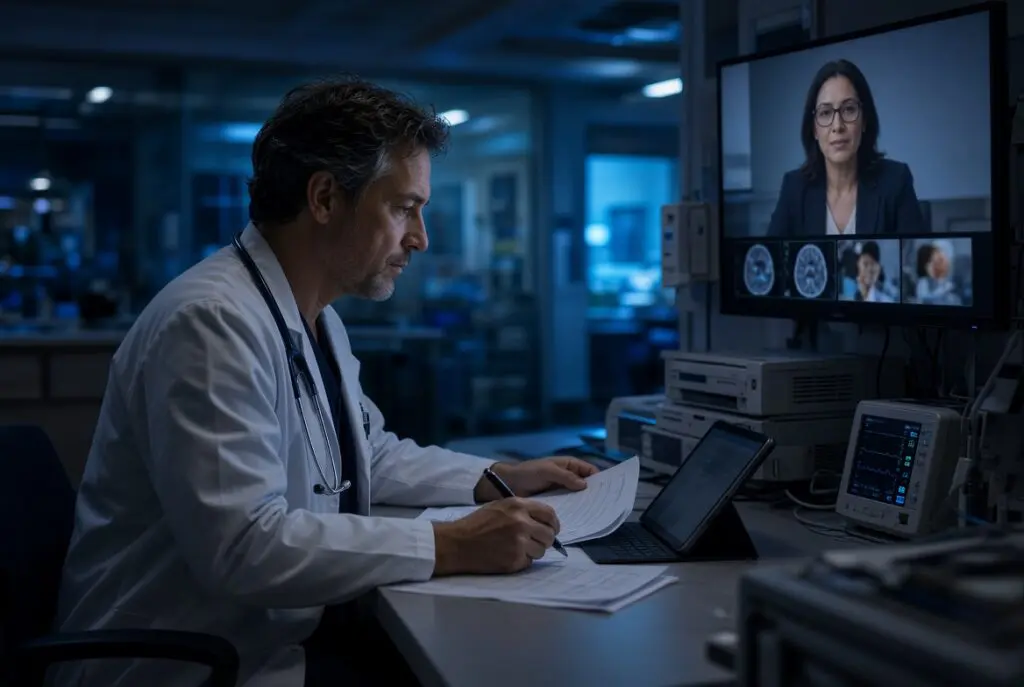
A remote medical director provides ongoing clinical governance without requiring an on-site psychiatrist in the leadership role. Typical responsibilities include:
- Defining documentation standards for high-scrutiny decisions (restraints, involuntary holds, capacity assessments, high-risk medication changes, and transfer or discharge from medical units).
- Establishing escalation triggers so nursing and medical teams know when to request an on-demand psychiatric evaluation rather than managing alone until morning rounds.
- Conducting periodic chart review of cases that meet defined criteria (restraint use, rapid medication changes, or events that trigger internal review).
- Updating protocols so they reflect current evidence and regulatory expectations.
- Serving as a consistent clinical resource for the medical director and nursing leadership when questions arise after a case has closed.
Because the remote medical director is not also carrying a full clinical panel every night, the role can focus on standards and oversight rather than competing with patient care volume. This separation helps medical directors maintain quality expectations even when the treating psychiatrist changes from one shift to the next. FasPsych’s 24/7 remote medical director services are designed to support exactly this form of ongoing clinical governance.
Where On-Demand Psychiatry Fits on the Inpatient Medical Floor
On-demand psychiatry supplies the real-time evaluation that protocols alone cannot provide. When a patient on a medical unit develops acute psychiatric symptoms, capacity questions, or safety concerns, the team can request a video evaluation from a licensed psychiatrist or psychiatric nurse practitioner. The clinician reviews the available record, speaks with the patient and the bedside team, and documents findings and recommendations directly in the facility’s EHR when the workflow allows. This approach aligns with established telepsychiatry practice standards that require the same clinical rigor as in-person care. Many facilities pair this on-demand access with the operational patterns described in after-hours telepsychiatry coverage so that night and weekend decisions on medical units follow the same clear pathway.
For medical directors, the value is practical:
- Decisions that may later be scrutinized have a specialist evaluation attached rather than relying solely on general medical staff judgment.
- The note captures the clinical rationale while the situation is current, not reconstructed the next day.
- Nursing and medical teams gain a clear plan for monitoring or next steps instead of an open-ended “watch overnight.”
- Coverage can be activated for nights, weekends, or unexpected surges without maintaining a full-time on-site psychiatrist solely for medical-floor consults.
Used together, the remote medical director sets the standard and reviews adherence; on-demand psychiatry supplies the evaluation that meets that standard when a case requires it. Hospitals expanding mental health capacity through flexible staffing models can also examine how a psychiatry staffing network helps hospitals expand mental health care. Additional context on scalable approaches appears in FasPsych’s overview of on-demand mental health services.
Practical Steps for Medical Directors
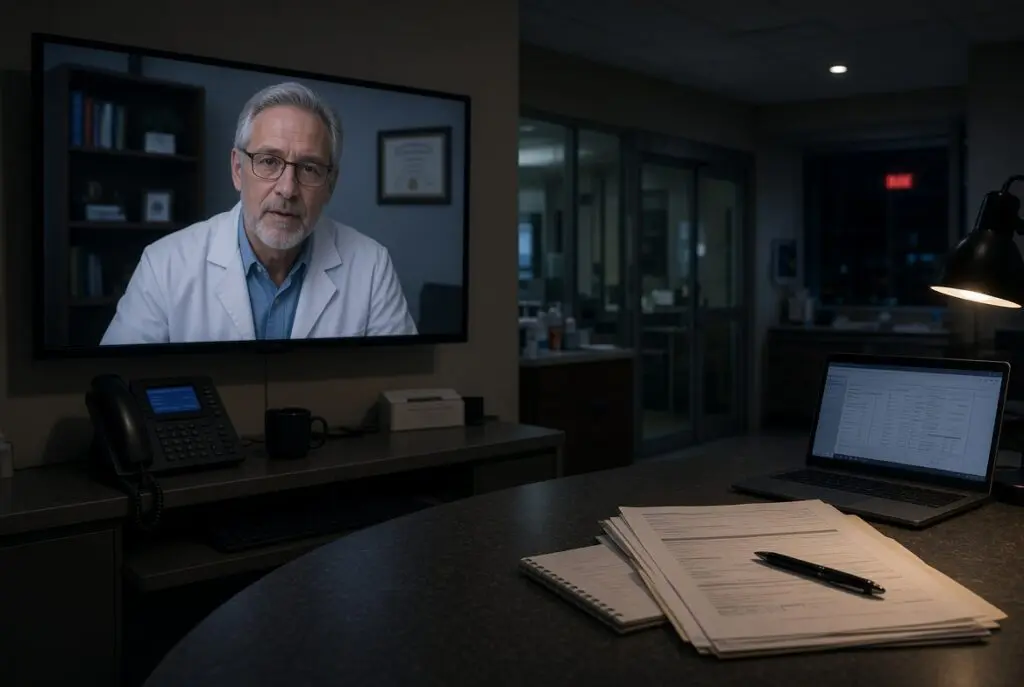
Medical directors evaluating this model can focus on a few concrete elements:
- Define the high-scrutiny decisions. List the situations (restraints, holds, capacity, high-risk med changes, rapid transfers) that will require either a protocol-driven response or an on-demand evaluation.
- Set documentation expectations. Specify the elements that must appear in the note: findings, alternatives considered, rationale, plan, and reassessment timeline. These expectations should align with Joint Commission and CMS documentation requirements for quality and safety reviews.
- Clarify the remote medical director’s role. Confirm chart-review criteria, protocol ownership, and how the remote medical director communicates findings back to the facility medical director.
- Establish the on-demand pathway. Agree on response expectations, who can initiate a request, how the video connection is made, and where the note is written. Facilities can reference established telepsychiatry for emergency rooms workflows as a starting point for inpatient medical units.
- Review early cases. Use the first several high-scrutiny events to confirm that protocols and documentation are working as intended and adjust if needed.
These steps keep the focus on operational reliability rather than adding another layer of process that teams will work around. Organizations also weigh practical factors such as affordable telepsychiatry services staffing and payment options when selecting a partner.
Frequently Asked Questions
How does a remote medical director improve defensibility of clinical decisions on inpatient medical units?
A remote medical director establishes clear documentation standards and escalation protocols for high-scrutiny decisions such as restraints, capacity assessments, and medication changes. Periodic chart review then confirms that those standards are followed, so that when a decision is later examined, the rationale and process are already visible in the record. This approach is consistent with Joint Commission expectations for ongoing clinical oversight and quality monitoring.
When should an inpatient medical team request on-demand psychiatry instead of waiting for scheduled rounds?
On-demand psychiatry is appropriate when a patient shows acute psychiatric symptoms, capacity questions, safety concerns, or other issues that require specialist input before the next scheduled evaluation. The remote medical director typically helps define the specific triggers so that teams know when to activate the service. See FasPsych’s guidance on after-hours telepsychiatry coverage for related operational considerations.
Can remote medical director services and on-demand psychiatry work together in the same facility?
Yes. The remote medical director owns ongoing clinical governance, protocol development, and chart review, while on-demand psychiatry provides timely patient evaluations when needed. The combination supports consistent standards without requiring a full-time on-site psychiatrist for every medical-floor consult. FasPsych describes this pairing in its remote medical director model overview.
What documentation elements help most when a clinical decision may later be scrutinized?
The most useful notes include the clinical findings, alternatives considered, the rationale for the chosen intervention, a clear plan, and a reassessment timeline. Having a specialist evaluation attached to high-scrutiny decisions further strengthens the record. APA telepsychiatry practice resources stress that documentation must support the same standard of care as in-person evaluations.
How does this model differ from general after-hours telepsychiatry coverage?
General after-hours coverage focuses primarily on availability. This model adds a dedicated remote medical director layer focused on standards, chart review, and preparation for later scrutiny of decisions made on inpatient medical units, paired with on-demand evaluations that follow those standards.
Conclusion
Inpatient medical units generate clinical decisions that are later examined. Medical directors can reduce the risk of thin documentation or unsupported actions by pairing a remote medical director—who owns standards and chart review—with on-demand psychiatry that delivers a timely specialist evaluation when the situation requires it. The combination supports consistent clinical governance and defensible decision-making without requiring a full-time on-site psychiatrist for every medical floor consult.
FasPsych provides both remote medical director services and on-demand psychiatry for inpatient medical facilities. Organizations that want coverage aligned with their existing EHR, privileging process, and escalation pathways can discuss specific staffing models with the FasPsych team.