
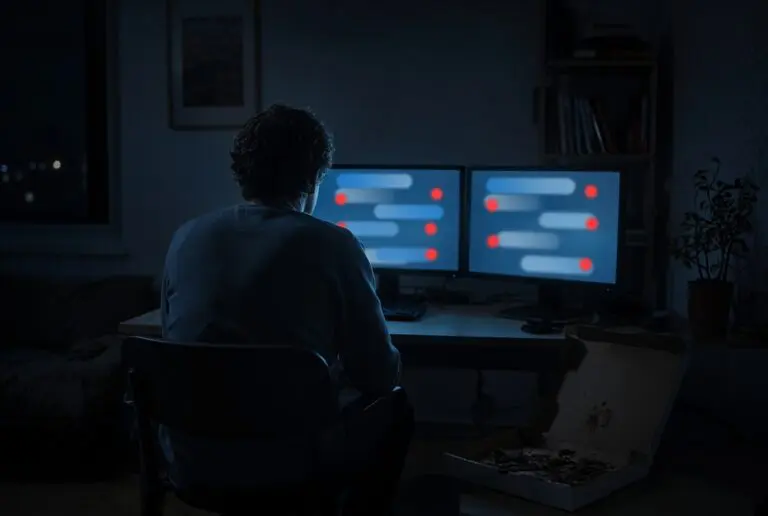

 Channels such as Channel 404 News with Don Flurgundy sit inside a familiar internet format: long live shows built around other creators’ disputes, public blow-ups, and running sagas. Flurgundy streams those recaps on Kick and posts show notes on X (@Channel404News). For some viewers it is entertainment. For people who spend hours every week inside that stream of call-outs and meltdowns — and for the hosts who produce it — the nervous system does not always treat it as fiction.
Living inside online conflict has a mental load. Repeated exposure to interpersonal hostility can raise secondary stress, drain emotional energy, disrupt sleep, and slowly train a person to see the world as a place of perpetual fight.
What “Living Inside” Conflict Content Actually Means
This is not the same as checking a headline once a day. It is a media diet of:
- Recurring personal disputes between public figures
- Reaction videos to someone else’s breakdown or humiliation
- Chat rooms that keep the argument going after the stream ends
- Clips designed to capture the peak moment of anger or collapse
Creators in this lane often work several nights a week, tracking multiple conflicts at once. Audiences may follow the same storyline across YouTube, Kick, X, and Discord. The conflict becomes a serial. The body keeps score even when the viewer says, “It’s just content.”
Psychiatric Times has described how media saturation and a steady diet of negative content can contribute to stress and anxiety. The American Psychological Association has used related language such as media saturation overload for the strain of near-constant negative coverage. Conflict commentary is a concentrated version of that diet: high emotion, personal stakes, and little recovery time between episodes.
Secondary Stress: Feeling the Fight Without Being in It
Secondary or vicarious stress is the strain that comes from close, repeated contact with other people’s distress. Therapists, first responders, and journalists have long recognized it. Heavy consumers of drama content can experience a lighter but real version of the same pattern.
Signs can include:
- Feeling wired or irritable after a stream
- Replaying someone else’s argument in your head
- Taking sides so strongly that a stranger’s conflict affects your mood
- Scanning for the next “drop” or meltdown
- Difficulty settling after the laptop closes
Research on media vicarious traumatization has focused most often on war and disaster coverage, but the mechanism is relevant here: emotionally intense media can leave residue. You did not live the fight. Your system still practiced it.
In drama commentary, the bond is often to a conflict and to the hosts who narrate it. Loyalty to a saga can keep a person returning even when the content leaves them tense or depleted.
Emotional Exhaustion for Creators and Audiences
For creators, the job can require staying inside other people’s worst hours and packaging them for an audience that expects heat. That is high-output emotional labor. It can blur into screen fatigue, difficulty switching off, and a sense that calm content will not hold attention. The risk is chronic high-intensity output without enough recovery.
For audiences, exhaustion often looks quieter:
- Less patience in real conversations
- A shorter fuse after nights of watching people tear each other down
- Cynicism that “everyone is performing”
- Using more conflict content to feel informed or less left out
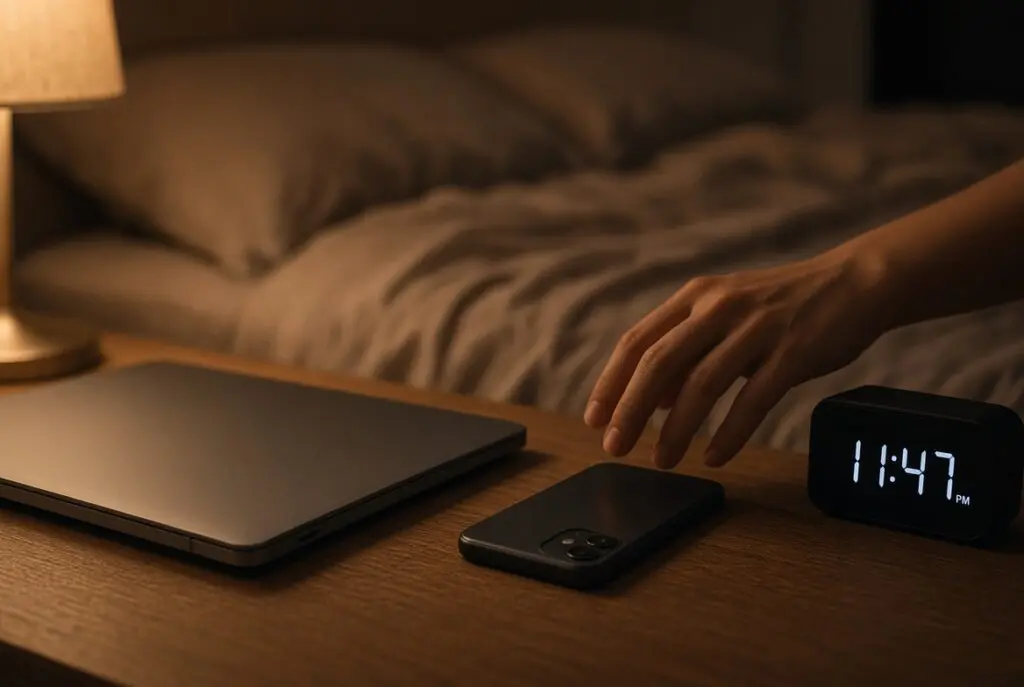
Sleep is a common casualty. Late streams, cliffhanger recaps, and the urge to check whether “something dropped” keep the brain in monitoring mode. Poor sleep then makes the next day’s conflict content land harder.
How Conflict Media Can Narrow Worldview
Spend enough hours in call-out culture and the world can start to look like a courtroom with no recess. People become sides. Ambiguity feels like weakness. Ordinary disagreements at work or home can feel like the opening of a streamer beef.
That shift is not a moral failure. It is habituation. The brain learns what it rehearses. If the rehearsal is public humiliation and counterattack, quieter forms of repair get less practice.
Digital conflict also travels through engagement systems that reward peak emotion, which is why it is easy to stay inside the fight. Related platform-level harms are covered separately in FasPsych’s post on social media mental health harm; this article is about the load of conflict-as-entertainment.
Practical Ways to Lower the Load
Name the genre. “I watch conflict content” is more precise than “I watch YouTube.” Naming it makes limits easier.
Put a clock on it. Decide the end of the show before it starts. Live chat is designed to hold you past that point.
Do not sleep on the fight. Leave a buffer between the last clip and lights out. The body needs a downshift that argument recaps do not provide.
Watch your aftertaste. If you close the tab more hostile, more hopeless, or more obsessed with people you do not know, the cost is already showing.
Protect real relationships from stream rules. Online conflict rewards the sharpest reply. Homes and workplaces do not.
Creators need recovery as a production constraint. If the product is other people’s distress, planned time off is part of doing the job safely — not a lack of hustle.
Even professional sports teams hire psychologists because they know constant high-emotion performance changes people. Commentary channels and the organizations that employ digital-native staff are not exempt from that reality.
When Online Conflict Starts to Need Clinical Attention
Seek professional support when conflict media is paired with:
- Persistent anxiety, irritability, or low mood
- Sleep that does not recover on nights off
- Withdrawal from offline relationships
- Feeling unable to stop checking a saga
- Using streams to numb or to stay angry
- A worldview so adversarial that ordinary life feels unsafe or pointless
Help can include evaluation for anxiety or depression, skills for emotional regulation, and treatment of co-occurring issues.
Telepsychiatry can make that care easier to start without walking into a clinic after a sleepless night of watching other people unravel. Coverage of how telepsychiatry services are transforming behavioral health care through technology and how technology is changing behavioral health under Medicaid reflects the same access problem: people need care that fits real schedules and strained systems.
Schools, clinics, hospitals, and justice settings see this load in students, patients, and staff. Organizations can add coverage through a nationwide network of licensed psychiatric providers. FasPsych’s telepsychiatry staffing model is built to fit existing workflows. Independent reporting has also described how FasPsych uses behavioral health telehealth to serve hospitals, jails, and schools.
Ready to add mental health support to your organization?
Contact FasPsych to discuss telepsychiatry staffing for anxiety, media-related stress, and other behavioral health needs.
- Phone: 877-218-4070
- Partner with us: https://faspsych.com/partner-with-us/
Frequently Asked Questions
Is watching drama streams harmful by itself?
Not automatically. Risk rises with hours spent, late-night use, strong emotional aftertaste, and using conflict content to cope.
What is secondary stress in this context?
It is strain from repeated close contact with other people’s fights and distress, even when you are only watching.
How is this different from general social media use?
The load here is the conflict genre — call-outs and meltdowns — not only likes, comparison, or platform design.
Can creators be affected as much as viewers?
Often more. They track multiple disputes, perform on a schedule, and may feel pressure to keep the temperature high.
When should someone get professional help?
When mood, sleep, relationships, or daily functioning stay worse after the streams stop, or when cutting back feels impossible. Organizations can learn more about integrating telepsychiatry services.