
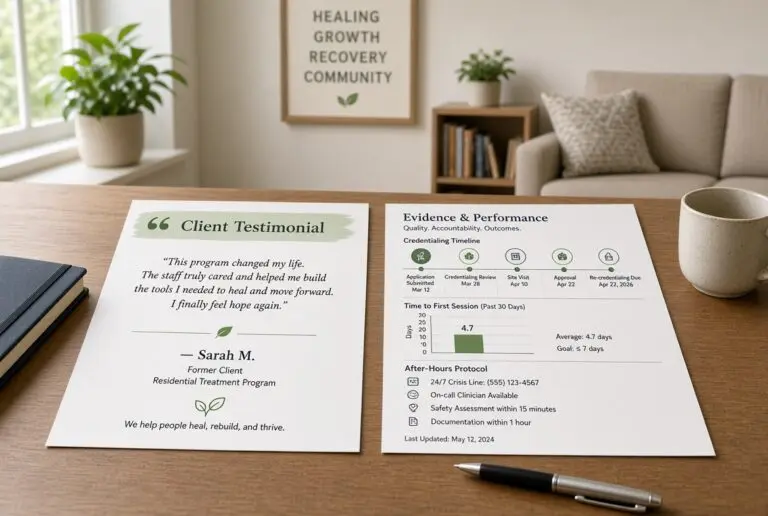

Treat most telepsychiatry consultation service reviews for residential treatment facilities as claims to verify, not as evidence. That is because most are testimonials a vendor selected and published, or patient listings about outpatient visits that have little to do with a residential stay. To get value from a review, turn each line into a question about residential operations. Then ask the vendor to back the answer with a document or a metric. FasPsych provides telepsychiatry and psychiatric staffing to behavioral health programs. Its telepsychiatry for residential treatment centers and SUD programs gives you a working residential service model to run that check against. The sections below cover what you can confirm, what does not transfer from hospital settings, and what to ask references.

Which review claims about telepsychiatry providers you can verify, and which ones don’t transfer
Positive reviews tend to repeat the same phrases, and each phrase points to something you can request. For example, “responsive providers” means little until you see time to first session for a new admission. Similarly, “easy onboarding” should translate into a dated credentialing timeline. Ask for each item in writing, ideally drawn from a recent residential client.
| Review claim | Evidence to request |
|---|---|
| “Responsive providers” | Time to first session for new admissions |
| “Easy onboarding” | Credentialing timeline from contract to first visit |
| “Great with our residents” | Licensure list by state, matched to your census |
| “Available when we need them” | Written after-hours escalation protocol |
| “Handles our adolescents well” | Minor and guardian consent workflow |
| “Works with our team” | EHR access and care-team integration process |
If a vendor cannot produce the item in the right column, the review behind it carries little weight. In short, praise tied to a document is a signal, while praise alone is marketing.
Even documented praise needs a second filter, however, because of where it was earned. Many telepsychiatry companies build their reputations in emergency departments and inpatient units, where success means completing a single consult quickly. Residential care asks for something else. A resident on a multi-week stay needs scheduled medication follow-up, dose adjustments tracked over time, and the same prescriber across visits so that changes are not lost between clinicians. As a result, weigh reviews on follow-up cadence and prescriber continuity, which form the core of residential telehealth medication management. Consumer star ratings tell you even less, since they usually describe one outpatient visit, a billing complaint or a wait time, and rarely name the care setting.
Checking licensure, credentialing and payer claims behind a positive review
Once a review passes the residential test, check the credentials behind it. Licensure must match the state where the resident is physically located, so compare the vendor’s licensure list with your census. Likewise, credentialing turnaround and time to first session should arrive as documented timelines from recent onboardings, not as assurances.
Next, confirm the provider mix. The types of providers telepsychiatry companies supply range from psychiatrists to psychiatric nurse practitioners, and scope, supervision and payer rules differ between them. Because FasPsych staffs both roles, you can ask it directly for its provider mix and state licensure list.
Finally, test billing claims against current rules. Medicare behavioral and mental health telehealth remains an exception to many payment restrictions that returned on October 1, 2025, including restrictions involving the patient’s home and nonrural locations (CMS). For Rural Health Clinics and FQHCs, the required in-person mental health visit will not take effect until after January 1, 2028 (CMS). So a vendor citing outdated rules is a warning sign.
After-hours crisis response and minor consent: the signals reviews rarely mention
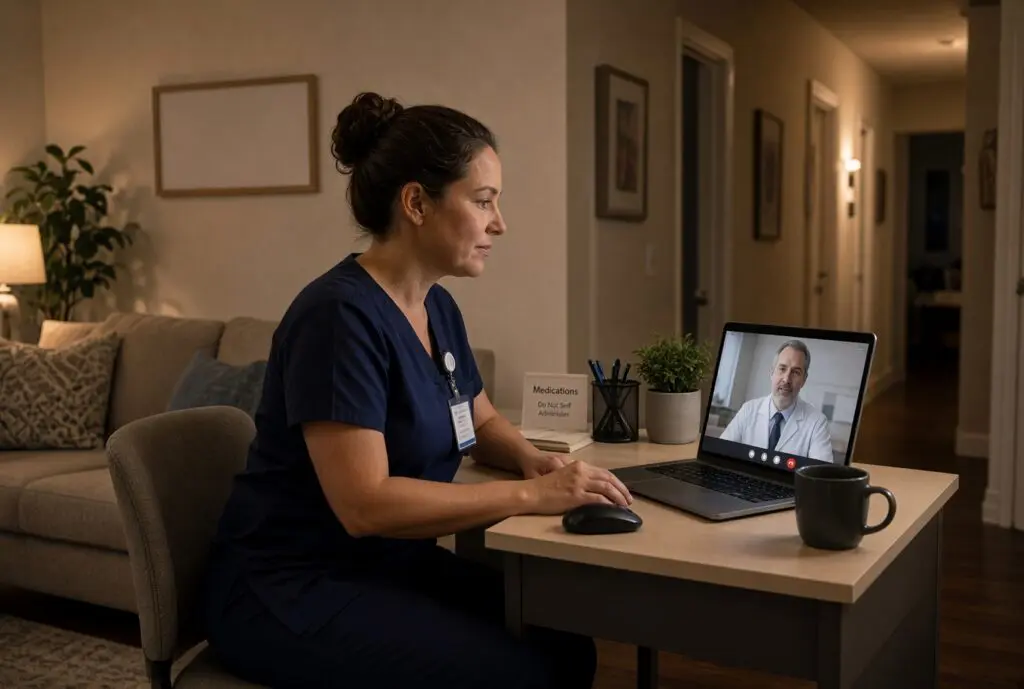
Credentials show who will treat your residents, but they do not show what happens when something goes wrong. Testimonials describe good days. However, they almost never cover 2 a.m. on a Saturday when a resident escalates. For that reason, ask for the written escalation protocol. It should spell out who your night nurse calls, who answers, how quickly a prescriber responds and how the event reaches the day team. Then compare it with how vendors structure night and weekend telepsychiatry coverage, and confirm that the after-hours prescriber can see current medication records.
Adolescent programs need one more document. Guardian consent for evaluation, medication changes and telehealth itself must be in place before the first session. Therefore, request the vendor’s consent workflow and check it against your state’s requirements and your admission packet.
How telepsychiatry consultation should fit your clinical team, and how references prove it
Beyond crisis coverage, the daily test is integration. Friendliness is the most common praise in reviews and the least useful, because what matters is whether the remote prescriber works inside your treatment team. In practice, that means notes in your EHR, clear nursing handoffs after each visit, and attendance at team meetings when a plan changes.
For residential SUD programs, integration also extends to medication-assisted treatment. Induction, dose changes and discharge planning have to line up with counseling and nursing. FasPsych offers virtual medication-assisted treatment alongside its telepsychiatry services for programs that need that coordination. In addition, many residents arrive with co-occurring disorders. They need a prescriber who applies dual diagnosis telepsychiatry strategies instead of treating each condition separately.
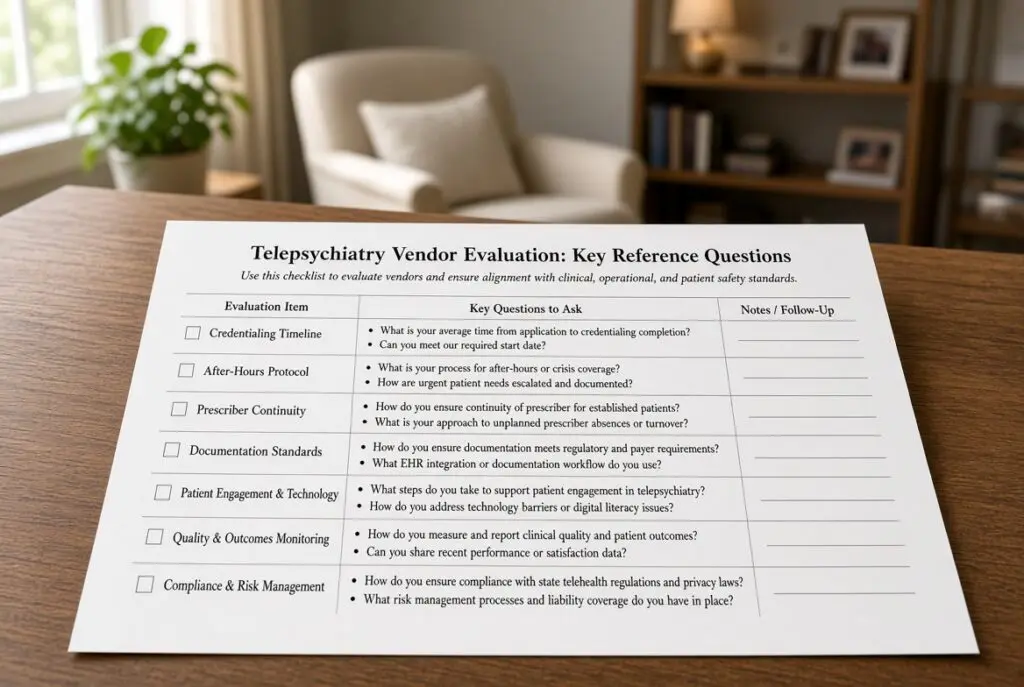
Since a testimonial will only offer adjectives about this work, peer residential programs are where you find the handoff examples. Ask references questions that have specific answers:
- How many prescribers have you had in the past year, and why did they change?
- How many scheduled sessions were missed, and how were residents covered?
- Did any after-hours crisis call go unanswered, and what happened next?
- How long did credentialing actually take compared with the estimate?
- How were medication changes communicated to nursing staff?
Put the same questions to FasPsych and ask it to answer with residential examples and references. As a next step, request a FasPsych consultation and walk its residential service model through this list.