


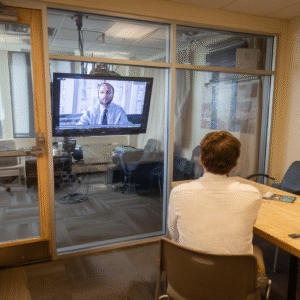
 Student mental health crises have reached unprecedented levels, with 44% of high school students reporting persistent feelings of sadness or hopelessness according to the CDC’s latest Youth Risk Behavior Survey. Yet many schools struggle to provide adequate mental health support due to staffing shortages, budget constraints, and limited access to qualified professionals. Virtual mental health partnerships have emerged as a transformative solution, offering schools the ability to connect students with licensed therapists and counselors regardless of geographic limitations or local resource availability.
However, selecting the right virtual mental health partner requires careful consideration of numerous factors that extend far beyond basic service offerings. Schools must navigate complex compliance requirements, evaluate technology platforms, assess clinical quality standards, and ensure seamless integration with existing support systems. The wrong choice can result in poor student outcomes, compliance violations, and wasted resources, while the right partnership can dramatically improve student wellbeing and academic success.
This comprehensive guide will equip school administrators, counselors, and decision-makers with a systematic framework for evaluating and selecting virtual mental health partners. You’ll discover essential criteria for vendor assessment, learn about critical compliance considerations including FERPA and HIPAA requirements, and explore proven implementation strategies used by successful school districts. We’ll examine real-world case studies that demonstrate measurable outcomes, provide cost-benefit analysis tools, and offer practical resources including evaluation scorecards and RFP templates.
FasPsych understands the unique challenges schools face when implementing virtual mental health services, having worked with numerous educational institutions to develop tailored solutions that prioritize student privacy, clinical excellence, and seamless integration with school operations. Whether you’re exploring virtual mental health services for the first time or looking to optimize an existing program, this guide will provide the insights and tools necessary to make informed decisions that truly serve your students’ mental health needs. FasPsych specializes in partnering with educational systems, providing board-certified child and adolescent psychiatrists and psychiatric nurse practitioners.
Key Takeaways
Conduct a comprehensive mental health needs assessment to identify specific service gaps and requirements across diverse student populations before selecting a virtual mental health partner. These services connect students with licensed counselors, social workers, or psychologists for therapy and support.
Prioritize virtual mental health providers with robust clinical credentials, evidence-based treatment approaches, and demonstrated cultural competency to ensure high-quality, inclusive mental health services.
Evaluate potential virtual mental health platforms based on stringent security standards, HIPAA compliance, and seamless integration capabilities with existing school technology infrastructure.
Explore diverse funding models, including state grants and strategic investment opportunities, to develop financially sustainable virtual mental health partnerships that provide long-term student support.
Design pilot programs with clear, measurable success metrics to systematically assess the effectiveness of virtual mental health partnerships and enable continuous quality improvement and strategic scaling.
Identifying Your School’s Virtual Mental Health Service Gaps and Requirements
Conducting a Mental Health Needs Assessment Across Student Populations
Before selecting a virtual mental health partner, establish a comprehensive baseline of your current service capacity and student needs. This assessment forms the foundation for making informed decisions about service gaps and required interventions. Virtual behavioral health services can include individual therapy, group sessions, crisis intervention, and skill-building programs.
Start by analyzing your existing mental health infrastructure. While nearly all schools (97%) provide mental health services, less than half (48%) can effectively serve all students in need. Document your current staffing ratios – South Carolina schools operated with a 1:1,300 mental health counselor-to-student ratio in 2022, well below their target of 1:650. This disparity illustrates why many districts are exploring virtual solutions to bridge capacity gaps.
Next, examine your student population demographics and mental health prevalence. Nearly 1 in 5 children (21%) have been diagnosed with a mental, emotional, or behavioral health condition, with anxiety, behavior disorders, and depression being most common. However, 40% of high school students report persistent sadness or hopelessness, indicating diagnosed conditions don’t capture the full scope of need. Virtual services can include mental health screenings to identify conditions such as depression or anxiety.
Conduct focus groups with diverse student populations to understand service preferences and barriers. California’s assessment revealed mixed student preferences for virtual services – some appreciate flexibility and privacy, while others struggle with confidential space limitations at home. This variability underscores the importance of understanding your specific student body’s needs before implementing virtual solutions. Specialized psychiatrists can perform evaluations and manage prescriptions for conditions like ADHD, anxiety, and depression. Some telemedicine companies such as FasPsych will offer fully remote, hybrid, or on site programs, and discuss the advantages and disadvantages of both; generally, the standard has become fully remote programs with delivery on site available via video conference.
Defining Service Delivery Models That Align with School Operations
When selecting a virtual mental health partner, define service delivery models that seamlessly integrate with your school’s operational framework. The Los Angeles County Office of Education (LACOE) model demonstrates flexible service delivery, offering sessions both at school and at home to accommodate different student preferences and scheduling constraints. It’s important to understand what the goals are of stakeholders involved in order to solicit information from various companies in the telehealth field. Additionally, schools must establish clear protocols for handling emergencies during virtual sessions to ensure student safety.
Your delivery model selection should address the critical capacity gap – while 97% of schools provide mental health services, less than 48% can effectively serve all students in need, with 55% citing insufficient mental health professional staff coverage as the primary barrier. As a result it’s also important to look at what is causing these gaps – if it’s a lack of local providers, a lack of funding, or a lack of ability to develop infrastructure. It’s also important to look at your unique situation in order to understand how a program may work within the scope of any policy requirements at the district, city, county, state or other level. The amount of flexibility available and the issues that telemedicine is being brought in to fix need to be known to develop a plan. Flexible scheduling for online therapy can accommodate students’ school schedules and extracurricular activities, and schools can connect students with licensed professionals regardless of their physical location, which is beneficial for rural areas.
Consider three primary models: in-school delivery for students needing structured environments and immediate crisis support, at-home delivery for those requiring privacy and flexible scheduling, and hybrid models combining both approaches. Platform decisions should prioritize student choice, as California focus groups revealed mixed preferences—some students prefer virtual formats for flexibility and privacy, while others feel uncomfortable due to inability to find confidential spaces at home. Experiences telemedicine companies will go over these models implementation costs and their ability to service each one – often getting a provider on site is significantly more expensive and provides less flexibility and hours, and after various periods of remote instruction many students may be more open to remote services.
Evaluating Virtual Mental Health Provider Clinical Qualifications and Cultural Competency
Assessing Provider Credentials and Evidence-Based Treatment Approaches
When evaluating virtual mental health providers, schools must prioritize clinical credentials that demonstrate specialized competency in adolescent mental health. Providers should hold current state licenses in counseling, psychology, or social work, with specific training in evidence-based therapeutic interventions such as Cognitive Behavioral Therapy (CBT) and Dialectical Behavior Therapy (DBT). Additionally, if full treatment is requested, information on psychiatric providers such as psychiatrists and nurse practitioners needs to be solicited, along with possible treatment plan guidelines, as patients can receive personalized treatment plans tailored to their specific mental health needs through telepsychiatry.
A comprehensive Clemson University study analyzing 3,500 middle and high school students across 11 states found that 75% of participants experienced clinically significant symptom reduction following treatment. Telepsychiatry interventions showed effect sizes of 0.83 for depression and 1.15 for anxiety symptom reduction. Telepsychiatry can include comprehensive evaluations and follow-up visits to ensure ongoing care, including long-term mental health monitoring.
Schools should require providers to demonstrate measurable clinical outcomes through standardized assessment tools like PHQ-9 and GAD-7. Research reveals that participants with more severe initial symptoms experienced the largest improvements, suggesting effectiveness across the clinical spectrum. Additionally, equitable outcomes were observed across racial groups. While behavioral health has a habit of becoming habitual treatment without cure, it’s important to look at the minimization of symptoms as the goal and a quantifiable way to justify spending and time allocation. Online therapy is proven to be as effective, if not more effective than face-to-face therapy.
Companies such as FasPsych will allow you to interview providers before staffing with them. It’s important to take advantage of this period to make sure the expectations between your site and the provider are the same. When interviewing potential providers, ask specific questions about their clinical supervision structure, continuing education requirements, and experience with adolescent populations. Providers should also demonstrate cultural competency training and familiarity with school-specific mental health challenges.
Ensuring Culturally Responsive Mental Health Services
Cultural competency represents a critical dimension that directly impacts treatment effectiveness and student engagement. Your evaluation should prioritize providers with diverse clinical staff who reflect your student population’s demographics. The Los Angeles County Office of Education’s model, serving 1.3 million K-12 students, emphasizes matching cultural backgrounds between providers and students.
The availability for providers with different backgrounds and treatment familiarities is significantly increased with the use of telemedicine. All providers will be licensed to practice in your location, but the larger pool of available providers (no longer constrained by geography) gives a state wide and in some case nation wide profile. This allows the use of nearly unlimited resources and even multiple providers to best reach cultural competency. Telepsychiatry services are designed to be accessible, often with shorter wait times compared to traditional in-person visits.
Examine potential partners’ bilingual capabilities, community-specific mental health training, and experience serving diverse populations. Third-party analysis shows that non-white participants, including Asian, Black, and Hispanic students, experience similarly significant improvements when services are culturally responsive.
Analyzing Technology Infrastructure and Platform Integration Requirements
Platform Security, HIPAA Compliance, and Student Privacy Protection
When evaluating virtual mental health platforms, prioritize robust security frameworks that protect sensitive student information while maintaining therapeutic effectiveness. The foundation of successful implementation rests on four critical success factors: provider training, access to reliable technology, availability of an e-helper, and policies supporting ethical telehealth delivery.
Your security assessment should begin with HIPAA compliance verification, ensuring the platform encrypts all data transmissions and maintains comprehensive audit trails. Schools face additional complexity with FERPA requirements, which govern educational records differently than healthcare data. For example, California’s regulatory framework, established through Assembly Bill 2315, emphasizes that student voice should be the most important guide over budgetary or contractual considerations when selecting platforms.
Data encryption standards must meet or exceed AES-256 protocols, with end-to-end encryption for all video sessions and messaging features. Verify that platforms maintain SOC 2 Type II compliance and conduct regular third-party security audits. Given that nearly all schools (97%) provide mental health services but less than half can effectively serve all students in need, your security infrastructure must scale efficiently while protecting student privacy across both school-based and home-based sessions.
Implement multi-factor authentication for all users and ensure the platform provides granular permission controls for different staff roles accessing student mental health data. An experienced provider staffing company will have its own IT staff and implementation experts to help adhere to all state guidelines based on experience working with previous school based contracts. Additionally many providers will have pre-existing routes to meet these standards.
Seamless Integration with Existing School Systems and Workflows
Schools must prioritize providers that integrate seamlessly with existing technology infrastructure without disrupting established workflows. The integration process should begin with a comprehensive assessment of current systems, including student information systems, scheduling platforms, and communication tools.
For example, California’s telehealth guidance emphasizes that platform decisions should be made by students themselves (except for special education students with IEPs), with student voice being the most important guide over budgetary considerations. This student-centered approach requires platforms that accommodate diverse preferences while maintaining system compatibility.
Staff training becomes crucial during integration, as research distinguishes between initial technology acceptance and sustained long-term use. Schools should evaluate providers based on their ability to offer comprehensive training programs that minimize workflow disruption. While the providers are off site and a third party staffing company can fill in the gaps in processes or needed requirements, it will ultimately still be on site staff that make sure the students connect, stay engaged in treatment, and answer basic questions.
Understanding Funding Models and Cost-Effectiveness Strategies
Exploring State Funding and Grant Opportunities for Virtual Mental Health Services
Securing sustainable funding is critical for establishing effective virtual mental health programs in schools. The federal School-Based Mental Health Services Grant Program has demonstrated consistent support, awarding 27 grants in FY 2025, 23 in FY 2024, and 32 in FY 2022. These grants provide substantial opportunities for schools to implement comprehensive teletherapy services without straining local budgets.
State-level initiatives offer promising models for sustainable implementation. The Los Angeles County Office of Education partnership exemplifies how state funding can eliminate financial barriers, providing mental health access to all 1.3 million K-12 students across the county at no cost to participating Local Education Agencies. This comprehensive coverage model demonstrates that large-scale virtual mental health services are financially viable with appropriate state funding.
The effectiveness of these funded programs has been validated through rigorous academic analysis. Third-party research demonstrates significant symptom reduction in 75% of participants across both depression and anxiety measures, with participants showing more severe initial symptoms experiencing the largest improvements. This clinical validation strengthens grant applications by providing evidence-based outcomes that funding agencies prioritize.
When pursuing grant opportunities, schools should emphasize the critical need for services, as over half of public schools report that insufficient mental health professional staff coverage limits their ability to serve students effectively.
Calculating Return on Investment and Long-Term Sustainability
Developing a comprehensive ROI framework for virtual mental health partnerships requires evaluating both immediate cost savings and long-term clinical outcomes. The most compelling evidence comes from third-party academic analysis showing significant symptom reduction in 75% of participants across depression (PHQ-9) and anxiety (GAD-7) measures. This clinical effectiveness validation provides a quantifiable foundation for ROI calculations.
The financial model becomes attractive when considering no-cost implementation options. Los Angeles County Office of Education provides mental health telehealth services at no cost to participating Local Education Agencies through state funding, serving all 1.3 million K-12 students. This eliminates the primary financial barrier while delivering comprehensive coverage.
When calculating traditional staffing costs, schools face significant challenges. South Carolina’s current mental health counselor-to-student ratio stands at 1:1,300, far from the target goal of 1:650. Virtual partnerships can bridge this gap cost-effectively, particularly when 55% of schools cite insufficient mental health professional staff coverage as their primary limitation.
Long-term sustainability depends on leveraging federal funding opportunities, with 27 School-Based Mental Health Services Grant awards available in FY 2025. Schools should develop multi-year financial projections that account for both direct service costs and the broader impact of improved student outcomes.
Implementing Pilot Programs and Measuring Partnership Success
Designing Effective Pilot Programs with Clear Success Metrics
Successful virtual mental health pilot programs require strategic design with diverse participant selection and measurable outcomes. With nearly 1 in 5 children diagnosed with mental health conditions, pilots must include representative student populations to ensure equitable effectiveness across demographics.
Effective pilot design should incorporate four critical success factors: provider training, access to reliable technology, availability of an e-helper, and policies supporting ethical telehealth delivery. Run pilots for a minimum of 12 weeks to capture meaningful clinical outcomes, with participants selected across severity levels and demographic groups. Training staff and engaging families is crucial for the successful implementation of virtual mental health services in schools.
Academic validation shows participants with more severe initial symptoms experienced the largest improvements, demonstrating effectiveness across the clinical spectrum. Successful studies included 50% participants identifying as people of color, with non-white participants experiencing similarly significant improvements.
Key success metrics should include standardized clinical assessments (PHQ-9 for depression, GAD-7 for anxiety), attendance rates, academic performance indicators, and qualitative satisfaction surveys. Track both clinical effectiveness—aim for symptom reduction in 75% of participants—and implementation metrics like technology reliability and staff engagement.
Scaling Successful Partnerships and Continuous Quality Improvement
Once pilot programs demonstrate positive outcomes, scaling district-wide requires systematic planning and robust quality assurance. Successful expansion maintains clinical effectiveness while adapting to increased volume and complexity.
Clinical Outcome Measurement as Foundation
Evidence-based scaling requires objective measurement using standardized assessments. Third-party academic analysis demonstrates teletherapy programs achieve significant symptom reduction in 75% of participants across depression and anxiety measures. This validates that virtual mental health partnerships deliver measurable clinical outcomes when properly implemented.
Quality Standards During Expansion
Maintain quality through structured protocols incorporating the four critical success factors identified in research. These become crucial during scaling, as initial adoption doesn’t correlate with continued implementation success.
Continuous Improvement Framework
Implement regular data review cycles tracking clinical outcomes and operational metrics. Monitor counselor-to-student ratios—South Carolina’s 1:650 goal provides a coverage benchmark. Establish feedback loops with students, families, and staff to identify emerging challenges before they impact service quality.
Frequently Asked Questions
Q: How do we determine if our school needs virtual mental health services?
Conduct a comprehensive mental health needs assessment that examines student population demographics, existing support resources, reported mental health challenges, and current service gaps. This assessment should involve surveys, stakeholder interviews, and analysis of student wellness data to identify specific mental health service requirements.
Q: What key qualifications should we look for in a virtual mental health provider?
Prioritize providers with licensed clinical professionals, evidence-based treatment approaches, demonstrated cultural competency, HIPAA compliance, robust technology platforms, and experience working specifically with educational institutions. Verify credentials, review treatment methodologies, and assess their ability to provide culturally responsive mental health services.
Q: How can schools fund virtual mental health partnerships?
Explore multiple funding strategies including state mental health grants, federal educational support programs, district budgets, public-private partnerships, and potential insurance reimbursement models. Calculate long-term cost-effectiveness by analyzing potential student wellness improvements, reduced intervention costs, and overall mental health program sustainability.
Q: What technology considerations are critical when selecting a virtual mental health partner?
Evaluate platform security, HIPAA compliance, data privacy protections, seamless integration capabilities with existing school management systems, user-friendly interfaces for students and administrators, and robust reporting/analytics features. Ensure the technology supports confidential, secure, and efficient mental health service delivery.
Q: How should we implement and evaluate a virtual mental health partnership?
Design a structured pilot program with clear, measurable success metrics such as student engagement rates, service utilization, mental health outcome improvements, and stakeholder satisfaction. Establish baseline measurements, implement the program in phases, collect continuous feedback, and develop a scalable framework for ongoing quality improvement and potential expansion.
Expert Insights
Conclusion
Selecting the right virtual mental health partner represents one of the most critical decisions your school will make in supporting student wellness. Throughout this comprehensive guide, you’ve discovered the essential criteria for evaluation—from ensuring proper licensing and evidence-based practices to prioritizing data security and seamless integration capabilities. You’ve learned how to assess a provider’s cultural competency, crisis management protocols, and ability to deliver measurable outcomes that align with your school’s unique needs.
The key takeaway is clear: thorough vetting and strategic selection of your virtual mental health partner will directly impact the quality of care your students receive. By following the systematic approach outlined in this guide—conducting comprehensive needs assessments, evaluating provider credentials, reviewing technology platforms, and establishing clear communication protocols—you position your school to make an informed decision that will benefit your entire educational community.
Remember, investing time in the selection process now will yield significant returns in improved student mental health outcomes, reduced crisis incidents, and enhanced overall school climate. The right partnership can transform how your institution addresses mental health challenges and creates a supportive environment where every student can thrive academically and emotionally.
Elevate Your School’s Mental Health Support: Contact a FasPsych implementation specialist today to learn how your school can implement FasPsych telepsychiatry in a way that best meets your students needs.