


 Dieter Bohlen, the German music producer and longtime judge on Deutschland sucht den Superstar, once described the intense pressure of his early career with Modern Talking in unflinching detail. In the RTL documentary Absolut Dieter Bohlen, he recounted how the relentless schedule, internal conflicts, and constant demand for success left him vomiting blood and battling a stomach ulcer, later recalling that he felt as if he was dying from the stress.
While few people experience the spotlight of international pop stardom, the underlying pattern is common. Prolonged psychological pressure frequently shows up in the body as heartburn, acid reflux, or gastroesophageal reflux disease (GERD). Research confirms a clear bidirectional relationship between these physical symptoms and mental health conditions such as anxiety and depression. The connection runs through the gut-brain axis—the complex network of nerves, hormones, and immune signals that link the digestive system and the brain.
In healthcare environments—hospitals, clinics, correctional facilities, rural practices, and emergency departments—both patients and providers face elevated stress. When heartburn or GERD coexists with untreated anxiety or depression, symptoms intensify, treatment response declines, and quality of life suffers. FasPsych delivers scalable telepsychiatry staffing and behavioral health solutions that help organizations address these interconnected challenges with timely access to specialist care.
The Bidirectional Link Between Heartburn and Mental Health
Multiple large-scale studies and meta-analyses demonstrate that people with GERD experience significantly higher rates of anxiety and depressive symptoms than those without the condition. A 2023 systematic review and meta-analysis published in The American Journal of Gastroenterology found pooled prevalences of anxiety symptoms at approximately 34.4% and depressive symptoms at 24.2% among individuals with GERD. Both conditions occurred at substantially elevated odds compared with healthy controls.
Mendelian randomization studies further support a two-way causal relationship: genetic predisposition to anxiety or depression increases the risk of developing GERD, while genetic liability to GERD raises the risk of anxiety disorders and depression. Cohort studies reinforce the same pattern—having one condition elevates the future risk of the other.
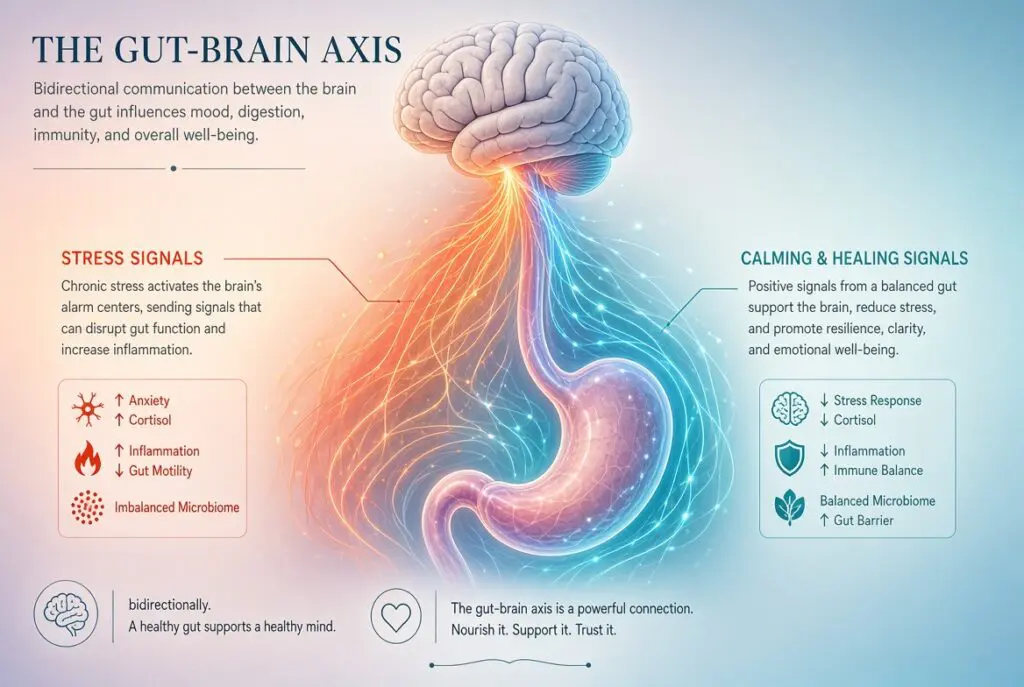
Several mechanisms explain the connection:
- Visceral hypersensitivity: Anxiety and chronic stress heighten the esophagus’s sensitivity to acid. Patients often experience more intense heartburn even when actual acid exposure is modest. This is especially common in non-erosive reflux disease.
- Autonomic and hormonal effects: Stress activates the sympathetic nervous system and the hypothalamic-pituitary-adrenal axis, which can alter lower-esophageal-sphincter function, esophageal motility, and acid production or perception.
- Sleep disruption and quality-of-life impact: Nighttime reflux interferes with rest, amplifying anxiety and depressive symptoms, which in turn increase symptom awareness and distress.
- Shared inflammatory pathways: Chronic low-grade inflammation and changes along the gut-brain axis contribute to both conditions.
The result is a self-reinforcing cycle: stress worsens heartburn, persistent heartburn fuels anxiety or low mood, and untreated mental health symptoms make standard acid-reducing therapies less effective.
Why This Matters for Healthcare Organizations
Patients presenting with recurrent heartburn often carry unrecognized anxiety or depression. Conversely, individuals seeking mental health care may report prominent gastrointestinal symptoms that complicate diagnosis and treatment planning. In high-stress settings such as emergency departments, correctional facilities, and understaffed rural clinics, these overlapping presentations are frequent and resource-intensive.
Providers themselves are not immune. Chronic workplace pressure contributes to provider burnout, which can manifest in physical symptoms including gastrointestinal distress. Addressing the full picture—both the physical and psychological dimensions—improves outcomes for patients and supports workforce sustainability. See FasPsych’s guidance on retaining telepsychiatry providers and reducing burnout.
How FasPsych Telepsychiatry Staffing Closes the Gap
FasPsych specializes in connecting healthcare facilities with board-certified psychiatrists and behavioral health clinicians through flexible telepsychiatry models. These solutions are particularly effective for patients whose symptoms straddle physical and mental health domains.
Key advantages include:
- Rapid access to specialists experienced in evaluating anxiety, depression, and somatic symptom presentations.
- Support for integrated care approaches, including the Collaborative Care Model (CoCM), that coordinate primary care and behavioral health.
- Coverage options for hospitals, clinics, residential programs, correctional settings, and rural organizations facing provider shortages.
- Reduced administrative burden and improved continuity, helping facilities maintain consistent care even amid staffing challenges.
- Focus on measurable outcomes and sustainable engagement that helps mitigate clinician burnout.
By embedding telepsychiatry into existing workflows, organizations can screen for and treat the mental health components that often perpetuate refractory heartburn and related symptoms. Patients receive more complete care; facilities gain scalable capacity without the overhead of permanent full-time hires in every location. Explore more telepsychiatry articles and resources from FasPsych.
Practical Next Steps
Healthcare leaders can begin by recognizing that persistent or treatment-resistant heartburn warrants evaluation for anxiety and depression. Incorporating brief validated screening tools into gastroenterology or primary care pathways, then linking positive screens to telepsychiatry resources, creates an efficient pathway to dual-focused treatment.
Lifestyle measures (meal timing, weight management, stress-reduction techniques) remain foundational, yet they are most effective when combined with appropriate psychiatric support when indicated. FasPsych works with partner organizations to design staffing models that fit operational realities and reimbursement environments.
Conclusion
The experience of high-profile figures such as Dieter Bohlen illustrates a broader truth: intense pressure does not stay confined to the mind. It frequently appears as heartburn and intersects with anxiety and depression through the gut-brain axis. Healthcare organizations that treat only one side of this equation leave patients and providers vulnerable to ongoing distress and suboptimal outcomes.
FasPsych provides the telepsychiatry and behavioral health staffing infrastructure needed to address these complex presentations effectively. Whether your facility needs on-demand coverage, hybrid models, or support for integrated care programs, FasPsych delivers experienced clinicians and practical solutions designed for real-world settings.
Frequently Asked Questions
Does stress actually cause heartburn? Stress does not always create new acid reflux in isolation, but it reliably intensifies existing symptoms and increases esophageal sensitivity. Chronic stress can also influence motility, lower-esophageal-sphincter function, and the perception of discomfort, making heartburn more frequent and severe. A 2023 systematic review and meta-analysis in The American Journal of Gastroenterology supports the strong association between psychosocial factors and GERD symptoms.
Can treating anxiety or depression improve GERD symptoms? Yes. Because the relationship is bidirectional, addressing anxiety and depression often reduces the intensity of heartburn and improves response to standard acid-reducing treatments. Many patients with refractory GERD see meaningful symptom relief once the psychological component is managed.
What is the gut-brain axis and why does it matter? The gut-brain axis is the two-way communication system between the central nervous system and the enteric nervous system of the digestive tract. It involves neural pathways, hormones, immune signals, and the microbiome. Disruptions in this axis help explain why stress, anxiety, and depression so frequently overlap with gastrointestinal symptoms such as heartburn.
When should a patient with chronic heartburn be evaluated for mental health concerns? Evaluation is appropriate when heartburn is frequent, only partially responsive to medication and lifestyle changes, or accompanied by sleep disruption, persistent worry, low mood, or reduced quality of life. Brief screening tools can efficiently identify patients who may benefit from concurrent behavioral health support.
How does FasPsych telepsychiatry staffing help facilities manage these overlapping issues? FasPsych connects organizations with board-certified psychiatrists and behavioral health clinicians experienced in evaluating patients who present with both physical and mental health symptoms. Flexible staffing models support integrated care (including the Collaborative Care Model), improve access in shortage areas, reduce provider burnout, and help facilities deliver more complete treatment without building large permanent teams in every location.
Is telepsychiatry effective for patients who have both GERD-related symptoms and anxiety or depression? Yes. Telepsychiatry enables timely specialist assessment, medication management when indicated, and coordination with primary care or gastroenterology teams. It is particularly useful in settings where in-person psychiatric resources are limited or delayed. Learn more about FasPsych’s approach on the telepsychiatry news and resources page.
Contact FasPsych today to discuss how telepsychiatry staffing can strengthen your behavioral health capacity and improve outcomes for patients navigating both physical and mental health challenges. The best way to reach an implementation specialist is to fill out an online contact form or call (877) 218-4070.