

A telepsychiatry partner can run the clinical decision layer of a ketamine or esketamine program. That layer includes psychiatric evaluation, candidacy screening, prescribing, ongoing telehealth medication management, protocol authorship and medical director oversight. Your clinic, however, keeps the physical layer: dosing, vital-sign monitoring, the Spravato REMS observation period, controlled-substance storage and the DEA registration at the administering site. If your program already has nurses and a treatment room but no psychiatrist on staff, a telepsychiatry partner such as FasPsych can supply the remote prescribers and medical director that ketamine care depends on. As a result, your team keeps running the treatment room while the psychiatric judgment arrives by video.
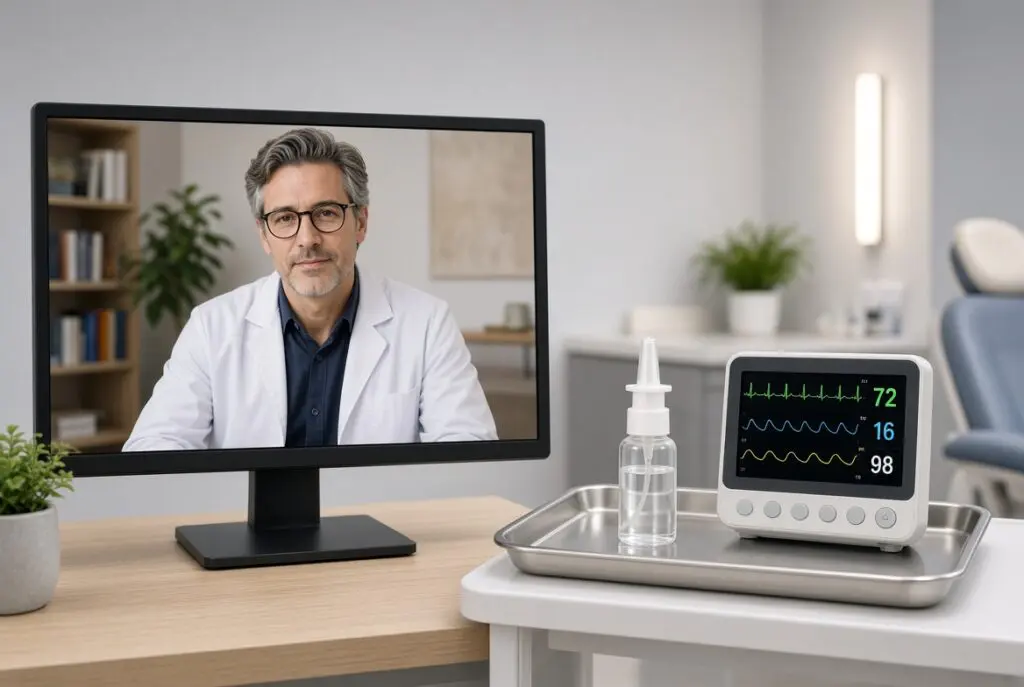
Can a telepsychiatry service provide ketamine treatment? It can run the decisions, not the dosing room
Yes, a telepsychiatry service can provide the clinical decisions behind ketamine treatment, but administration itself happens in person. For example, a telehealth psychiatrist can complete the psychiatric evaluation and confirm that a patient meets your criteria for treatment-resistant depression. That work includes reviewing prior antidepressant trials, screening for psychosis, substance use history and cardiovascular risk, and documenting why ketamine or esketamine is appropriate. The same clinician can also hold prescribing authority, provided licensure and controlled-substance requirements are met, which the section on federal and state rules covers.
After induction, the remote role shifts to psychiatric medication management. Follow-up visits track response and side effects, and they decide whether to continue, space out or stop maintenance sessions. For esketamine, coordination with the oral antidepressant is part of the treatment itself. In FDA’s June 2026 warning letter to KetamineTroches.com, the agency describes Spravato as indicated for treatment-resistant depression in adults, and for depressive symptoms in adults with major depressive disorder with acute suicidal ideation or behavior, in conjunction with an oral antidepressant. Someone therefore has to own that oral regimen. FasPsych’s ongoing telehealth medication management assigns it to the same remote psychiatrist who makes the maintenance decisions, so the antidepressant and the esketamine schedule are managed together rather than by two clinicians who rarely talk.
The remote layer stops at the treatment room door, though, because the drug’s risks are physical. FDA states that Spravato carries boxed-warning risks including sedation, dissociation, respiratory depression, abuse and misuse, and is available only through the restricted Spravato REMS. Sedation and respiratory depression need a trained person in the room, and a video link cannot meet that need.
The REMS then turns that risk into specific rules. It requires dispensing and administration in medically supervised healthcare settings certified in the REMS, with patient monitoring for at least two hours after administration. Dispensing pharmacies must also be REMS-certified. Check the program details against the FDA’s Spravato REMS record, last updated June 24, 2026, rather than relying on older summaries. In practice, you should plan staffing so a nurse can observe each patient for the full window, and plan chair capacity around it.
Custody of the drug stays local for the same reason. The clinic stores it, keeps the controlled-substance records and holds the DEA registration at the location where doses are given, so a remote prescriber’s registration does not replace your site’s. Sourcing deserves equal care with racemic ketamine. In a 2026 FDA warning letter to a ketamine retailer, FDA said compounded ketamine products must meet the conditions of FD&C Act sections 503A or 503B to qualify for their exemptions. FDA also described unapproved products offered without prescriptions as violating federal requirements. Buy only from compliant compounders or approved supply chains, and document which one you use.
The table shows how each task divides between your telepsychiatry partner and your site.
| Program task | Remote or on site | Who handles it | Governing requirement |
|---|---|---|---|
| Psychiatric evaluation and candidacy screening | Remote | Telehealth psychiatrist or psychiatric nurse practitioner | State licensure in the patient’s state; clinical standard of care |
| Prescribing or ordering ketamine or esketamine | Remote | Licensed remote prescriber | Schedule III controlled-substance rules; DEA and state law |
| Protocol authorship (screening, dosing, escalation) | Remote | Remote medical director | State medical practice rules; clinic policy |
| Dosing and administration | On site | Clinic nursing staff under protocol | Spravato REMS certified healthcare setting |
| Vital-sign and post-dose monitoring | On site | Clinic clinical staff | Spravato REMS: at least two hours after administration |
| Dispensing | On site or pharmacy | REMS-certified pharmacy | Spravato REMS pharmacy certification |
| Controlled-substance storage and records | On site | Clinic as DEA registrant | DEA registration at the administering location |
| Follow-up visits, maintenance decisions, oral antidepressant coordination | Remote | Remote psychiatrist | Spravato labeling; ongoing standard of care |
The pattern is simple. Judgment can travel, while custody of the drug and observation of the patient cannot.
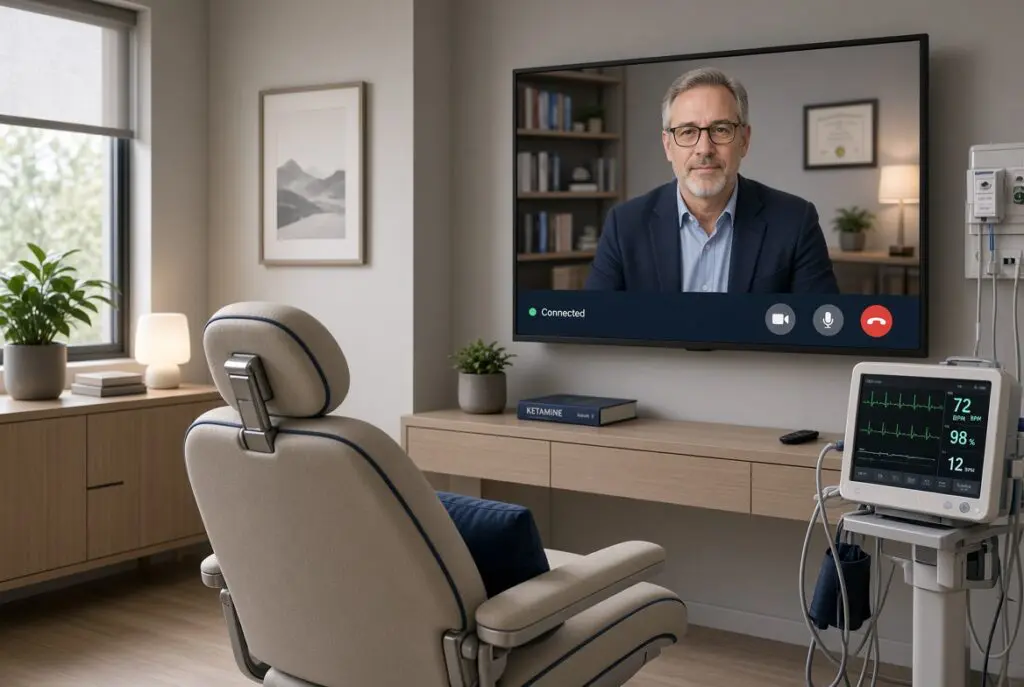
Can I add a remote medical director to prescribe ketamine? Yes, with protocol authority and on-site delegation defined
Yes, you can add a remote medical director, but the director role and the prescriber role are separate authorities, even when one clinician holds both. The medical director owns the program’s rules. That means writing the screening criteria, dosing protocols, contraindication lists, adverse-event procedures and escalation pathways. It also means deciding what on-site nurses may do under standing orders and when they must call a physician or emergency services.
Beyond writing the rules, the director supervises the people carrying them out. In practice, that means reviewing monitoring documentation and adverse events, and staying reachable while sessions run. A remote medical director for clinical oversight from FasPsych can hold that protocol authority for a ketamine program. Your nurses keep the bedside role, and the clinic gets physician accountability without a full-time hire.
Prescribing, by contrast, carries its own conditions. The prescriber needs licensure in the state where the patient is located and must comply with controlled-substance rules. For that reason, the contract should name who holds each authority: protocol approval, individual treatment orders, delegation to nursing staff, adverse-event response and after-hours coverage. Gaps in that list cause most oversight failures, and they are far easier to close before the first patient is booked.
Can online psychiatrists prescribe medication like ketamine? Federal and state rules set the limits
Online psychiatrists can prescribe medication, including controlled substances, but federal and state rules decide how. The starting point is the drug’s legal status. FDA states that ketamine is a Schedule III controlled substance and is FDA-approved as an intravenous or intramuscular general anesthetic, not for treatment of any psychiatric disorder. Using racemic ketamine for depression is therefore off-label, so the prescriber carries that clinical judgment and should document it in each chart. Esketamine, on the other hand, is the approved option and comes with the REMS obligations described earlier.
At the federal level, the Ryan Haight Online Pharmacy Consumer Protection Act generally requires an in-person medical evaluation before a controlled substance is prescribed through telemedicine, subject to defined exceptions. One exception covers patients physically located in a DEA-registered hospital or clinic, which can apply when patients receive treatment at your site. Even so, confirm the current status of DEA’s telemedicine flexibilities and any permanent rule with counsel before launch, because they determine which visits can be fully remote.
Within those federal limits, state rules shape the staffing model. Scope-of-practice laws decide whether psychiatric nurse practitioners can prescribe Schedule III drugs, and whether they need collaboration or supervision agreements. Some states also add their own telehealth prescribing conditions. Because FasPsych offers psychiatrists and psychiatric nurse practitioners available through telepsychiatry, you can match the prescriber type to what your state allows.
Who provides doctors for ketamine clinics, and which companies offer ketamine clinic staffing
Ketamine clinics usually draw psychiatric coverage from four sources, and each covers a different share of the remote layer.
- A telepsychiatry staffing partner such as FasPsych. One partner covers evaluations, prescribing, ongoing online medication management and remote medical director oversight. FasPsych’s telepsychiatry staffing for clinics and hospitals serves CMHCs, outpatient clinics and hospital behavioral health programs, and coverage can scale as patient volume grows.
- An in-house psychiatrist hire. This gives you a dedicated clinician on site who can cover both layers. However, it also means recruiting, salary and benefits commitments sized to one person’s capacity.
- Locum tenens agencies. These place temporary physicians, often on site. As a result, they work well for filling a defined gap or bridging until a permanent hire starts.
- Single-placement medical director services. These supply a director for protocol oversight, while evaluations and follow-up medication management are typically arranged separately.
The deciding question is how much of the table you need covered. If you need the whole remote column, one partner keeps evaluations, prescribing, follow-up and oversight under one set of protocols and one contract.
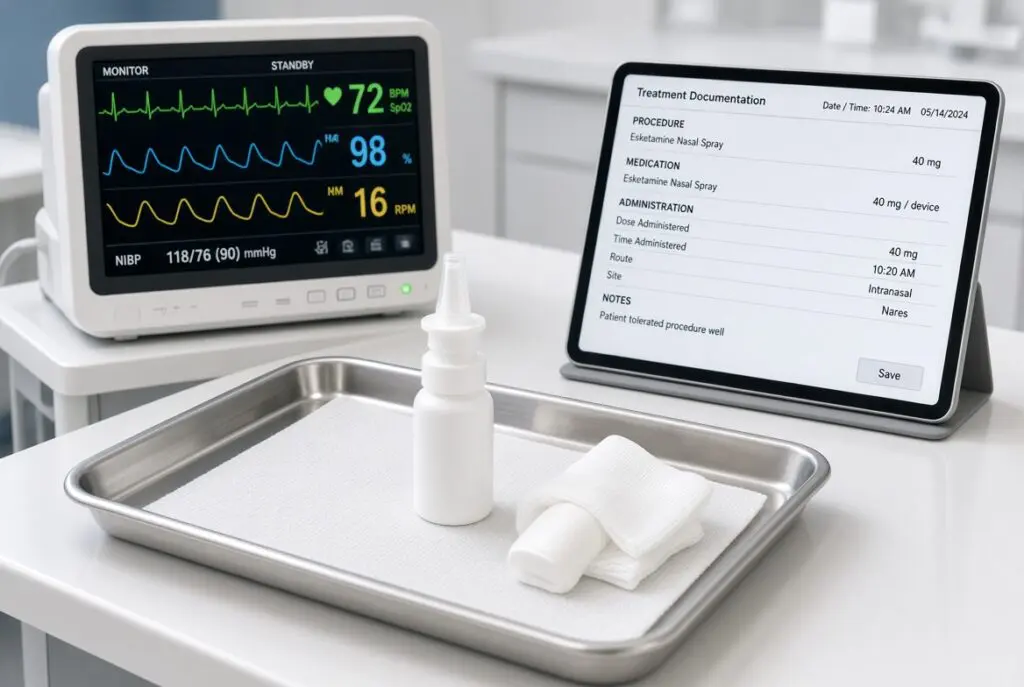
How to add ketamine treatment to your clinic and support it in six steps
To add ketamine treatment and support it over time, work through these steps in order, since each one depends on the step before it.
- Choose ketamine, esketamine or both. Esketamine is the FDA-approved option with REMS obligations, whereas racemic ketamine is off-label and needs compliant sourcing.
- Certify the site and pharmacy in the Spravato REMS if you offer esketamine, and confirm your treatment space supports the two-hour monitoring window.
- Secure the DEA registration at the administering location, then set up storage, logs and reconciliation procedures.
- Contract remote prescribers and a medical director. Confirm licensure in your patients’ states, and name in writing who holds each authority.
- Write protocols and train on-site staff in monitoring, adverse-event response and escalation to the remote team.
- Go live with follow-up medication management already scheduled, so maintenance decisions and oral antidepressant coordination start with the first patient.
Steps four through six are where launches most often stall, because the remote team has to fit into your scheduling, charting and escalation routines from day one. FasPsych’s step-by-step telepsychiatry implementation guide walks through how to connect those pieces before patients arrive. When you are ready, contact FasPsych to scope remote psychiatrist and medical director coverage for your ketamine program.