
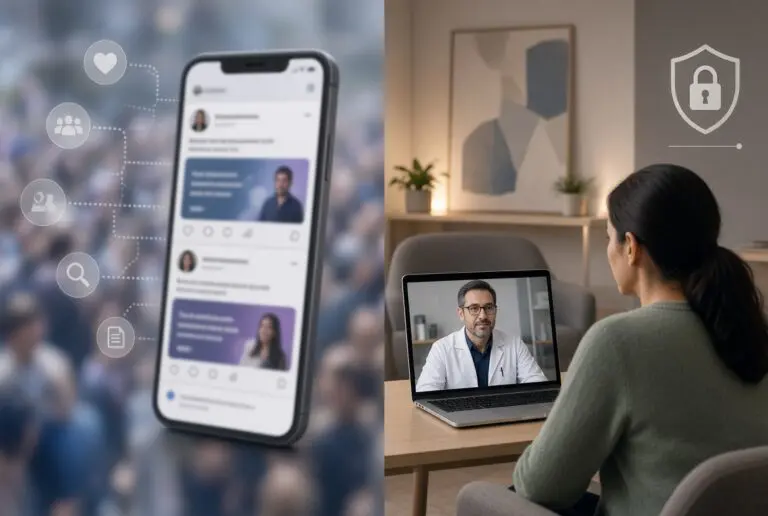

 Criminal defense lawyer Bruce Rivers has spent years delivering a blunt warning on his Criminal Lawyer Reacts channel: Stop Self Snitching. He coined and popularized the phrase after watching rappers and social media users post videos, lyrics, and boasts that later became evidence for prosecutors. Once something is online, Rivers points out, it becomes a permanent, searchable digital record that law enforcement can mine.
The same principle applies to mental health.
People routinely share details about anxiety, depression, panic attacks, medication side effects, hospital visits, or diagnoses on social platforms. What feels like connection or relief in the moment creates a lasting digital footprint. Employers, insurers, family members, future clinicians, and even opposing parties in legal matters can find it. Stigma deepens. Professional opportunities narrow. Privacy disappears.
The Real Cost of Public Mental Health Disclosures
Social media posts are rarely as private as users assume. Screenshots circulate. Archives persist. Search engines index content long after accounts are deleted or made private. Research on people living with serious mental illness shows that many already worry about privacy risks when using social media for mental health reasons, including threats to employment, stigma, damaged relationships, and hostility.
Oversharing can also worsen symptoms. Public posts invite comparison, unsolicited advice, and cyberbullying. For adolescents and young adults, the combination of permanent records and social pressure is especially damaging. Growing evidence links heavy social media use to higher rates of anxiety, depression, sleep disruption, and body-image concerns, placing additional strain on primary care and behavioral health systems. Resources such as how social media can affect mental health and what primary care providers can do, coverage of the New Mexico Meta case, broader reviews of social media’s impact on mental health, and discussions of emerging AI mental health conflicts underscore both the scale of the problem and the need for practical clinical responses.
Fear of creating a lasting public trail itself becomes a barrier: some people delay or avoid professional care because they do not want a documented history others can discover.
Bruce Rivers’ legal warning has a clear behavioral health parallel. Once sensitive personal information leaves a protected clinical setting and enters the public internet, control is largely lost.
The Protected Alternative: Confidential Care
Professional psychiatric care operates under strict confidentiality rules. The Health Insurance Portability and Accountability Act (HIPAA) requires covered providers to safeguard protected health information, including the highly sensitive details shared in mental health treatment. Telehealth sessions, messaging, and records fall under the same protections as in-person care when delivered through compliant platforms and processes.
FasPsych partners exclusively with organizations—hospitals, emergency departments, clinics, community mental health centers, correctional facilities, schools, and residential programs—to deliver that protected care at scale. Through secure telepsychiatry services, organizations gain access to board-certified psychiatrists and psychiatric nurse practitioners who provide evaluations, medication management, and consultation without requiring patients to broadcast their struggles online.
Documentation stays inside the organization’s systems. Sessions run on HIPAA-compliant platforms. Patients receive timely care while clinical teams retain a reliable, private resource.
How Organizations Benefit
Facilities that integrate telepsychiatry staffing reduce reliance on public channels as informal “support.” Key advantages include:
- Rapid or scheduled coverage without the fixed cost of full-time recruitment in every location.
- Consistent providers familiar with the organization’s workflows and patient populations.
- Integration with existing electronic health records and e-prescribing systems wherever possible.
- Ability to scale for nights, weekends, surge periods, or specialized needs (adolescent, geriatric, forensic, or crisis).
When someone is in distress, the priority is private evaluation and treatment—not a public post that may later be used against them or deepen stigma. On-demand and scheduled models make that private pathway practical for hospitals, jails, schools, and community programs alike. Learn more about flexible coverage options on the FasPsych telepsychiatry services page.
Practical Steps for Healthcare Leaders
- Recognize that social media often fills gaps left by limited psychiatric access. Closing those gaps with confidential care reduces the incentive to overshare.
- Ensure clinical teams have ready access to psychiatric consultation so patients are not left to manage crises publicly.
- Train staff on the difference between public digital disclosure and protected clinical conversation.
- Treat digital footprint risks as part of broader patient safety and risk-management discussions.
Bruce Rivers tells his audience to stop creating evidence against themselves. In mental health the equivalent guidance is straightforward: stop treating social media as a substitute for care. Seek—or provide—private, professional support instead.
FasPsych has operated this model since 2007, supporting organizations across the United States with scalable, HIPAA-compliant telepsychiatry staffing. If your facility needs reliable psychiatric coverage that prioritizes confidentiality and access, contact the team to discuss partnership options.
Partner with FasPsych to expand confidential mental health capacity without the risks of public digital disclosure. Visit faspsych.com or explore current telepsychiatry service models to get started.
Frequently Asked Questions
What does “stop self-snitching” mean in a mental health context? Bruce Rivers uses the phrase to warn against creating permanent digital evidence that can later be used against someone. Applied to mental health, it refers to the risks of publicly posting symptoms, diagnoses, treatment details, or crises on social media. Those posts become lasting records that can affect employment, relationships, stigma, and privacy. Confidential clinical care avoids that exposure.
How does telepsychiatry protect privacy better than sharing on social media? Telepsychiatry sessions and records are protected under HIPAA when delivered through compliant platforms and processes. Information stays within the clinical and organizational systems rather than becoming searchable public content. Patients can discuss sensitive details with a licensed provider without creating a permanent online trail.
Is FasPsych telepsychiatry HIPAA-compliant? Yes. FasPsych delivers services through secure, HIPAA-compliant platforms. Documentation integrates with the partner organization’s systems, and providers follow all applicable federal and state privacy requirements for mental health care.
Which types of organizations does FasPsych support? FasPsych partners with hospitals, emergency departments, clinics, community mental health centers, correctional facilities, schools, universities, residential programs, and other behavioral health organizations that need scalable psychiatric coverage.
How quickly can an organization implement confidential telepsychiatry coverage? Most partners become operational in a matter of weeks after needs assessment, provider matching, and technology integration. FasPsych offers both scheduled and on-demand models so facilities can match coverage to actual demand without long-term fixed staffing costs.
Can telepsychiatry help reduce the pressure patients feel to post about their mental health struggles? Yes. When timely, private psychiatric evaluation and medication management are readily available through an organization, patients have a protected alternative to public disclosure. Closing access gaps lowers the likelihood that people turn to social media as their primary outlet for distress.