
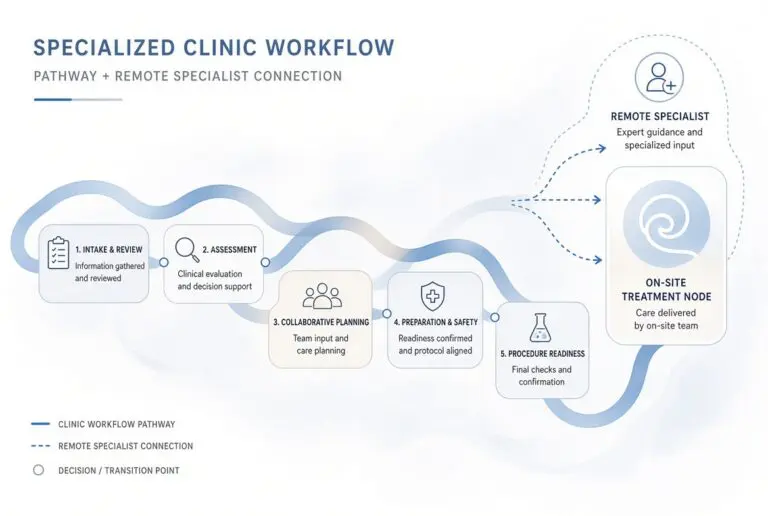

Clinics that want to offer specialized behavioral health services—such as ketamine or esketamine programs for treatment-resistant depression—often run into the same practical barrier: they need consistent psychiatric expertise for evaluations, treatment planning, and medication management, but they cannot easily recruit and retain a full-time psychiatrist. In-house hiring remains slow and expensive in a national shortage environment, while a psychiatry staffing network can supply the missing clinical capacity without locking the organization into a permanent headcount. This approach lets smaller and mid-sized specialty clinics expand access while keeping the physical treatment process under their own control.
Real Costs and Coverage Gaps of In-House Hiring
Traditional recruitment rarely solves short-term gaps. When a psychiatrist resigns or a nurse practitioner takes leave, organizations often face weeks or months of vacancy. Starting salaries for psychiatrists regularly exceed $300,000, and specialized search firms commonly charge 25–30% of the first-year salary. Additional costs include job-board fees, signing bonuses, and the productivity lost while the position sits empty. Turnover compounds the problem: estimates of the full cost of replacing a psychiatrist range from $250,000 to $500,000 once recruitment, onboarding, and disrupted clinical volume are included.
Even after a successful hire, coverage remains incomplete. Mid-sized clinics and specialty programs rarely need a psychiatrist present every hour of every day, yet an employed physician expects a full-time schedule and benefits. Nights, weekends, and holiday coverage are especially difficult to staff without overtime or additional positions that sit underutilized most of the time. The result is either delayed patient access or reliance on temporary locum coverage that still carries high hourly rates and limited continuity.
A psychiatry staffing network reverses this structure. Instead of paying for a full-time employee regardless of actual volume, the organization pays for the hours or encounters that are delivered. Coverage can be scaled up for a busy period or scaled down when volume drops, and after-hours telepsychiatry can fill nights and weekends without creating permanent overnight positions. See the detailed comparison in Psychiatry Staffing Network vs. In-House Hiring.

How Staffing Networks Enable Specialized Programs and Broader Access
Specialty programs such as ketamine and esketamine clinics illustrate the practical advantage. These services require psychiatric evaluation of diagnosis, treatment history, contraindications, and suitability, plus ongoing medication management and follow-up. At the same time, the physical administration, vital-sign monitoring, and (for Spravato) REMS observation must occur on site under the clinic’s own protocols and DEA registration. A staffing network supplies the remote psychiatric layer—evaluations, treatment planning, e-prescribing when appropriate, and follow-up—while the clinic retains the on-site procedures and patient relationship. More detail on organizing this support appears in Ketamine Clinic Virtual Staffing and Psychiatric Support.
This hybrid split is more efficient than either pure in-house hiring or a standalone virtual clinic. The organization does not need to build a full psychiatric department, and it does not hand the patient panel to an external practice. Remote clinicians integrate into the clinic’s existing workflows and electronic health record, coordinating with the on-site team on eligibility, dosing plans, and between-session changes. The same model supports other specialized outpatient services that need intermittent psychiatric expertise without continuous on-site presence. Operational guidance on this model is covered in Telepsychiatry Staffing for Ketamine Clinics.
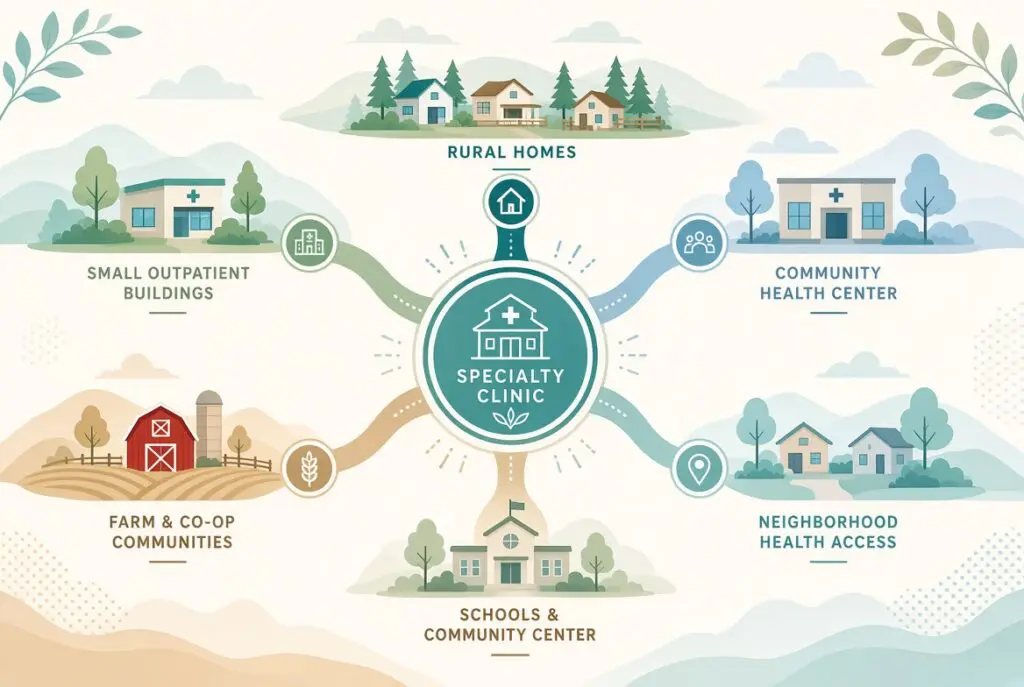
Broader access follows from the same flexibility. Telepsychiatry removes geographic barriers, shortens wait times, and covers gaps that smaller institutions cannot fill with full-time staff. Organizations pay only for the clinical time used, which makes specialized expertise available even when patient volume is uneven or seasonal. Hybrid arrangements—some visits fully remote, others combining video with in-person elements—further match the delivery method to clinical need. A wider view of these access benefits is available in Telepsychiatry: Expanding Access to Mental Health Care.
Practical Evaluation Factors for Specialty Clinics
Clinics considering a network partnership should assess a short set of operational factors rather than price alone:
- Weekly and after-hours coverage hours actually required, including any surge capacity for new program launches.
- Credentialing and state licensing timelines for the providers who will support the specialty service.
- Ability to scale hours up or down with reasonable notice as patient volume or funding changes.
- Clear division of responsibilities between the remote psychiatric team and the on-site clinical staff, especially for documentation, communication between appointments, and urgent issues.
- Continuity preferences—whether a consistent provider or a small pool better supports the therapeutic relationship and program protocols.
FasPsych has operated as a psychiatry staffing network since 2007, placing licensed psychiatrists and psychiatric nurse practitioners inside partner organizations’ own programs. Providers document in the host EHR, work under the organization’s clinical governance, and can be engaged on a PRN, part-time, or on-call basis. Most programs launch in two to six weeks, including credentialing and technology integration. Organizations interested in mapping coverage for a specialty clinic or ketamine program can review FasPsych’s clinics page, the virtual clinic vs. psychiatry staffing network comparison, flexible payment options, or the partner-with-us page.
Measuring Impact on Access and Sustainability
Success metrics for a specialty program typically include time from referral to initial psychiatric evaluation, percentage of eligible patients who complete the full treatment series, no-show or cancellation rates, and the ability to maintain coverage during vacations or volume spikes without emergency locum spending. Because the network model ties cost to actual utilization, clinics can track return on the psychiatric hours purchased against improvements in access and program volume. Many partners also monitor patient and staff satisfaction with the remote-on-site handoff to confirm that coordination remains smooth as the program grows.
Next Steps
Specialty clinics do not need to choose between long vacancies and an expensive full-time hire. A psychiatry staffing network supplies the psychiatric expertise required for programs such as ketamine and esketamine while the organization keeps control of on-site care, patient relationships, and billing. The combination of flexible coverage, reduced overhead, and broader geographic reach makes specialized behavioral health services practical for clinics that previously could not support them.
To discuss coverage matched to your clinic’s volume, payer mix, and specialty program goals, contact FasPsych at (877) 218-4070 or visit the partner-with-us page.
Frequently Asked Questions
What is the main difference between a psychiatry staffing network and in-house hiring for a specialty clinic?
In-house hiring commits the organization to a full-time salary, benefits, and recruitment cycle regardless of actual patient volume. A staffing network supplies licensed providers for the hours or encounters needed, allowing coverage to scale with demand and reducing the cost of vacancies and turnover.
Can a telepsychiatry staffing partner support a ketamine or esketamine clinic?
Yes. Remote psychiatrists can handle evaluations, treatment planning, medication management, and follow-up while the clinic manages on-site administration, monitoring, and any required REMS procedures. The model integrates into the clinic’s existing operations rather than creating a separate virtual practice. See FasPsych’s overview of ketamine clinic virtual staffing for additional context.
How quickly can coverage start?
With an experienced staffing partner, most programs can launch in two to six weeks once credentialing and privileging are underway. Exact timing depends on state licensing and facility requirements.
Does the clinic still control the patient relationship and documentation?
Yes. In a staffing-network model the providers work inside the partner organization’s EHR and clinical governance. The clinic retains the patient panel, billing, and overall program responsibility.
What if our volume is unpredictable?
Usage-based arrangements let the organization increase or decrease hours with reasonable notice, avoiding the fixed cost of an underutilized full-time position while still covering nights, weekends, or program surges when needed.