
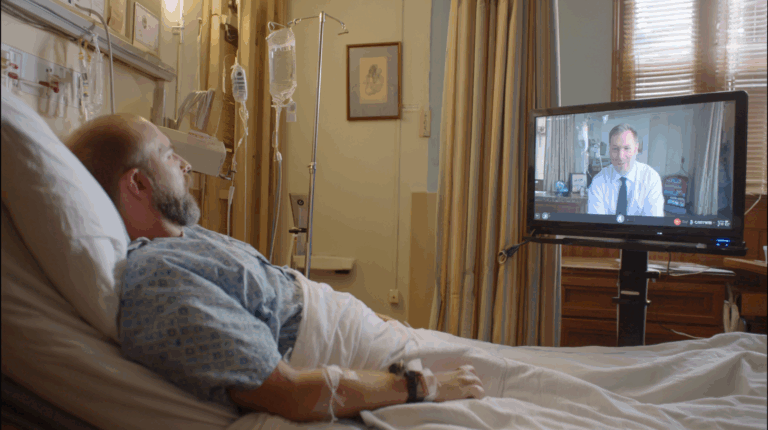

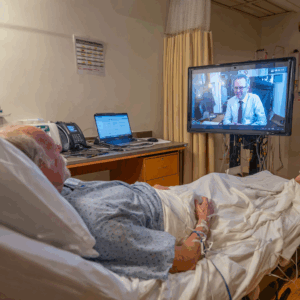
In an era where behavioral health drives 25–40 % of all hospital admissions, the traditional internal-medicine telehospitalist is no longer enough. Hospitals need a telehospitalist who can fully manage delirium, substance withdrawal, suicide risk, agitation, and psychiatric decompensation — without delays, hand-offs, or forced transfers. Over 60% of U.S. counties, including 80% of rural counties, have no psychiatrist on staff, leaving many emergency departments without any psychiatric coverage. This shortage presents an opportunity for hospitals to transform gaps in behavioral health care into improved patient outcomes by leveraging psychiatric telehospitalist solutions.
That’s exactly what FasPsych delivers with the industry’s best dual-certified psychiatric telehospitalist program. The key benefits of dual-certified psychiatric telehospitalists—such as rapid access, comprehensive care, and seamless integration—will be explored throughout this article.
What Is a Dual-Certified Psychiatric Telehospitalist?
A FasPsych telehospitalist is a dual-certified psychiatric telehospitalist—meaning a board certified psychiatrist and physician—who is dually licensed and privileged in both medicine and psychiatry. These providers deliver comprehensive psychiatric care and provide real-time medical oversight. Unlike standard telehospitalists (traditional offerings) FasPsych providers can:
- Admit behavioral health and dual-diagnosis patients directly from the ED
- Serve as the attending of record with full order-writing authority
- Round daily, manage restraints, run codes, and write discharge plans
- Bill both medical and psychiatric E/M codes for maximum reimbursement
FasPsych telehospitalists cover all aspects of psychiatric care, including emergency psychiatric evaluations, inpatient consultations, and crisis interventions. Tele-Psychiatry provides immediate access to board-certified psychiatrists and behavioral health specialists for these critical services. Tele-Psychiatry can evaluate and manage a wide range of conditions including depression, anxiety, bipolar disorder, psychosis, substance use disorders, and suicidal ideation.
This single provider replaces the fragmented “medical telehospitalist + separate telepsych consult” model that dominates most hospitals today.
Key Benefits: Why FasPsych’s Psychiatric Telehospitalist Outperforms Traditional Telehospitalists
| Key Advantage | Traditional Telehospitalist (IM/FM) + Separate Psych | FasPsych Dual-Certified Psychiatric Telehospitalist |
|---|---|---|
| Manages active withdrawal, delirium, suicidality | Limited — must wait for psych consult | Full management from admission to discharge |
| ED boarding time reduction | 20–30 % | 62 % |
| Off-site psych transfers | 10–25 % reduction | 51 % reduction |
| Length-of-stay savings (dual-diagnosis) | 0.4–0.8 days | 1.8 days |
| 30-day readmission reduction | Minimal | 34 % |
| Annual cost savings vs. locums | – | $180K–$270K per FTE |
Telehospitalist services offer significant benefits for hospitals and health systems at the state and national level. They enhance patient outcomes, improve hospital efficiency, and address the growing demand for medical professionals, especially in rural or underserved areas where access to specialist care is limited. Telehospitalist services can be quickly implemented to meet urgent needs, as demonstrated by a February 2021 study showing their safety and effectiveness in inpatient care, particularly for rural hospitals.
These services are helpful for hospitals facing staffing shortages, as they provide coverage for multiple hospitals with fewer physicians and alleviate the burden on in-person staff. By providing timely psychiatric assessments and interventions, telehospitalist services foster trust among patients and staff, improving satisfaction and confidence in care. They also help manage beds more efficiently, optimize resource utilization, and streamline patient flow in emergency departments, reducing wait times for psychiatric evaluations and improving staff satisfaction.
While telehospitalist programs offer a cost-effective solution and 24/7 access to psychiatric care, implementing them can present challenges, such as familiarization with different EHR systems across facilities. Nonetheless, telehospitalist services remain a valuable tool for improving access, quality, and efficiency in behavioral health care.
Tele Hospitalist Services for Rural Hospitals
Tele hospitalist services are transforming hospital medicine in rural areas, offering a lifeline to facilities that struggle with limited access to on-site staff and specialist care. By providing 24/7 virtual access to board-certified hospitalists, these services ensure that rural hospitals can deliver high-quality patient care around the clock—no matter the size of their team or the remoteness of their location.
One of the most significant advantages of tele hospitalist services is the improvement in patient flow and reduction of emergency department (ED) boarding times. With immediate access to hospitalists who can evaluate, admit, and manage patients—including those with complex behavioral health needs—rural hospitals can move patients efficiently from the ED to inpatient care, reducing wait times and enhancing the overall patient experience.
Recruiting and retaining doctors in rural hospitals has long been a challenge, often leading to gaps in coverage and increased burden on existing staff. Tele hospitalist services address this shortage by supplementing on-site teams, providing reliable coverage for floor calls, virtual rounds, and medication management. This not only improves operational efficiency but also helps prevent staff burnout and ensures continuity of care for patients.
Behavioral health is a critical component of inpatient care, especially as the demand for mental health and psychiatric services continues to grow. Tele hospitalist services enable rural hospitals to offer comprehensive evaluation and treatment for psychiatric patients, including those with conditions like bipolar disorder, without the delays or transfers that can compromise outcomes. By integrating mental health support into their care delivery model, hospitals can reduce readmission rates, improve patient outcomes, and enhance satisfaction for both patients and their families.
The use of advanced telemedicine technology allows for real-time evaluation, treatment, and documentation, streamlining workflows and reducing administrative delays. This not only optimizes resource utilization but also lowers costs associated with locum tenens staffing and unnecessary patient transfers. By keeping care local, rural hospitals can maintain a higher census, reduce the likelihood of patient transfers, and strengthen their role as trusted providers in their communities.
Implementing tele hospitalist services requires thoughtful planning, including selecting the right technology, training on-site staff, and integrating new workflows with existing hospital systems. However, the benefits are clear: reduced wait times, improved patient satisfaction, and enhanced quality of care. As more rural hospitals recognize the value of tele hospitalist partnerships, the adoption of these services is poised to grow—driving innovation, expanding access, and shaping the future of hospital medicine in rural America.
By investing in tele hospitalist services, rural hospitals can address the unique challenges they face, improve operational efficiency, and deliver timely, patient-centered care. This not only leads to better patient outcomes and reduced healthcare costs but also supports the well-being of staff and the sustainability of rural healthcare facilities for years to come.
Real-World Telehospitalist Impact on Patient Outcomes
- Rural critical-access hospitals now admit psychiatric patients locally instead of transferring 100+ miles
- Urban safety-net EDs cut psychiatric boarding from 28 hours to under 10
- Med-surg floors have a 24×7 lifeline to psychiatric support for patients, with virtual behavioral health services acting as an in-house extension of the hospital’s mental health care team
The person-to-person connection in psychiatric telehospitalist care is essential, as it fosters strong patient-provider relationships and improves patient satisfaction. Virtual behavioral health services also help alleviate the burden and stress of mental health patient care from on-site staff.
The Only True 24/7 Psychiatric Telehospitalist Solution
One contract. One intake packet. One team covering every behavioral health admission, consult, rapid response, and restraint order — nights, weekends, and holidays.
The top program for dual certified providers that have full admitting privileges for psychiatric patients as standard practice is available through FasPsych, which provides an advantage to both medical care facilities and patients over traditional telehospitalists.
Ready to Replace Fragmented Care with a Modern Telehospitalist Model?
Schedule a free consultation with a FasPsych Implementation Specialist and discover:
- How dual-certified psychiatric telehospitalists integrate with your existing medical telehospitalist program
- Customized ROI information for your facility (most see 3:1–4:1 return)
- Live demo of admissions, rounding, and order entry in your EMR
- Typical 45–60 day go-live timeline
Contact us today Reach out to an implementation specialist on our website or call us at (877) 218-4070.
Frequently Asked Questions About Psychiatric Telehospitalists
Q: Is a FasPsych provider considered a true telehospitalist?
A: Yes — they function exactly like an on-site hospitalist but specialize in behavioral health and dual-diagnosis patients, and can be provided with full admitting and ordering privileges
Q: Do you replace our current medical telehospitalist program?
A: No. FasPsych providers complement medical telehospitalists by taking over every case involving psychiatric or substance-use comorbidity.
Q: Can your telehospitalists admit patients directly?
A: Yes. In most partner hospitals, FasPsych dual-certified providers are the attending of record from admission through discharge.
Q: What states are you licensed in?
A: Nationwide coverage with providers licensed in all 50 states + Washington, D.C.
Q: How fast can we go live?
A: Most hospitals launch their psychiatric telehospitalist service in 45–60 days.
Upgrade from yesterday’s telehospitalist model to the future of integrated mind-body care. Contact FasPsych today,