


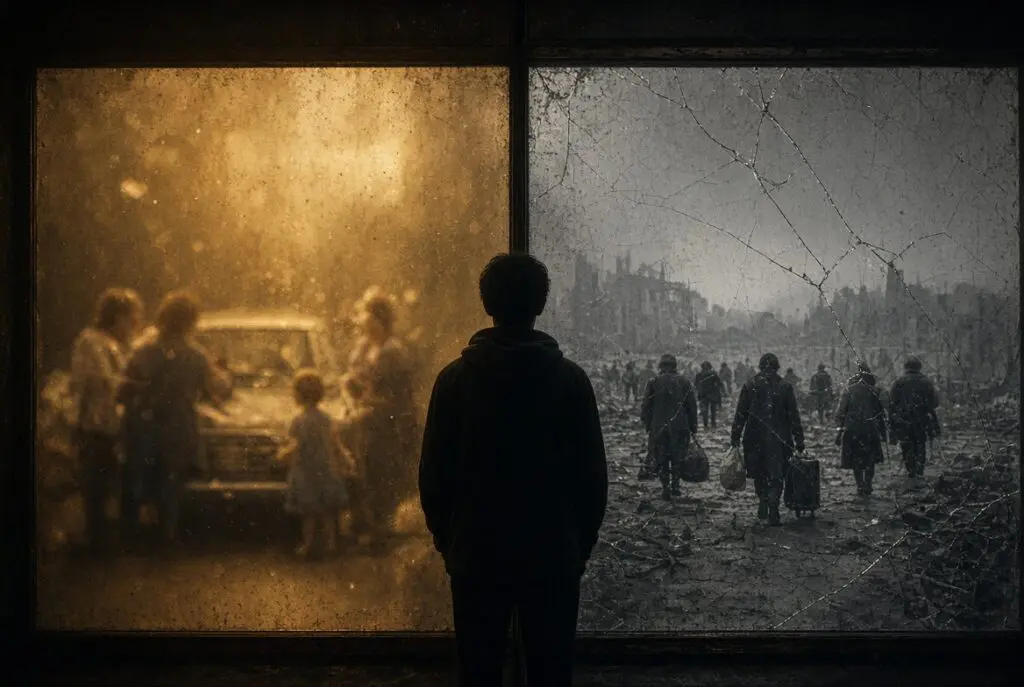
A widely circulated video that pairs a well-known romantic song with archival footage of Cold War-era African conflicts illustrates a familiar tension: idealized popular culture set against the documented reality of historical violence. Watch the video here. The juxtaposition is not unusual. Popular culture routinely packages distant places, eras, and events in emotionally appealing frames. When those frames meet the lived or inherited experience of historical trauma, the result is rarely neutral.
The Psychology of Nostalgia
Nostalgia is the emotional engine of much of that packaging. Defined as sentimental longing for the past, it is a self-conscious, bittersweet emotion that is predominantly positive for most people under ordinary conditions. Research associated with Constantine Sedikides, Tim Wildschut, and colleagues has shown that nostalgia can increase self-positivity, strengthen social connectedness, enhance a sense of meaning, and buffer certain forms of stress (see their regulatory model of nostalgia and related reviews of its psychological functions).
A clear everyday example is the recent official trailer announcing the return of Unsolved Mysteries on YouTube. The trailer deliberately evokes the original series’ format, music, and visual style—elements many viewers associate with childhood or earlier decades—triggering the familiar mix of warmth and wistfulness that characterizes nostalgia. Media revivals of this kind routinely activate personal and collective memory, even when the new content is not itself historical trauma material.
These benefits appear across cultures and age groups when the remembered past is largely safe and the present offers reasonable continuity.
When Nostalgia Meets Historical Trauma
The picture changes when the past being idealized sits next to historical trauma. Historical trauma refers to cumulative, collective wounding experienced by groups over generations—through colonization, forced displacement, organized violence, or prolonged political conflict—and transmitted through families, communities, and cultural memory.
When popular culture supplies a romanticized version of that same past or place, two opposing processes can occur:
Potential benefits
- Short-term buffering of distress (studies of displaced civilians have found deliberate nostalgic reflection can reduce negative affect and increase optimism; see this 2026 experiment on wartime evacuees)
- Support for reflective nostalgia, which acknowledges loss and distance rather than seeking to restore a vanished past
- Placement of present difficulties inside a longer narrative of continuity

What Are the Potential Costs of Nostalgia?
Nostalgia is not inherently helpful when the idealized past is entangled with trauma. Research and clinical observation point to several costs:
- Higher distress when nostalgia centers on a pre-trauma self or world experienced as permanently lost (as documented in research on survivors of sexual assault; see “More Bitter Than Sweet”)
- Greater difficulty accepting the trauma and integrating documented history into present functioning
- Restorative nostalgia that flattens historical complexity, reduces recognition of ongoing effects, and can complicate clinical conversations about what actually happened
- Increased negative affect and reduced self-compassion when the longing reinforces a sense that the “better” past is irretrievable
- In collective settings, the risk that idealized cultural narratives obscure the measurable symptoms that programs are equipped to treat
These costs are most pronounced when nostalgia functions as avoidance rather than as a resource for continuity and meaning.

Practical Implications for Behavioral Health Programs
Behavioral health programs encounter both the benefits and the costs. A patient or family may arrive with a strong cultural attachment to a romanticized narrative of origin or place while simultaneously carrying symptoms tied to the less romantic history.
Programs that already use measurement-based care can treat idealized media as data rather than distraction. This aligns with broader approaches to trauma-informed care and culturally responsive practice. Models such as the Collaborative Care Model (CoCM) further support integrated, measurement-driven workflows that keep treatment focused on current symptoms. Efficient screening tools, such as streamlined instruments that reduce the time burden of multiple separate questionnaires, further support this by helping teams capture relevant data without delaying care (psychiatric screening tools discussion):
- Add a brief question about cultural or family narratives of origin, place, or historical events alongside standard screening
- Note whether the romanticized image is functioning as a resource (connectedness, meaning) or as a barrier (avoidance of present symptoms)
- Ask how the patient or family understands the difference between the version of a place or era that appears in popular culture and the version that appears in their own history
The goal is not to correct the culture. It is to keep the treatment plan attached to the symptoms and functioning that are measurable now.
How Telepsychiatry Staffing Supports This Work
Facilities that serve populations with significant historical trauma—immigrant and refugee clinics, community mental health centers, hospitals in high-diversity areas, and certain rural or tribal programs—often lack consistent psychiatric coverage for nuanced narrative work. Telepsychiatry services have become a practical mechanism for expanding access in exactly these settings by connecting organizations with licensed providers through secure video. Smaller facilities in particular can follow structured steps to build an effective program without large capital outlays (steps for creating an effective telepsychiatry program by smaller facilities).
FasPsych’s telepsychiatry staffing model supports these programs by placing licensed psychiatrists and psychiatric nurse practitioners into the facility’s existing workflow, EHR, and clinical governance. Our nationwide provider network supplies specialist capacity on the schedule the program already uses, without requiring a full-time specialist hire. Documentation stays tied to current symptoms and scales rather than open-ended cultural excavation. Idealized narratives are treated as context that may help or hinder the measurable plan, not as the target of treatment.
Frequently Asked Questions
Is nostalgia always helpful for people who have experienced trauma?
No. While nostalgia can buffer stress and increase meaning for many people, it can also increase distress when the idealized past is tied to a pre-trauma life that feels permanently lost. The effect depends on what is being idealized and how it interacts with current symptoms.
How should programs handle romanticized cultural narratives during evaluations?
Treat them as clinical data. Ask brief, open questions about family or cultural stories of origin or place, then note whether the narrative supports engagement or functions as avoidance. Keep the treatment plan tied to measurable symptoms and functioning rather than attempting to correct the narrative itself.
Does this approach require specialized training in historical trauma?
Not necessarily as a separate specialty. Providers who are already skilled in measurement-based care and culturally responsive practice can address the tension by distinguishing resource from barrier. Telepsychiatry staffing can supply that capacity on an existing schedule without a full-time hire.
How is this different from general trauma-informed care?
Trauma-informed care emphasizes safety, trust, and avoiding re-traumatization. This angle specifically examines how idealized popular-culture narratives interact with historical trauma and how that interaction affects the measurable treatment plan. The two approaches are complementary rather than identical.
Romanticized popular culture will continue to circulate idealized images of places and eras that also carry historical trauma. Nostalgia will continue to function as both a resource and a complication. Programs that can distinguish the two—and that can staff the psychiatric capacity needed to do so consistently—are better positioned to keep care attached to what is treatable.
Flexible telepsychiatry coverage is one practical way organizations expand that capacity without relocating patients or rebuilding their clinical teams from scratch. Partner with FasPsych to discuss how telepsychiatry staffing can support your program’s approach to complex trauma narratives and measurement-based care.