
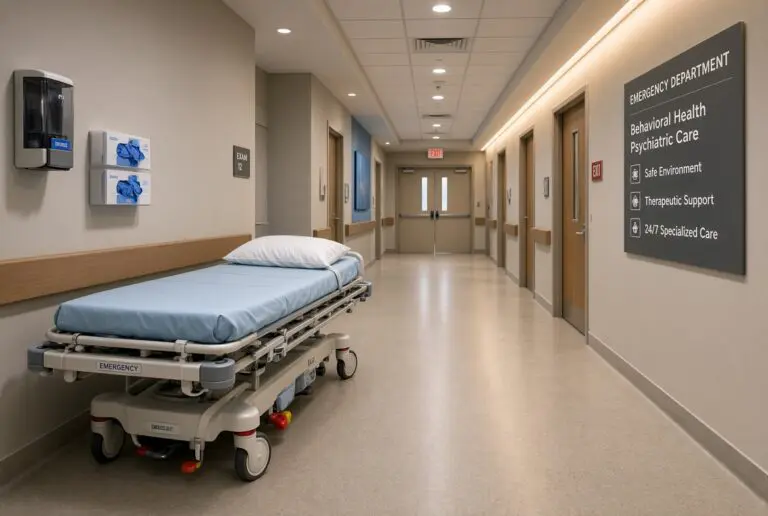

Lionel, the mononymous attorney, former Florida prosecutor, and host of Lionel Nation, has made a blunt public case for restoring structured psychiatric capacity. In commentary and video on his YouTube channel, he argues that the large-scale closure of state psychiatric hospitals did not solve the problem of severe mental illness—it relocated it. Streets in cities such as San Francisco and New York, he notes, now hold people with untreated psychosis, while jails have become the largest mental health providers in the country. His perspective is informed by years handling Baker Acts, insanity matters, and the practical consequences of people who are severely ill but not simply “criminal.”
The observation is not new, but the unfinished nature of the policy is. Deinstitutionalization began with the introduction of antipsychotics in the 1950s and accelerated after the Community Mental Health Act of 1963 and the Medicaid Institutions for Mental Diseases exclusion. State hospital populations fell from more than 550,000 in the mid-1950s to under 40,000 today (Treatment Advocacy Center and NRI data). The promise was community-based care that would be more humane and effective. For many people with severe and persistent illness—particularly those with schizophrenia who also experience anosognosia (lack of insight into their condition)—the community system that was supposed to replace the hospitals never fully arrived. Outpatient clinics often operate with limited slots, short medication visits, and little capacity for the intensive stabilization that acute or chronically unstable patients require.
The measurable results are visible in two places Lionel repeatedly highlights: the streets and the jails. Studies and reports consistently show that a large share of people experiencing chronic homelessness have serious mental illness, frequently co-occurring with substance use. At the same time, jails and prisons house substantial numbers of people with psychotic disorders, often because there is nowhere else for them to go after an arrest or a short hospital stay. Lionel’s prosecutor background makes the point concrete: when structured options are scarce, the justice system becomes the default holding environment. That outcome is expensive, clinically inadequate, and difficult to reverse once someone is cycling between street, emergency department, and cell.

Why Capacity Still Matters
Critics of reinstitutionalization correctly note the abuses that occurred in the old state hospitals. The counterpoint Lionel and others raise is that the absence of any structured capacity has produced its own harms—untreated psychosis, victimization, premature death, and the criminalization of illness. Anosognosia means many of the people who most need care will not volunteer for it. Brief community contacts are often insufficient to interrupt a deteriorating course. Structured inpatient or intensive residential settings have been shown in multiple studies to reduce relapse rates compared with fragmented outpatient care alone. The practical question for health systems, courts, and community providers is not whether every former hospital bed must be rebuilt, but how to restore enough capacity—acute, step-down, and ongoing—so that people with severe illness are not left solely to emergency departments, police, or jails. Integrated approaches such as the Collaborative Care Model (CoCM) can further support primary care settings in identifying and managing milder conditions before they escalate, while still leaving a clear need for specialist capacity for the most severe cases.
Telepsychiatry Staffing as a Practical Bridge
Full reconstruction of large state hospitals is politically and financially distant for most jurisdictions. Telepsychiatry staffing offers a nearer-term way to expand clinical capacity inside the systems that already exist. As noted in coverage of how FasPsych leverages behavioral health telehealth to serve hospitals, jails, and schools, the model places licensed psychiatrists and psychiatric nurse practitioners into an organization’s existing electronic health record, workflows, and clinical governance rather than creating a parallel clinic. Coverage can be scheduled, on-demand, or hybrid, and it can scale with volume instead of requiring a permanent full-time hire that may be impossible to recruit or retain. Broader discussions of telepsychiatry expanding access to mental health care underscore the same operational advantage.
In practice this looks like:
- Rapid psychiatric evaluation and disposition support in emergency departments, reducing prolonged boarding for patients who need assessment or short-term stabilization.
- Ongoing medication management and consultation for community teams or ACT-style programs that already provide intensive outreach but lack reliable prescriber capacity.
- Coverage for correctional and court-related settings where competency, treatment, and diversion decisions depend on timely specialist input.
- Support for residential or step-down programs that need consistent psychiatric oversight without maintaining an on-site medical director full time.
Because the clinicians work inside the host organization’s system, continuity improves and the administrative burden of credentialing, licensing, and scheduling is handled centrally. When a local psychiatrist leaves or volume spikes after a new partnership with law enforcement or the courts, remote coverage can hold the schedule without interrupting care.
Closing the Gap Without Repeating the Past
Lionel’s argument is not a call to recreate the warehouses of the mid-20th century. It is a recognition that the policy experiment of deinstitutionalization remains unfinished for the people with the most severe illnesses. Jails and streets are not treatment settings. Organizations that already serve these patients—hospitals, community programs, residential facilities, and court-adjacent services—can expand effective capacity today by integrating telepsychiatry staffing rather than waiting for large-scale institutional reconstruction.
FasPsych partners with organizations to supply the psychiatric workforce that makes structured care possible inside existing programs. For facilities looking to reduce reliance on emergency boarding, jail cycles, or understaffed outpatient clinics, scalable telepsychiatry coverage provides a direct operational path.

Frequently Asked Questions
What is deinstitutionalization and why is it considered unfinished?
Deinstitutionalization refers to the mid-20th-century policy shift that closed most large state psychiatric hospitals in favor of community-based care. While many people benefited, the community infrastructure never fully matched the need for people with severe and persistent mental illness—especially those with anosognosia who do not voluntarily seek treatment. As a result, large numbers of people with serious mental illness now cycle through jails, emergency departments, and homelessness instead of receiving structured care.
Can telepsychiatry replace the need for inpatient psychiatric beds?
No. Telepsychiatry does not replace inpatient or residential capacity. It expands the psychiatric workforce available inside existing systems—emergency departments, community programs, correctional settings, and residential facilities—so that people can be assessed, stabilized, and managed more effectively while longer-term capacity is addressed.
How does FasPsych’s telepsychiatry staffing model work for hospitals and jails?
FasPsych integrates licensed psychiatrists and psychiatric nurse practitioners into an organization’s existing electronic health record and clinical workflows. Coverage can be scheduled, on-demand, or hybrid. The approach has been used to support hospitals, jails, schools, and community programs without requiring organizations to stand up a separate clinic or absorb the full cost of permanent full-time recruitment.
What types of organizations can use telepsychiatry staffing to address capacity gaps?
Hospitals and emergency departments, community mental health centers, correctional facilities, residential and step-down programs, and court-adjacent services. The model is designed to add psychiatric capacity inside the host organization’s existing structure rather than creating parallel care.
Contact FasPsych to discuss telepsychiatry staffing for hospitals, community programs, correctional settings, or residential facilities.