
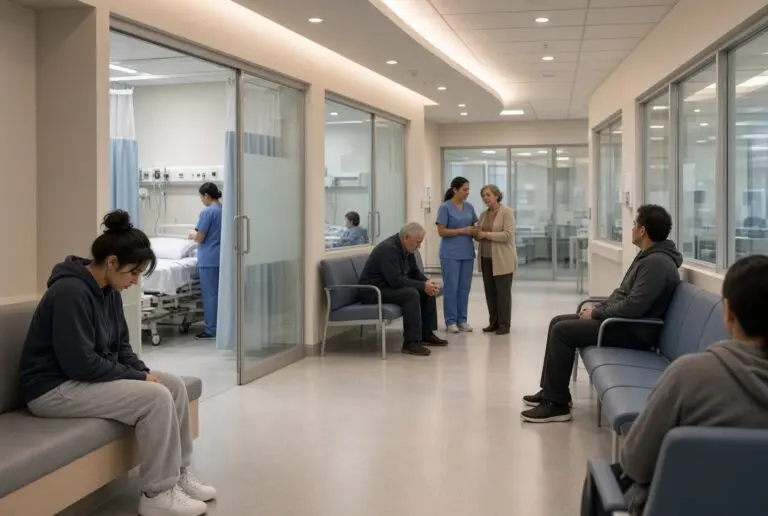

Rick Sanchez, a well-known and highly respected international news host who has led programs in both the United States and abroad, has argued that public language around severe mental illness has grown more cautious while the practical capacity to treat it has not kept pace. A longtime journalist and commentator with experience covering medical and policy issues, Sanchez has used his platform to examine how shifts in public terminology can diverge from on-the-ground conditions in health systems. In discussions of mental health, he has pointed to the way softer language has become more common even as measurable gaps in treatment access remain. Softened terms such as “behavioral health support,” “emotional wellness,” or “challenging behaviors” have become common in policy discussions, hospital communications, and media coverage. These phrases reduce stigma for some audiences, yet they can also obscure the clinical reality of conditions that involve impaired insight, high rates of nonadherence, and the need for consistent specialist treatment. When language softens without a corresponding expansion of psychiatric capacity, the gap between description and delivery widens. Organizations that treat people with schizophrenia, schizoaffective disorder, and severe bipolar illness still confront short hospital stays, limited outpatient slots, and high rates of treatment nonadherence driven in part by anosognosia—the neurological lack of insight that affects a substantial share of people with these conditions.
Anosognosia is not denial. It is a symptom that leaves many people unable to recognize they are ill. Estimates place its prevalence between 50% and 98% in schizophrenia spectrum disorders and lower but still significant rates in bipolar disorder (Treatment Advocacy Center). It is the leading reason for medication nonadherence. When insight is limited, voluntary outpatient engagement is unreliable. Brief inpatient contacts can stabilize acute symptoms, yet the same patients frequently leave with no immediate, reliable connection to ongoing psychiatric care. This continuity-of-care gap is one of the clearest expressions of psychiatric capacity limits in current systems. Softened language does not change the underlying need for timely evaluation, medication management, and follow-up; it only changes how the need is described.
Follow-up data illustrate the problem. Multiple studies show that fewer than half of patients discharged from psychiatric hospitalization receive timely outpatient psychiatric care within 30 days. Early follow-up is associated with lower risk of suicide (JAMA Network Open) and, in several cohorts, modestly lower readmission rates (Psychiatric Services). Yet many community programs and hospital systems lack consistent prescriber capacity to make those appointments available. The result is a revolving pattern: short stabilization, discharge, missed or delayed follow-up, relapse, and return to the emergency department or another brief admission. The operational shortfall remains even when the language used to describe it has become more careful.
Capacity Limits After the Acute Stay
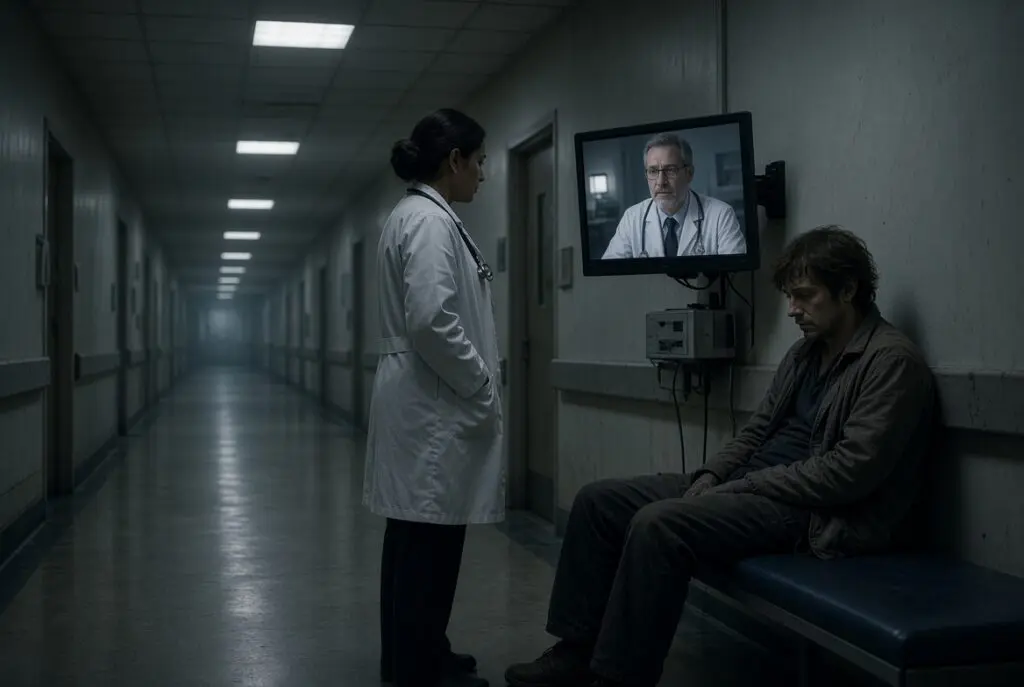
The practical constraint is not primarily the number of inpatient beds. It is the absence of enough psychiatrists and psychiatric nurse practitioners who can provide timely evaluation, medication adjustment, and ongoing management once a patient leaves the hospital. Community clinics often operate with limited slots and long waits. Hospital teams discharge patients with instructions to follow up, but the receiving system may not have the specialist hours to absorb the volume. Anosognosia further reduces the likelihood that patients will bridge the gap on their own (Treatment Advocacy Center).
Organizations already embedded in these pathways—hospitals, community mental health centers, crisis teams, and residential programs—need a way to add psychiatric capacity without standing up a separate clinic or waiting for permanent recruitment. That is the operational translation of the language debate: the words used to describe severe illness matter less than whether a qualified clinician is available to treat it after the acute episode ends. Some of the same capacity constraints also appear when systems must complete time-sensitive court-ordered evaluations, where delayed specialist access can affect both clinical and legal timelines.
Telepsychiatry Staffing as Continuity Capacity
Telepsychiatry staffing supplies licensed psychiatrists and psychiatric nurse practitioners who work inside an organization’s existing electronic health record, schedules, and clinical protocols. Coverage can be scheduled for post-discharge clinics, on-demand for crisis teams, or hybrid to support both hospital and community programs. Because the clinicians integrate into the host workflow rather than creating a parallel practice, continuity improves and administrative overhead stays low.
In practice this supports:
- Timely post-discharge evaluations and medication management so that the first 30 days after hospitalization are covered rather than left to chance.
- Consultation for community teams managing patients with limited insight who require more frequent or assertive medication oversight.
- Surge capacity when volume rises after a cluster of discharges or a local increase in acute presentations.
- Consistent psychiatric input for residential or step-down programs that already provide structure but lack reliable prescriber time.
The model scales with actual volume. When a local psychiatrist leaves or caseloads expand, remote coverage can maintain the schedule without interrupting care or forcing organizations into long recruitment cycles. This is especially relevant for programs that must maintain continuity of care for people with serious mental illness while also meeting other evaluation and treatment demands.
Moving from Language to Operational Capacity
Public discussion of severe mental illness often centers on terminology. The more immediate constraint for hospitals and community providers is the shortage of specialists who can deliver continuous medication management and evaluation after short stays. Anosognosia means a significant portion of the patients who most need care will not reliably seek it. Systems that already serve these patients can reduce the gap between discharge and ongoing treatment by integrating telepsychiatry staffing rather than waiting for broader institutional changes.
FasPsych partners with organizations to place psychiatric capacity directly inside existing programs. For hospitals, community mental health centers, and residential providers seeking to strengthen post-acute continuity and reduce avoidable cycling, scalable telepsychiatry coverage offers a practical operational path that addresses psychiatric capacity limits without duplicating existing clinical infrastructure.
Frequently Asked Questions
Why does treatment nonadherence remain high in severe mental illness?
Anosognosia—the neurological lack of insight into one’s illness—is the leading cause of medication nonadherence in schizophrenia spectrum disorders (Treatment Advocacy Center). Many people with these conditions do not recognize that they are ill, so voluntary engagement with outpatient care is unreliable even after a hospital stay.
How common is timely psychiatric follow-up after discharge?
Multiple studies show that fewer than half of patients discharged from psychiatric hospitalization receive outpatient psychiatric care within 30 days. Early follow-up is linked to lower suicide risk (JAMA Network Open) and, in some cohorts, reduced readmission, yet capacity limits prevent many systems from providing it.
Does telepsychiatry replace the need for inpatient care?
No. Telepsychiatry does not replace acute inpatient or residential capacity. It expands the psychiatric workforce available inside existing hospital, community, and residential programs so that patients can receive timely evaluation and medication management after short stays.
How does FasPsych’s staffing model support continuity?
FasPsych integrates licensed psychiatrists and psychiatric nurse practitioners into an organization’s existing electronic health record and workflows. Coverage can be scheduled for post-discharge clinics or made available on demand, allowing programs to maintain psychiatric capacity without permanent full-time recruitment.
Contact FasPsych to discuss telepsychiatry staffing that strengthens post-discharge continuity and practical capacity for severe mental illness.