
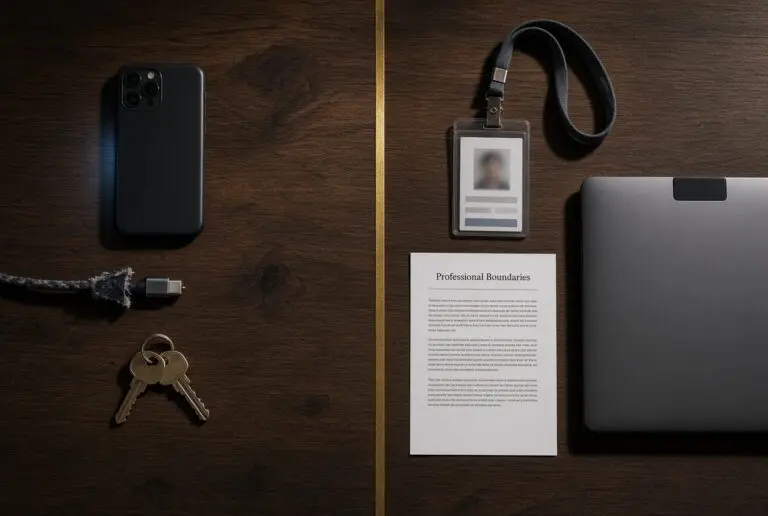

Clinical boundaries are the golden rules of a psychiatry service line. They are not etiquette. They decide who holds the chart, who can prescribe, who can be alone with a patient, and what happens when someone starts treating the relationship as personal. When those rules break, the first cost is usually not a lawsuit. It is a split team, a compromised prescriber, a patient who will only talk to one person, and a unit that no longer knows which conversation is care and which is something else.
This article is for organizations that staff psychiatry — hospitals, emergency departments, FQHCs and CMHCs, residential programs, correctional units, and school-based clinics. The question is not whether warmth belongs in the visit. It does. The question is which crossings you will treat as clinical events, including the ones that arrive by text, social media, and video.
What a boundary violation actually is
A boundary is a limit on role. The psychiatrist or psychiatric nurse practitioner is not a friend, not a date, not a business partner, and not an after-hours confidant. A boundary crossing is a departure from that role that can still be discussed, documented, and repaired — staying two minutes late to finish a safety plan, accepting a handmade card, answering a portal message about a missed dose.
A clinical boundary violation is a departure that exploits the power imbalance or makes the professional relationship unsafe to continue: a dual relationship, sexual or romantic involvement, business dealing, secret after-hours contact, looking up a patient for personal curiosity, or letting one patient become the person who “really understands” the clinician. The American Psychological Association’s social-media guidance treats contact with current or past clients on personal platforms as a role conflict for the same reason: the second relationship competes with the first. (APA guidelines on optimal use of social media)
Video care does not invent these problems. It changes the surface they travel across.

How patients cross the line — and why units miss it
Patients rarely announce a dual relationship. They test the edge.
- After-hours texts or DMs that start as “quick medication questions” and become nightly check-ins.
- “You’re the only one who gets me” — a compliment that isolates the clinician from the team.
- Friend or follow requests on personal Instagram, Facebook, or TikTok.
- Gifts, special food, or offers to help the clinician outside work.
- Requests to hide information from the rest of the team, the family, or the court.
- Showing up at the clinician’s other job, church, or neighborhood, then treating the encounter as part of treatment.
On a residential unit or in a jail, the same pattern can look like extra time at the door, notes passed through staff, or a patient who will only attend groups if one person is in the room. In a school clinic it can look like a student messaging a counselor at 11 p.m. because “you said I could always reach you.” None of those openers is automatically a violation. All of them are data. If the facility has no written rule for what happens next, the relationship writes the rule.
Structured psychiatric evaluation is the place to name the frame early: how to reach the team, what the portal is for, what is an emergency, and that social media is not a clinic.
How staff cross the line
Staff-side violations are the ones facilities under-report because they look like dedication.
- Treating a coworker, a coworker’s child, or a neighbor without a second clinician and a documented plan.
- Searching a patient’s social media “to understand them better” without a clinical indication, consent discussion, or note.
- Sharing personal crises, dating life, or political fights in the session because the video room feels informal.
- Texting from a personal phone so the thread never hits the EHR.
- Agreeing to be the patient’s only contact after hours.
- Romantic, sexual, or financial entanglement — including “it started after discharge.”
- Using the patient as a source of admiration when the rest of the job is thin.
APA telepsychology guidance and the American Psychiatric Association’s telepsychiatry toolkit make the same point in different words: the professional standards do not relax because the visit is on a screen. Identity verification, confidentiality, and the shape of the relationship still have to be defined. (APA Guidelines for the Practice of Telepsychology; APA Telepsychiatry Toolkit — technologies and professionalism)
Video adds three failure modes facilities should write down:
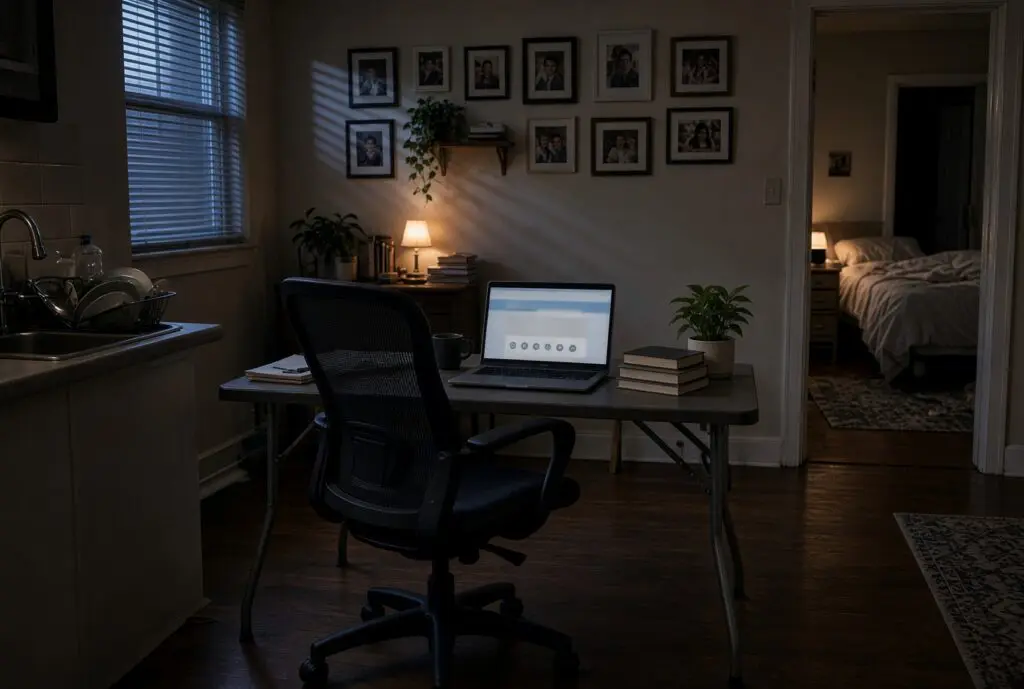
- The room behind the clinician. Family photos, a bedroom, a political poster, a personal bookshelf become part of the treatment setting.
- The informal channel. SMS, WhatsApp, and platform DMs feel faster than the portal. They also leave the chart.
- The always-on illusion. A patient who can see you in your kitchen at 7 p.m. may conclude you are available at 11.
Psychiatric Times has summarized the digital version of the same ethics: separate personal and professional spheres, do not treat media or messages as a substitute for care, and do not build dual relationships with people who arrived as patients. (How to protect professional boundaries digitally)
Settings where the rules break faster
The same shortage that pushes psychiatry onto video also puts hospitals, jails, and schools on one coverage model. DGM News’ look at how FasPsych uses behavioral health telehealth across those settings is useful here for a different reason than access: each site has a different boundary surface, and a policy written only for an outpatient clinic will not hold in a booking area or a nurse’s office.
Hospitals and EDs. High acuity plus rotating coverage. A patient latches onto the psychiatrist who happened to be on the video cart at 2 a.m. The next night that person is gone and the unit looks like it abandoned them. Name coverage as a team, not as a private bond. On-demand psychiatry only works if the patient understands the next licensed clinician can open the same record.
Residential and dual-diagnosis programs. Staff and patients share a building for weeks. Gifts, secrets, and “special” relationships grow in the hallway. Co-occurring intake should include who the patient may contact, and who they may not.
Corrections. Power is already skewed. Any extra channel — personal email, social follow, unofficial phone time — is a security event as well as an ethics event. Remote evaluation inside the facility reduces transport risk; it does not reduce the need for a written rule about who the incarcerated person may message.
Schools and universities. Minors, parents, and after-hours messages collide. The rule has to be written for the student and for staff who want to be kind at midnight. A tablet in the nurse’s office is still a clinic. It is not a private line to one adult.
Small towns and tribal clinics. Dual relationships are sometimes unavoidable. The fix is documentation and a second pair of eyes, not pretending the second role does not exist.
Medicaid-heavy CMHCs and FQHCs hit the same problem with a thinner bench. Low reimbursement and hard-to-fill posts push coverage onto contract telepsychiatry, which is the staffing picture in Free Medical Journals’ account of technology and behavioral health under Medicaid. That model does not change the rule. When the building has no on-site psychiatrist, video is how the visit happens. Access is not a reason to loosen the frame. The portal, the scheduled visit, and the coverage pool still have to be the clinical channels.
A policy list medical directors can enforce
Before the next boundary event, the service line should be able to answer yes to all of the following:
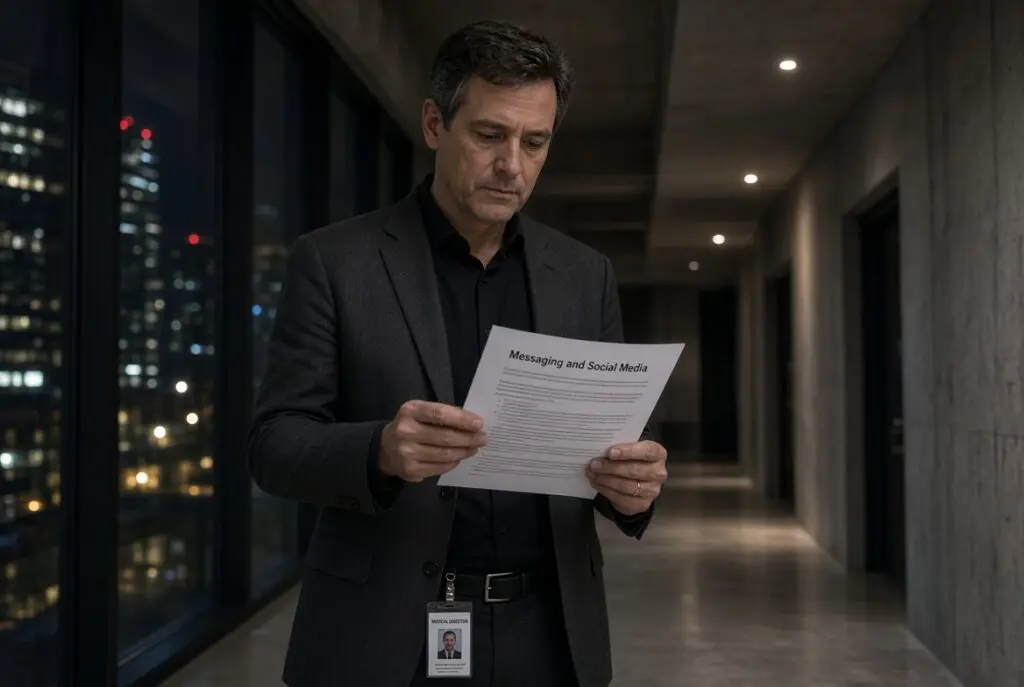
- Is there a written social-media and messaging policy that applies to employed staff and contracted telepsychiatrists?
- Are personal phone numbers barred for clinical contact except in a documented emergency, with the thread transferred into the EHR the same day?
- Is after-hours contact routed to a coverage pool, not to a favorite clinician?
- Are gifts, rides, employment offers, and outside meetings reported — not left to individual judgment?
- Is there a named supervisor for dual-relationship questions in rural or closed communities?
- Does informed consent tell the patient that portal and scheduled video are the clinical channels, and that social media is not treatment?
- If a crossing happens, is there a process: document, confer, reassign if needed, and protect the patient from sudden disappearance?
Reassignment is not punishment. It is how you keep the chart honest. A credentialed provider network of adult psychiatrists and PMHNPs exists so the facility can change who is in the slot without ending the service.
What this is not
It is not a brief against empathy. Patients in trauma, psychosis, or withdrawal need a human voice. It is not a brief against telepsychiatry. The APA toolkit treats video as a setting that still requires the same professional relationship, not a lesser one. And it is not the same article as FasPsych’s piece on clear communication and false hope. That post is about saying a clean no in ordinary life. This one is about who is allowed to say yes inside a licensed program.
Frequently asked questions
Is accepting a thank-you card a violation?
Usually no. Document it. If gifts escalate, or if the gift is valuable, alcohol, or a request for secrecy, treat it as a crossing and confer.
Can a telepsychiatrist friend a former patient after discharge?
APA social-media guidance advises against contact with current or past clients on personal accounts because the second role still collides with the first. Put the rule in policy so individual clinicians are not improvising.
What if the patient texts “I’m the only one who understands you”?
That sentence is a clinical event. Do not answer in kind. Bring it into the next scheduled visit, document the content, and decide whether the dyad should be interrupted.
Does video make dual relationships more likely?
It makes informal channels easier and the clinician’s private life more visible. The ethics do not change. The policy has to name SMS, DMs, backdrops, and after-hours expectations.
What should a unit do when staff already crossed the line?
Protect the patient first: safety, continuity, and a new clinician if the old relationship cannot be repaired. Then document, notify the medical director, and follow facility HR and licensing rules. Do not leave the patient without a named covering prescriber.
When does this become a staffing problem rather than a training problem?
When the program depends on one person who “has a special connection” with half the census. That is key-person risk wearing a halo. Build coverage that can absorb a reassignment.
Golden rules exist because the relationship is not symmetrical. Patients may push them. Staff may enjoy being the exception. Facilities that write the rule, put it in consent, and keep more than one licensed clinician on the service are the ones that can still treat the person after the crossing.
Organizations that need psychiatrists and PMHNPs inside their policies — not a private channel that lives on someone’s phone — can map that coverage with FasPsych. Call (877) 218-4070 or start at Partner With Us.